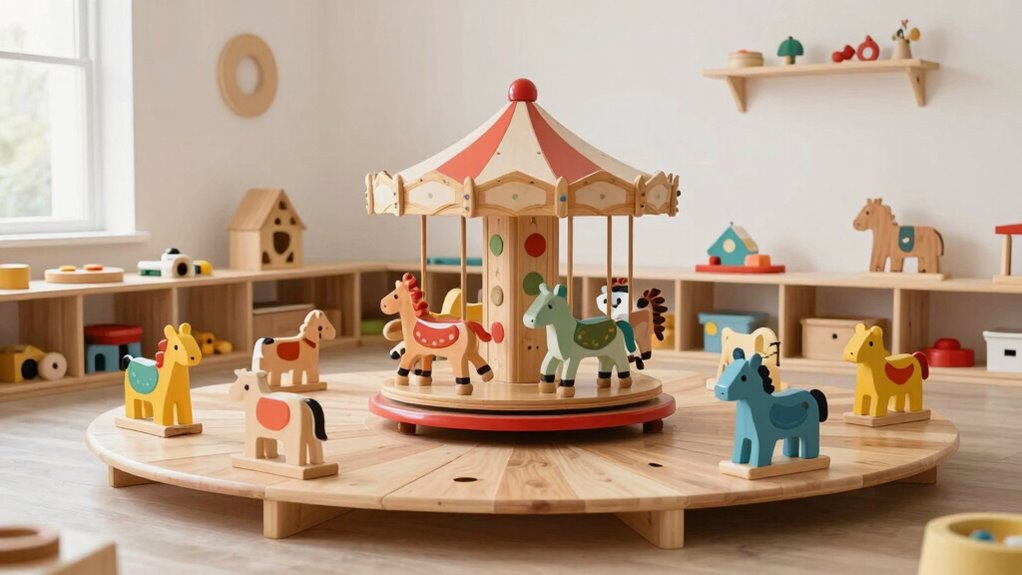

To rotate large toys the Montessori way without constant rearranging, focus on weekly or bi-weekly swaps using organized, labeled storage. Choose developmentally appropriate toys that spark curiosity and encourage exploration. Keep the environment simple and calm, making toy changes intentional rather than overwhelming. This approach prevents overstimulation while maintaining a stimulating space. If you want practical tips on keeping your play area fresh and inviting with minimal effort, you’ll find more useful ideas ahead.

Turn the school run and nap time into listening time
- Thousands of audiobooks, podcasts and originals
- Listen on your phone, tablet or Echo — also offline
- Cancel anytime
Key Takeaways
- Rotate large toys weekly or bi-weekly to introduce variety without frequent rearrangements.
- Use organized, labeled storage baskets to easily swap toys while keeping the environment calm.
- Limit toy options at a time to prevent overload and maintain a simple, intentional setup.
- Focus on thoughtful selection of toys that promote exploration and development.
- Keep the layout consistent, changing only the toys to refresh the space naturally.
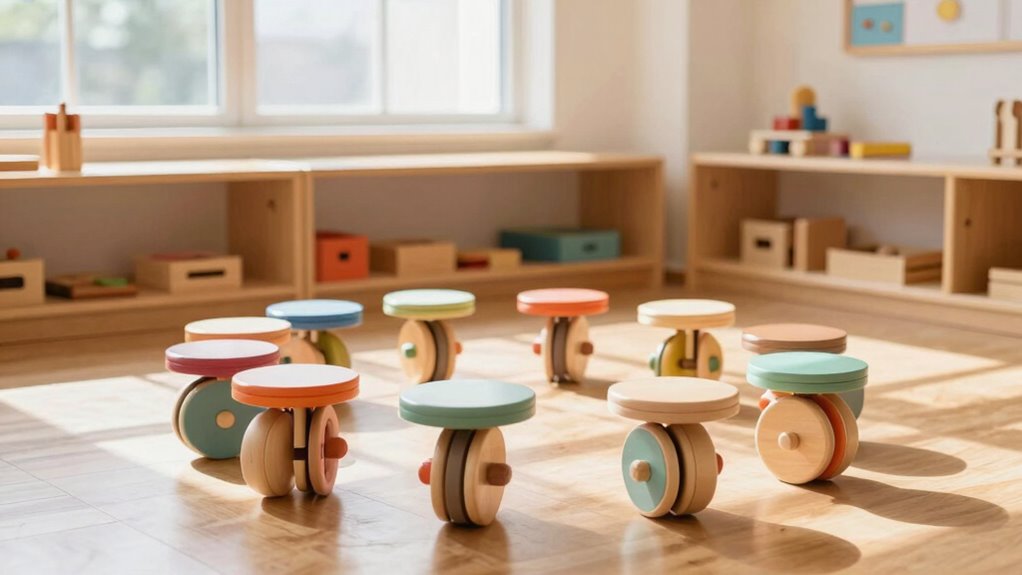
Have you ever wondered how to keep your child’s play environment engaging and educational? One effective way is by rotating large toys the Montessori way, without the constant need for rearranging the entire space. The key is to focus on intentional, thoughtful changes that stimulate your child’s curiosity and support their development. When you regularly introduce a curated selection of toys, your child is encouraged to engage in sensory exploration and independence building. Instead of overwhelming them with everything at once, you selectively present toys that challenge their senses and foster problem-solving skills.
Rotate toys intentionally to spark curiosity, support independence, and create a calming, engaging Montessori environment.
In a Montessori-inspired setup, you want to keep things simple and deliberate. By rotating large toys weekly or bi-weekly, you create a fresh environment that invites your child to explore anew. This doesn’t mean you need to move furniture or overhaul the room; it’s about swapping out a few toys or materials carefully stored away until their next turn. When your child sees new or different toys, their senses are stimulated—textures, shapes, colors—prompting sensory exploration. This variety keeps their mind engaged and helps develop their tactile and visual perceptions. Incorporating organized storage like labeled baskets or shelves makes it easier to swap out toys efficiently while maintaining a calm environment. Additionally, understanding child-led play helps ensure that the toys you rotate in truly meet your child’s evolving interests. Regularly rotating toys also supports the development of independent exploration and decision-making skills, essential components in Montessori education.
When it’s time for a rotation, remove the current toys and replace them with the new set, which you’ve pre-selected based on your child’s interests and developmental needs. This method minimizes disruption and maintains a calm, inviting environment. The goal isn’t to fill the space but to craft a rich, stimulating setting that evolves regularly, encouraging your child’s natural curiosity and independence. Regularly rotating toys also helps prevent overstimulation and keeps the play area calm and inviting, promoting focused engagement.
Montessori large toy storage baskets
As an affiliate, we earn on qualifying purchases.
As an affiliate, we earn on qualifying purchases.
Frequently Asked Questions
How Often Should I Rotate Large Montessori Toys?
You should rotate large Montessori toys every 2 to 4 weeks, keeping toy safety in mind. Regular rotation keeps your child engaged and prevents boredom, while also reducing clutter. As a parent, your involvement is key—observe which toys spark interest and which are neglected. This way, you can thoughtfully rotate toys, ensuring a safe, stimulating environment that promotes independence and exploration without constant rearranging.
Can Rotating Toys Improve a Child’s Focus?
Absolutely, rotating toys can sharpen your child’s focus like a magnifying glass on a tiny detail. It offers sensory stimulation and encourages visual exploration, which keeps their mind engaged and prevents boredom. When toys are fresh and interesting, your child stays attentive longer, developing concentration skills. Think of it as turning a kaleidoscope—each new view sparks curiosity and deepens focus, making playtime both fun and educational.
What Storage Solutions Work Best for Large Toys?
You should use sturdy storage containers designed for Toy organization to keep large toys tidy and accessible. Clear bins make it easy to see what’s inside, while stackable options save space. Label each container to encourage independent clean-up. Keep these storage solutions at child-friendly heights, so kids can easily access and put away their toys, promoting responsibility and maintaining an organized play area without constant rearranging.
How Do I Introduce New Toys Without Overwhelming My Child?
Imagine your child’s excitement when you introduce a new toy—it’s like revealing treasure! To avoid overwhelming them, carefully select one or two new toys at a time, keeping toy organization simple and accessible. Present each new toy with enthusiasm, explaining how it fits into their existing play. This encourages child independence, making the shift seamless and joyful. Keep rotations manageable, and your child will be keenly explore without feeling overwhelmed.
Are There Specific Montessori Principles to Follow During Rotation?
Yes, there are specific Montessori principles to follow during rotation. Guarantee your Montessori environment maintains toy accessibility, so your child can easily choose and engage with materials. Rotate toys gradually, introducing new ones one at a time to avoid overwhelming your child. Keep the environment orderly, with a limited selection of toys that align with their developmental stage, fostering independence and focus. This approach encourages exploration without constant rearranging.
Conclusion
By rotating your large toys the Montessori way, you’re like a wise gardener, carefully pruning and nurturing your child’s curiosity. Instead of a cluttered jungle, your space transforms into a well-tended garden where each toy blooms with new excitement. This gentle dance of change keeps your little explorer captivated, making playtime feel fresh and magical. So, keep the rhythm flowing, and watch your child’s imagination grow like a vibrant, unstoppable garden in full bloom.
Halloween Picks
halloween
As an affiliate, we earn on qualifying purchases.