

Stoplight sequencing games help you boost your child’s early logic skills by engaging them in arranging or identifying colors in order, which improves pattern recognition and prediction. Using bright red, yellow, and green cues, these activities make learning colorful and memorable while supporting visual understanding. They also strengthen fine motor skills through handling small objects like tokens or cards. With ongoing activities, you’ll find ways to adapt complexity and foster confidence—exploring more strategies can make learning even more fun.

Get baby and family essentials delivered free — and shop member deals
- Fast, free delivery on millions of items
- Access to Prime Big Deal Days deals on October 6–7
- Prime Video, Amazon Music and more included
Key Takeaways
- Uses vibrant stoplight colors to teach sequencing and pattern recognition in an engaging way.
- Incorporates visual cues like red, yellow, and green to enhance color recognition and pattern understanding.
- Integrates hands-on activities that develop fine motor skills and hand-eye coordination through object manipulation.
- Promotes language development by encouraging discussion of sequences and predicting next colors.
- Allows for scalable difficulty by adding shapes or numbers, supporting progressive learning and critical thinking.
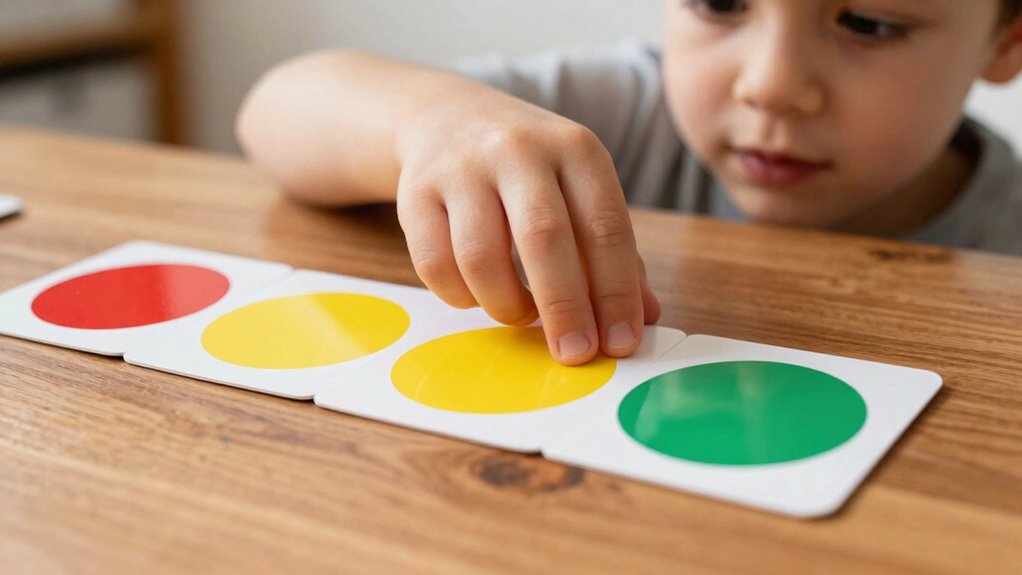
Stoplight sequencing games are a fun and effective way to help young children develop their early logic skills. These games introduce children to sequencing concepts by having them arrange or identify colors in a specific order, much like a traffic light. As they play, you’ll notice how they begin to understand patterns, predict what comes next, and improve their problem-solving abilities. The vibrant colors of the stoplight—red, yellow, and green—serve as visual cues that make learning engaging and memorable. When children practice identifying and sorting these colors, they enhance their color recognition skills, which are foundational for more advanced learning tasks.
Stoplight games boost early logic, pattern recognition, and color skills through fun sequencing activities.
Playing stoplight sequencing games also encourages the development of fine motor skills. As your child manipulates small objects, such as colored tokens or cards, they strengthen the small muscles in their hands and fingers. This coordination is essential for tasks like writing, drawing, and other daily activities that require precise hand movements. For example, when they pick up and place the colored pieces in the correct order, they practice grasping, pinching, and placing with control. These actions may seem simple, but they build the muscle memory needed for more complex fine motor tasks later on. Additionally, the act of sorting and aligning the colors helps improve hand-eye coordination, a skill that supports overall cognitive development. Incorporating visual cues into the game can further enhance a child’s ability to recognize and interpret patterns. Understanding cognitive development is crucial for appreciating how these activities contribute to overall learning. Engaging in these activities also promotes early learning by reinforcing foundational skills in a playful setting.
The game also offers opportunities for you to engage directly with your child, providing guidance and encouragement as they learn. You can ask questions like, “What color comes after yellow?” or “Can you find the red stoplight?” This interaction not only bolsters their understanding of sequencing but also boosts their language skills and confidence. As they become more familiar with the pattern, they’ll start to anticipate the next color, which is a fundamental step in developing early logical thinking. Repetition of these activities can also help children develop a strong foundation in pattern recognition, which is essential for many areas of learning. The repetitive nature of the game helps reinforce these concepts, making them easier to grasp and remember.
Furthermore, stoplight sequencing games are versatile and can be adapted to suit your child’s developmental level. You can start with just two colors or gradually introduce additional elements, like shapes or numbers, to increase complexity. This flexibility guarantees that your child remains challenged without feeling overwhelmed. Over time, these simple activities can lay the groundwork for more advanced cognitive skills, including pattern recognition, memory, and critical thinking. Incorporating biodiversity into learning activities can also foster an appreciation for the natural world and its patterns, enriching the educational experience. Ultimately, these games make learning both enjoyable and meaningful, setting a strong foundation for their future educational success.
stoplight sequencing game for kids
As an affiliate, we earn on qualifying purchases.
As an affiliate, we earn on qualifying purchases.
Frequently Asked Questions
What Age Group Benefits Most From Stoplight Sequencing Games?
You’ll find that preschoolers and early elementary kids benefit most from stoplight sequencing games. These games help improve their color recognition as they identify red, yellow, and green lights. They also boost motor coordination because kids practice moving and stopping in sequence. By engaging in these activities, children develop essential early logic skills while having fun, making them perfect for children around ages 3 to 6.
How Can Parents Modify the Game for Beginners?
Think of modifying the game like adjusting a recipe to suit your taste. You can simplify rules, use fewer steps, or add visual cues for easier understanding. Your active parental engagement makes a big difference, guiding your child gently through the game. By customizing the game to their level, you help build confidence and skills. Keep it fun and encouraging, turning learning into an exciting adventure tailored just for them.
Are There Digital Versions of Stoplight Sequencing Games?
Yes, there are digital adaptations of stoplight sequencing games available on various interactive platforms. You can find these games as apps for tablets and smartphones, or online games on educational websites. These interactive platforms make the game more engaging, allowing you to customize difficulty levels and track progress easily. Using digital versions helps children develop early logic skills in a fun, accessible way while giving you convenient tools to monitor their growth.
How Often Should Children Practice These Games?
You should have children practice stoplight sequencing games about 3 to 4 times a week, with each session lasting 10 to 15 minutes. This frequency supports steady skill progression without causing fatigue. Keep game durations appropriate to their attention span, gradually increasing complexity as they improve. Regular practice helps reinforce sequencing skills, enhances logical thinking, and builds confidence, making learning both effective and enjoyable for young children.
Can These Games Improve Overall Classroom Behavior?
Yes, these games can improve overall classroom behavior by acting as a guiding light, illuminating behavior management strategies. As you lead children through stoplight signals, they learn to recognize cues, regulate impulses, and develop social skills. The rhythm of these activities helps children internalize rules, fostering patience and cooperation, which ultimately creates a more harmonious classroom environment. This steady sequence encourages positive behavior, making learning more engaging and manageable.
Conclusion
Remember, practice makes perfect, and these stoplight sequencing games make learning fun and engaging. By encouraging your child to think critically and follow patterns, you’re helping build a strong foundation for future logic skills. Keep in mind, a little patience goes a long way—every step forward counts. As they say, “Rome wasn’t built in a day,” so enjoy the journey and celebrate each small victory along the way.
Fall Picks
fall essentials
As an affiliate, we earn on qualifying purchases.