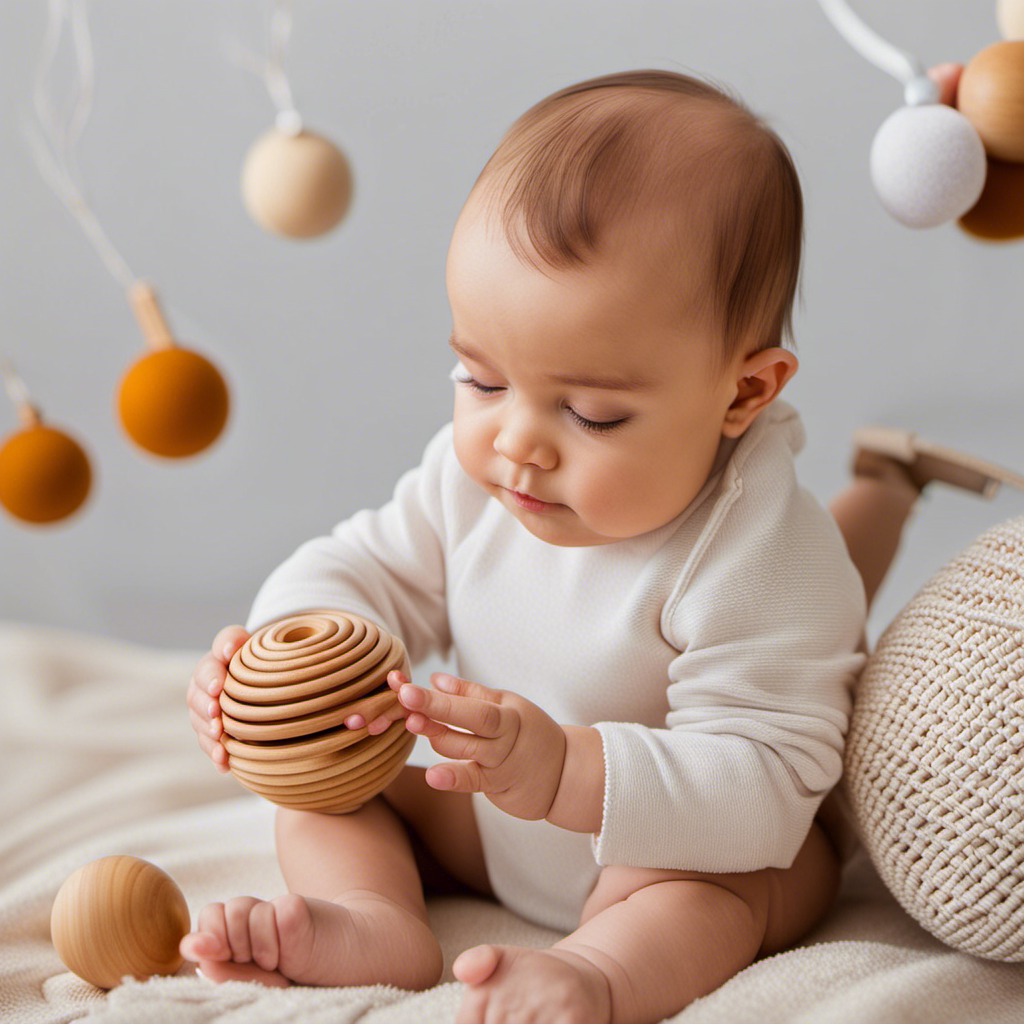
As a Montessori parent, pausing before intervening helps you truly understand your child’s interests, strengths, and challenges. It allows you to observe how they engage with their environment and identify what supports their growth. By taking a moment first, you can respond more thoughtfully and respectfully, fostering independence and confidence. This mindful approach creates a nurturing space for natural development. Keep exploring to discover more ways observation benefits your child’s progress.
Key Takeaways
- Pausing allows parents to understand the child’s interests and needs before taking action.
- Observation helps identify whether the child’s behavior signals frustration, curiosity, or developmental readiness.
- It supports mindful responses that respect the child’s autonomy and promote self-motivation.
- Waiting encourages a nurturing environment where children feel understood and confident to explore.
- It ensures interventions are targeted, relevant, and foster independence rather than impulsive reactions.
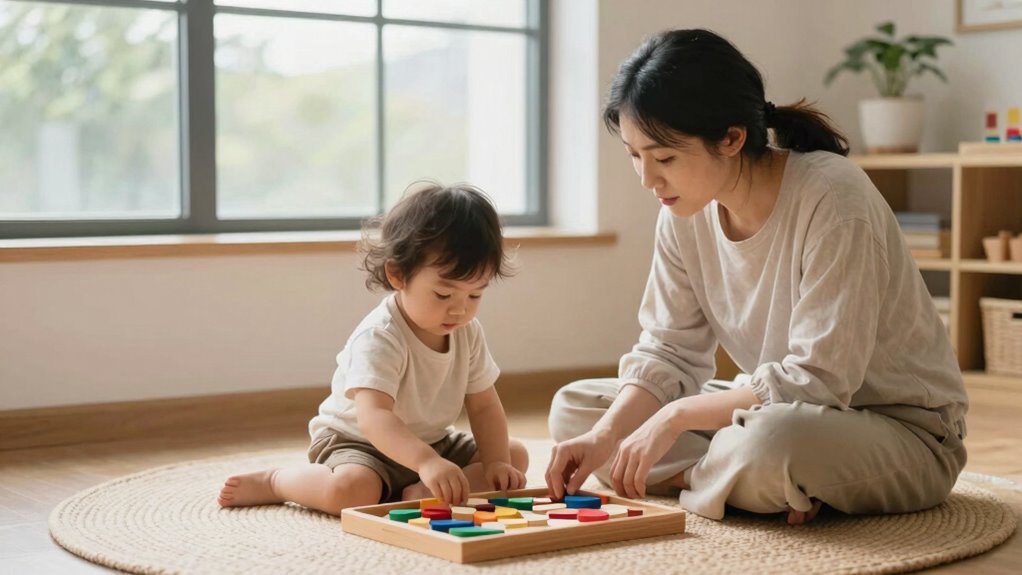
Have you ever wondered why experts emphasize the importance of observing before intervening? When it comes to supporting your child’s development, taking a moment to watch rather than rush in with solutions makes a significant difference. This approach aligns closely with Montessori principles, which prioritize child-led learning. Instead of imposing your ideas or expectations, you learn to recognize your child’s interests, strengths, and challenges through careful observation. This process helps you understand what truly engages your child and where they might need gentle guidance.
Observation allows you to assess the effectiveness of the environmental setup in your child’s space. In Montessori education, the environment is intentionally designed to foster independence and exploration. By observing how your child interacts with the materials and surroundings, you can identify which elements support their growth and which might need adjustments. For example, if your child consistently avoids a particular activity, it might be a sign that the setup isn’t appealing or accessible enough. On the other hand, if they’re deeply engaged, it confirms that the environment is encouraging their curiosity. Understanding child-led learning can help you create a more supportive atmosphere for your child’s growth. Additionally, paying attention to developmental stages can provide deeper insights into your child’s unique needs and interests. Recognizing that each child progresses through these stages at their own pace is essential for effective observation. Moreover, being aware of biodiversity in your child’s environment can inspire you to introduce natural elements that promote curiosity and exploration. Incorporating natural elements also aligns with the importance of environmental awareness, which fosters a sense of responsibility and wonder in children.
Pausing before intervening isn’t about doing nothing; it’s about being intentional with your responses. When you observe first, you gather valuable information that guides your next steps. Instead of rushing to correct a behavior or steer your child in a certain direction, you allow them space to explore and learn at their own pace. This approach respects their autonomy and promotes self-motivation. It also helps you develop patience and a deeper understanding of their developmental timeline, which varies from child to child. Developing this awareness can foster a more mindful parenting style, supporting your child’s natural growth.
Furthermore, observing your child’s reactions helps you fine-tune your interventions. If you notice they’re frustrated or disengaged, you can step in with targeted support, rather than generic advice. This ensures your help is meaningful and tailored to their current needs. It also nurtures their sense of independence because they feel understood and respected. Over time, this practice builds trust and encourages your child to become an active participant in their learning journey.
In essence, pausing to observe before intervening isn’t just a Montessori technique; it’s a mindful approach that fosters genuine growth. It’s about creating a nurturing environment where your child feels safe to explore, make mistakes, and develop confidence. By focusing on observation, you become a more intentional parent—one who truly understands and supports your child’s individual path, rather than rushing to fix every obstacle. This simple yet powerful shift in perspective can transform your relationship and your child’s learning experience.
Frequently Asked Questions
How Long Should Parents Observe Before Intervening?
You should observe your child for at least 10 to 15 minutes before intervening, allowing you to understand their emotional cues and support their developing independence. During this time, watch how they approach the task, whether they’re frustrated or engaged, and respect their natural learning process. Pausing helps you gauge if they need guidance or if they’re capable of solving problems on their own, promoting confidence and resilience.
What Signs Indicate a Need for Intervention?
Signs like persistent frustration, regression in skills, or refusal to engage signal a need for intervention. While parent patience is essential, these cues indicate developmental milestones might be delayed or misunderstood. You should intervene kindly and promptly, balancing observation with gentle guidance. Recognizing these signs helps you support your child’s growth effectively, ensuring they feel secure and understood during their learning journey.
Can Observation Delay Necessary Developmental Support?
Observation doesn’t delay necessary developmental support; instead, it guarantees you understand your child’s unique pace. By practicing patience, you can accurately gauge whether they’re meeting milestones or need help. Rushing in too early might cause unnecessary concern or intervention. Taking time to observe allows you to gather valuable insights, helping you support your child’s growth effectively and confidently, without jumping to conclusions too soon.
How Do You Balance Observation With Timely Action?
Did you know that 60% of behavioral cues signal emotional readiness? You should prioritize observation to understand your child’s needs, but act promptly when urgent signs appear. Balance is key: pause to recognize subtle cues, then respond quickly when behavior indicates a real concern. By trusting your observations, you guarantee your child receives timely support without rushing into interventions, fostering their emotional growth and development effectively.
What Tools or Methods Are Best for Effective Observation?
You can use tools like checklists and observation journals to effectively monitor your child’s progress. Pay attention to environmental cues that reveal their interests and developmental stage, fostering child-led learning. Engage in regular, focused observations without interrupting their natural activities. This approach helps you understand their needs better, allowing you to support their growth thoughtfully. Active listening and gentle note-taking enhance your ability to respond appropriately and nurture their independence.
Conclusion
By taking the time to observe before intervening, you allow your child’s natural development to unfold organically. This patience guarantees you’re guiding rather than forcing, much like tending a garden—you nurture what’s already sprouting instead of rushing to plant anew. As the saying goes, “A stitch in time saves nine,” emphasizing that careful observation now can prevent bigger issues later. Trust the process, and watch your child’s confidence and independence grow.