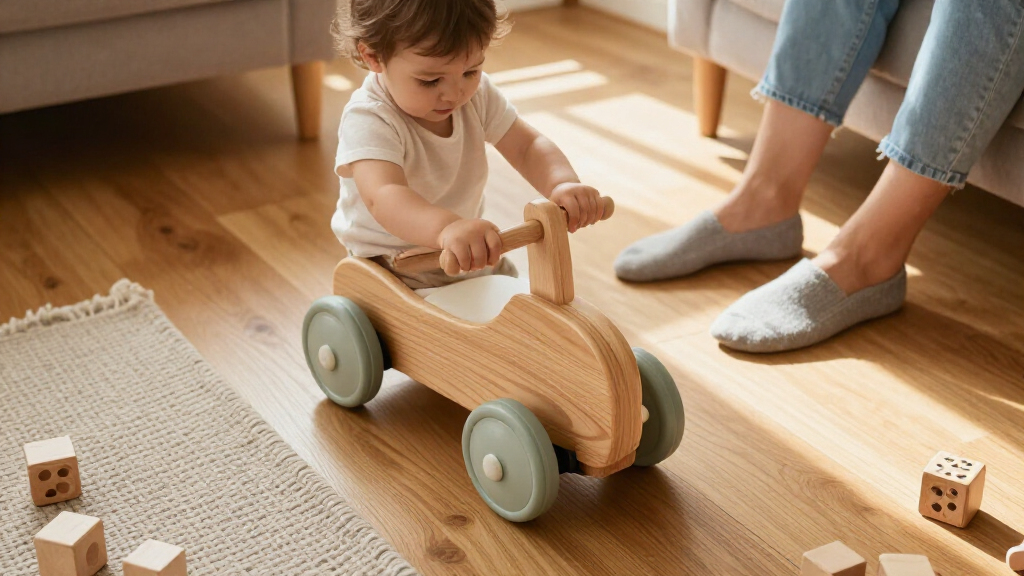

Use this guide to choose a wooden ride-on toy for a toddler, check that it suits the child and play space, and prepare it for a first supervised ride. It is for caregivers with no special equipment or toy-building experience. Allow 30-60 minutes to compare options, inspect the toy, and set up a clear area; the time needed to shop may vary.

Turn the school run and nap time into listening time
- Thousands of audiobooks, podcasts and originals
- Listen on your phone, tablet or Echo — also offline
- Cancel anytime

Hape Scoot Around Wooden Ride-On Bike for Toddlers, Green
- ✔ Brand: Hape
- ✔ Model: E0101
- ✔ Age range: 12 months to 5 years

B. toys Zippity Zebra Wooden Ride-On Toy
- ✔ Brand: B. toys
- ✔ Type: Indoor push ride-on toy
- ✔ Material: Fabric, metal, plastic, and wood
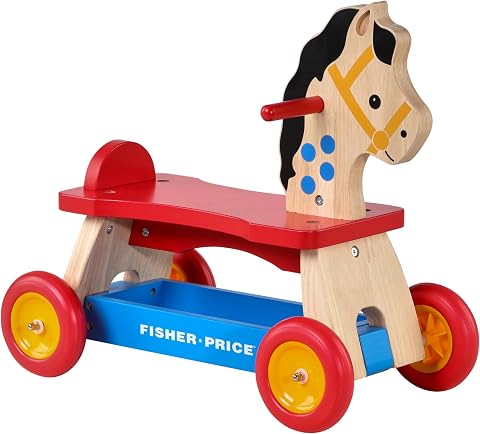
Fisher-Price Retro Wooden Pony Ride-On Toy
- ✔ Brand: Dynacraft
- ✔ Material: Wood
- ✔ Age range: 18 months to 3 years
Difficulty: Beginner | Time: 30-60 minutes for shopping, inspection, and setup
What You’ll Need
Tools & Materials:
- A tape measure
- A clean, level play area
- The toy’s assembly instructions and any supplied parts
- A damp cloth for cleaning
Knowledge:
- The toddler’s age, weight, and approximate inseam or seated leg reach
- How to supervise a child during play
Check the manufacturer’s stated age, weight limit, assembly directions, and care instructions before buying or using the toy. A ride-on is not a substitute for a stroller or other child restraint. Keep children away from stairs, roads, pools, and other hazards during play.
Hape Scoot Around Wooden Ride-On Bike for Toddlers, Green
For a toddler just starting to scoot, the Hape Scoot Around has the most beginner-oriented age guidance in this group: it is listed for ages 12 months to 5 years. Its four-wheel layout gives the toy a stable-feeling format for early mobility practice, while the rubberized wheels are intended to help protect indoor floors. Compared with the Zebra, it puts more emphasis on a straightforward push-bike shape than on a soft seat or freely turning wheels.Its water-based paint and non-toxic finishes are useful details for families considering materials and finish. The tradeoff is that the description specifically frames it for toddlers beginning to develop mobility, so older or more confident riders may outgrow its appeal before the stated upper age. Assembly is also indicated by an included tool, whereas the Zebra arrives ready to ride. We rank Hape first for its early-age fit and floor-conscious wheels, while noting the unusually low listed weight of 8 oz should be verified with the seller if portability matters.
Pros:
- Age range starts at 12 months, earlier than the other listed options.
- Four rubberized wheels are designed to help protect floors.
- Water-based paint and non-toxic finishes are specified.
- Supports practice with mobility, balance, and motor skills.
Cons:
- The description suggests it may lose usefulness as a child grows.
- An assembly tool is included, so some setup is expected.
- The listed weight of 8 oz appears unusually low for this type of wooden ride-on.
Best for: Families looking for a four-wheeled wooden ride-on for a toddler beginning to develop mobility, especially when floor-friendly wheels and finish details matter.
Not ideal for: Riders who want a soft seat, a fully assembled toy, or a model explicitly designed for older toddlers with more developed scooting skills.
Bottom line: We recommend the Hape for younger beginners who benefit most from its earlier age guidance and four-wheel format.
“We recommend the Hape for younger beginners who benefit most from its earlier age guidance and four-wheel format.”
B. toys Zippity Zebra Wooden Ride-On Toy
The Zippity Zebra is the most comfort-focused pick here. Its soft seat and sturdy handle give toddlers a defined place to sit and hold as they scoot, while 360-degree rotating wheels allow movement in multiple directions around a room. Compared with the Hape’s four rubberized wheels, the Zebra emphasizes turning freedom and a cushioned seat; compared with the Pony, it skips storage in favor of simpler, ready-to-use play.That convenience is a real distinction: the Zebra arrives fully assembled, so there is no setup step before play. Its limits are equally clear. It is designed for indoor use, and its maximum capacity is listed as 22.68 kg, below the Pony’s stated 40 lb capacity. At 9 x 17.5 x 12.75 inches, it is a compact option, but buyers should still consider available floor space and the child’s fit. We place it second because its comfort and turning range are compelling, while the Hape offers a younger starting age and floor-protective wheel description.
Pros:
- Soft seat and sturdy handle support seated scooting.
- 360-degree rotating wheels allow free movement indoors.
- Arrives fully assembled and ready to use.
- Compact listed dimensions suit indoor play areas.
Cons:
- Designed for indoor use.
- Maximum weight capacity is 22.68 kg.
- Does not include the under-seat storage offered by the Pony.
Best for: Families seeking an assembled indoor ride-on with a soft seat and wheels that allow toddlers to change direction easily.
Not ideal for: Families who need an outdoor-capable toy, a storage compartment, or a higher stated weight capacity than 22.68 kg.
Bottom line: We favor the Zebra for comfortable, ready-to-go indoor scooting when turning freedom matters more than storage or a broader capacity.
“We favor the Zebra for comfortable, ready-to-go indoor scooting when turning freedom matters more than storage or a broader capacity.”
Fisher-Price Retro Wooden Pony Ride-On Toy
The Retro Wooden Pony makes the strongest case for families who want a ride-on with a small storage feature. Its under-seat box gives toddlers a place to carry a few small toys during play, a practical difference from both the Hape and the Zebra. The listed 40 lb weight capacity is also higher than the Zebra’s 22.68 kg limit, though families should follow the product’s age guidance as well as its capacity.With a recommended range of 18 months to 3 years, this pony is less flexible for younger beginners than Hape, whose listed range starts at 12 months. It also has the narrowest stated age window in the group. Rounded edges, non-toxic finishes, and indoor floor-friendly wheels are useful design details, but the supplied description does not specify wheel material or a detailed finish standard. We rank it third because storage and capacity are appealing, yet its age range is more restrictive and it does not match the Zebra’s soft seat or the Hape’s earlier starting age.
Pros:
- Under-seat storage box holds small toys.
- Stated weight capacity is 40 lb.
- Rounded edges and non-toxic finishes are specified.
- Indoor floor-friendly wheels support indoor use.
Cons:
- Age range is limited to 18 months through 3 years.
- Does not list wheel material or a soft seat.
- The age window is narrower than Hape’s stated range.
Best for: Toddlers aged 18 months to 3 years whose families value a small onboard storage space and a stated capacity of 40 lb.
Not ideal for: Children under 18 months, riders expected to use a toy beyond age 3, or families who prioritize a soft seat or a clearly specified rubberized wheel design.
Bottom line: We choose the Pony when under-seat storage and its stated capacity matter most, provided the toddler fits its specific age range.
“We choose the Pony when under-seat storage and its stated capacity matter most, provided the toddler fits its specific age range.”
As an Amazon Associate we earn from qualifying purchases.
Before You Start
Decide where the toy will be used and measure the available route, including turning space. A toy intended for smooth indoor floors may not work well on gravel, grass, or uneven pavement. Do not use a toy with loose parts, sharp edges, cracks, or missing hardware. Follow product-specific safety instructions, since designs and age guidance vary.
Step-by-Step Instructions
Step 1: Set the child’s fit and use requirements
Write down the child’s age, weight, and leg reach while seated. Note whether the toy will be used indoors, outdoors, or in both settings, and how much storage space you have. Use these details to narrow the choices before comparing colors or decorative features.
Tip:Choose based on the manufacturer’s fit and weight guidance, rather than assuming that a toy will fit because it is labeled for toddlers.
Check: You have the child’s measurements and a clear idea of the surface and space where the toy will be used.
Step 2: Compare toy design and safety information
Read the product label and instructions. Check the recommended age and maximum weight, dimensions, assembly requirements, cleaning directions, and any warnings. Look for a stable base, smooth finished surfaces, secure wheels, and a seat that lets the child reach the floor comfortably. Confirm that the seller identifies the maker and product clearly.
Tip:Wood construction alone does not establish that a toy is safe. Check the whole design, finish, hardware, and maker’s instructions.
Check: The toy’s stated limits match the child, its design suits the intended surface, and you can access clear assembly and care instructions.
Step 3: Measure the route and turning space
Measure doorways, narrow passages, and the open area where the child will ride. Leave room to turn and stop without reaching stairs, furniture corners, cords, pets, or breakable objects. If the route includes a slope or a drop, choose another area.
Tip:For indoor use, check that wheels will not damage the floor and that the surface is not slippery. For outdoor use, avoid traffic, steep slopes, and rough ground.
Check: The play route is level, clear, and wide enough for the toy to turn with space around it.
Step 4: Assemble the toy as directed
Lay out the parts and compare them with the parts list. Assemble the toy on a flat surface in the order shown in the instructions, using only the supplied or specified hardware. Tighten fasteners as directed. Do not substitute screws or add accessories unless the maker approves them.
Tip:Keep small hardware out of children’s reach during assembly. Stop if a part is cracked, missing, or does not fit as shown; contact the maker or seller for guidance.
Check: The assembled toy matches the instructions, all required parts are present, and no fastener is visibly loose.
Step 5: Inspect and clean before play
Run your hand over accessible surfaces to check for splinters, rough spots, protruding fasteners, or sharp edges. Check that wheels turn as intended and remain attached, and that the seat and body show no cracks or wobbling. Wipe the toy with a damp cloth and let it dry before use. Follow the maker’s directions for cleaning products.
Tip:Do not sand, repaint, or apply a finish unless the maker’s care guidance allows it; changes can affect the surface or finish.
Check: The toy is dry, stable, and free of visible damage, rough edges, and loose hardware.
Step 6: Introduce the toy with close supervision
Place the toy on the prepared level surface. Stay within arm’s reach as the toddler sits down, holds the toy as designed, and places both feet on the floor. Let the child move slowly over a short, clear route. Help them stop and get off safely, and end play if they lose balance or the surface becomes unsafe.
Tip:Keep the first ride short and calm. Do not let the child ride near stairs, roads, pools, driveways, or other moving vehicles.
Check: The child can sit securely, move at a controlled pace, place feet down to stop, and get off with help as needed.
Step 7: Put the toy away and check it regularly
After play, wipe off dirt and store the toy in a dry place away from stairs and walkways. Before each use, look for loose wheels or fasteners, cracks, splinters, or other changes. Recheck the fit and product weight limit as the child grows, and follow the maker’s maintenance guidance.
Tip:Keep the instructions or a photo of them where caregivers can find them.
Check: The toy is stored securely, and you know what condition checks to repeat before the next ride.
Common Mistakes to Avoid
- Choosing a toy by appearance without checking fit or weight limits. — Compare the child’s age, weight, and leg reach with the maker’s stated guidance before buying.
- Using the toy on a slope, slippery floor, or cluttered route. — Prepare a level, clear area with enough room to turn and stop; supervise closely.
- Skipping assembly checks or replacing supplied hardware with a similar-looking part. — Follow the instructions and use only specified hardware. Stop and contact the maker if anything is missing or does not fit.
Troubleshooting
Problem: The toddler’s feet do not reach the floor comfortably.
Solution: Stop the ride and compare the child’s fit with the maker’s guidance. Choose a better-fitting model; do not add an unapproved cushion or raise the seat.
Problem: A wheel wobbles or a fastener loosens.
Solution: Take the toy out of use. Check the assembly instructions and tighten only as directed. Replace damaged or missing parts through the maker or seller before play resumes.
Problem: The toy is difficult to move on the intended surface.
Solution: Check the maker’s surface guidance and inspect the wheels for dirt or damage. Move play to a suitable smooth, level surface if permitted; do not force the toy over rough ground.
Problem: The child tips, slips, or cannot control the toy.
Solution: End the ride and check the fit, surface, and route. Clear obstacles and try again only when the child can sit securely and move at a controlled pace under close supervision.
What Success Looks Like
The toy matches the child’s size and the maker’s age and weight guidance. It is assembled according to its instructions, stable, clean, and free of visible damage or loose parts. The play area is level and clear. During a supervised first ride, the child can sit securely, move slowly, place their feet down to stop, and get off safely with help if needed.
Next Steps
Keep the manufacturer’s instructions and check the toy before each play session. Clean and store it as directed, and stop using it if you find damage or a loose part. As the child grows, review the toy’s stated limits and fit again. Contact the maker or seller for replacement parts or guidance specific to the model.
Frequently Asked Questions
What age can a child start using a wooden ride-on toy?
Follow the age and ability guidance for the specific model. A toddler should be able to sit securely and use their feet to move and stop, with an adult supervising closely. Ask the child’s healthcare professional if you have concerns about their readiness.
Can a toddler use a wooden ride-on toy outdoors?
Only if the maker permits outdoor use and the surface suits the toy. Use a level, clear area away from traffic, slopes, stairs, and water. Check the care instructions after outdoor play.
How do I know if the toy is the right size?
Compare the child’s age, weight, and seated leg reach with the product instructions. The child should be able to sit securely and place their feet on the floor as they move and stop. Do not modify the toy to compensate for a poor fit.
How often should I inspect the toy?
Check it before each use, especially the wheels, fasteners, seat, and accessible surfaces. Follow the maker’s schedule for any additional maintenance.