Choosing the right toy can feel like solving a puzzle, especially when the market is flooded with options that promise education, engagement, and endless fun. My goal with this roundup is to cut through the noise and highlight three standout products that define the current landscape of play. The Nex Playground Active Play System takes the top spot for its ability to get entire families moving without the clutter of controllers, making it a strong contender for active indoor play. Close behind, the PlayShifu Orboot Earth offers a unique blend of physical geography and digital augmented reality, perfect for visual learners who need more than just a static map. Finally, the ThinkFun Gravity Maze remains a timeless choice for parents who want to prioritize screen-free logic and spatial reasoning.

Turn the school run and nap time into listening time
- Thousands of audiobooks, podcasts and originals
- Listen on your phone, tablet or Echo — also offline
- Cancel anytime
The main tradeoff you will face is between digital interactivity and tactile simplicity. Do you want your child interacting with a screen to learn facts, or do you prefer a hands-on mechanical puzzle that builds critical thinking without batteries? This guide breaks down exactly who each toy serves, helping you decide which one aligns with your household values and your child’s current developmental stage.
Complete the kit


Key Takeaways
- The Nex Playground eliminates the need for handheld controllers, relying on body movement for a more active play experience.
- PlayShifu Orboot Earth bridges the gap between physical geography and digital learning through augmented reality overlays.
- ThinkFun Gravity Maze offers a completely screen-free logic puzzle that builds spatial reasoning through manual tower arrangement.
- Nex Playground requires a subscription for full game access, while the other two are one-time purchase models.
- Age suitability varies significantly, with Orboot targeting ages 4-10 and Gravity Maze designed for ages 8 and up.
| Nex Playground Active Play System for Kids and Families | 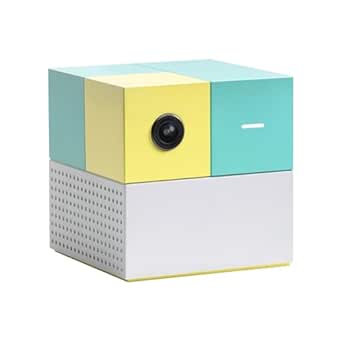 | Best Overall for Active Family Play | Number of Players: Up to 4 | Controller: No controller required | Included Games: Fruit Ninja, Starri, Whac-a-Mole, Go Keeper, Party Fowl | VIEW LATEST PRICE | See Our Full Breakdown |
| PlayShifu Orboot Earth Interactive AR Globe for Kids, Ages 4–10 |  | Best Educational Toy for Visual Learners | Brand: PlayShifu | Model: Shifu014 | Diameter: 10 inches | VIEW LATEST PRICE | See Our Full Breakdown |
| ThinkFun Gravity Maze Marble Logic Game |  | Best Screen-Free Logic Puzzle | Brand: ThinkFun | Age Range: 8+ | Included Components: Game grid, 9 towers, 3 marbles, 1 target piece, 60 challenge cards | VIEW LATEST PRICE | See Our Full Breakdown |
| toys of the year | Power Source | Age Range | Brand | Color |
|---|---|---|---|---|
| Nex Playground Active Play Sys | Corded electric | 5 and up | — | — |
| PlayShifu Orboot Earth Interac | — | — | PlayShifu | Blue |
| ThinkFun Gravity Maze Marble L | None | 8+ | ThinkFun | Multicolor |
More Details on Our Top Picks
Nex Playground Active Play System for Kids and Families
This system stands out because it reimagines how children interact with video games. Unlike traditional consoles that require a controller, the Nex Playground uses a built-in wide-angle camera to track body movements. This means kids are jumping, dodging, and swinging to play games like Fruit Ninja or Go Keeper. Compared to the PlayShifu Orboot, which requires a tablet or phone for interaction, the Nex system connects directly to a TV or projector via HDMI, keeping the focus on the big screen and physical space rather than a handheld device. It supports up to four players simultaneously, which is a significant advantage over the single-player focus of the Gravity Maze.
However, this convenience comes with a caveat. The full library of games is locked behind a Play Pass subscription. While five games are included, the true value proposition relies on ongoing access to new content. For families who prefer a one-time purchase, this recurring cost might be a deterrent. Additionally, because it relies on motion tracking, it requires sufficient open floor space, making it less ideal for cramped apartments compared to the compact Gravity Maze. The privacy-conscious approach is a strong selling point, as it does not store motion data in the cloud, which reassures parents wary of smart devices.
Pros:- No controllers required for gameplay
- Supports up to four players at once
- KidSAFE+ and COPPA certified for privacy
- Connects easily to TVs and projectors
Cons:- Requires a subscription for full game library
- Limited to indoor use
- Needs adequate open space for motion tracking
Best for: Families who want to encourage physical activity and social play without the mess of handheld controllers.
Not ideal for: Parents looking for a one-time purchase with no subscription fees or those with limited indoor floor space.
- Number of Players:Up to 4
- Controller:No controller required
- Included Games:Fruit Ninja, Starri, Whac-a-Mole, Go Keeper, Party Fowl
- Connection:HDMI
- Motion Tracking:Built-in wide-angle camera
- Memory Storage Capacity:64 GB
- Power Source:Corded electric
- Age Range:5 and up
- Safety:kidSAFE+ and COPPA certified
Our verdict“This pick makes the most sense for households that value active, screen-based family bonding and are comfortable with a subscription model.”
PlayShifu Orboot Earth Interactive AR Globe for Kids, Ages 4–10
The Orboot Earth occupies a unique niche by merging a physical object with digital augmentation. It is not just a globe; it is a gateway to over 1,000 facts about animals, cultures, and monuments. When you point a compatible device at the globe, the app overlays 3D animations and information, turning static geography into an interactive experience. This approach differs significantly from the Nex Playground, which focuses on reflexes and movement. The Orboot is more cerebral, encouraging curiosity and research. It is particularly effective for children who might find traditional maps boring but are captivated by technology.
However, the reliance on an app is its primary drawback. Unlike the Gravity Maze, which works entirely offline, the Orboot requires a charged tablet or smartphone and a stable internet connection for many of its features. If the device battery dies or the app crashes, the globe becomes just a plastic sphere. The plastic construction, while durable enough for home use, may not withstand the rough handling of a classroom environment as well as heavier materials. Still, the inclusion of a passport and stickers adds a layer of imaginative play that complements the digital facts, making it a well-rounded educational tool for the 4-10 age range.
Pros:- Combines physical globe with AR technology
- Over 1,000 facts, games, and quizzes
- Includes passport and stickers for imaginative play
- Suitable for home, homeschool, and classrooms
Cons:- Requires a separate tablet or phone for AR features
- Plastic construction may feel less premium
- Dependent on app stability and battery life
Best for: Children aged 4-10 who are curious about geography and enjoy interactive, tech-enhanced learning.
Not ideal for: Parents seeking a completely screen-free educational tool or those without access to a compatible tablet.
- Brand:PlayShifu
- Model:Shifu014
- Diameter:10 inches
- Weight:1200 g
- Material:Plastic
- Color:Blue
- Recommended Age:4–10 years
- Included Components:10-inch globe, booklet, sticker booklet, app, passport
- Warranty:1 year against manufacturer defects
Our verdict“This model is better suited to parents who want to use technology to enhance traditional learning rather than replace it.”
ThinkFun Gravity Maze Marble Logic Game
In a market increasingly dominated by screens, the Gravity Maze offers a refreshing return to tactile problem-solving. Players must arrange towers on a grid to guide marbles to a target, using logic and spatial reasoning. This stands in direct contrast to the Orboot Earth, which delivers information digitally. The Gravity Maze forces the child to physically manipulate the environment to solve the puzzle, which can reinforce learning through muscle memory and spatial awareness. It is a solo-focused game, though it can be adapted for collaborative play, unlike the Nex Playground, which thrives on group interaction.
The challenge curve is steep, with 60 cards ranging from beginner to expert. This longevity is a major pro, as the game remains engaging as the child’s skills improve. However, the age recommendation of 8+ is strict. Younger children, even those who love puzzles, may find the frustration of failed marble paths discouraging. It lacks the immediate feedback of a video game or the narrative depth of the Orboot app. It is a pure logic engine, which is excellent for developing specific cognitive skills but may not hold the attention of a child who prefers storytelling or high-energy action.
Pros:- 60 progressive challenges from beginner to expert
- Encourages spatial reasoning and problem-solving
- No batteries, screens, or apps required
- Durable components for repeated use
Cons:- Not suitable for children under 8
- Solo play focus limits social interaction
- Requires precise tower arrangement which can be frustrating
Best for: Children aged 8 and up who enjoy solitary, challenging logic puzzles and spatial reasoning tasks.
Not ideal for: Younger children under 8 or those who prefer social, multiplayer gaming experiences.
- Brand:ThinkFun
- Age Range:8+
- Included Components:Game grid, 9 towers, 3 marbles, 1 target piece, 60 challenge cards
- Model Number:44001006
- Color:Multicolor
- Unit Count:1
- Power Source:None
- Play Style:Solo or Collaborative
Our verdict“This option stands out for its ability to build critical thinking skills without any digital dependency.”

How We Picked
To curate this list, I evaluated toys based on their ability to sustain long-term engagement, the educational value they provide, and their ease of use in a typical home environment. I looked for products that offer more than just a novelty factor; I wanted items that could evolve with a child’s skills or provide a distinct type of play that screens alone cannot replicate. I also considered the setup process, as toys that require complex assembly or constant troubleshooting often end up in the back of the toy chest. The three products selected here represent distinct categories: active digital play, interactive educational tech, and analog logic puzzles. By comparing these distinct approaches, I aimed to provide a balanced view of what is currently available and what actually delivers on its promises.
| toys of the year | Power Source | Brand | Color |
|---|---|---|---|
| Nex Playground Active Play Sys | Corded electric | — | — |
| PlayShifu Orboot Earth Interac | — | PlayShifu | Blue |
| ThinkFun Gravity Maze Marble L | None | ThinkFun | Multicolor |
Factors to Consider When Choosing Best Toys Of The Year
Selecting a toy is rarely about finding the single ‘best’ item in a vacuum; it is about matching the toy’s mechanics to the child’s developmental needs and the family’s lifestyle. My buying guide focuses on three critical axes: engagement type, educational value, and logistical ease.Digital vs. Analog Engagement
The first decision is whether you want your child interacting with a screen. The Nex Playground and Orboot Earth are digital-first or digital-enhanced toys. They offer immediate feedback, vibrant graphics, and vast libraries of content that can keep a child engaged for hours. However, they require power, connectivity, and sometimes subscriptions. The Gravity Maze is purely analog. It requires no batteries or Wi-Fi, making it portable and always available. For parents trying to limit screen time, the Gravity Maze is the clear winner, but it demands more mental effort from the child to stay engaged without the dopamine hits of digital rewards.
Educational Focus: Active vs. Intellectual
Each toy teaches differently. The Nex Playground promotes physical coordination and reaction time. It is ‘educational’ in a kinesthetic sense, helping children understand body awareness and spatial timing. The Orboot Earth is explicitly academic, focusing on geography, culture, and facts. It is designed to supplement school learning or spark curiosity about the world. The Gravity Maze targets logic and engineering thinking. It teaches cause and effect through physical construction. If your goal is physical activity, choose Nex. If it is factual knowledge, choose Orboot. If it is problem-solving logic, choose Gravity Maze.
Space and Setup Requirements
Consider your living environment. The Nex Playground requires a TV or projector and, crucially, open floor space for the camera to track movements. It is not ideal for small apartments with cluttered rooms. The Orboot Earth needs a tablet or phone and a stable surface for the globe. It is relatively compact but requires the child to manage a second device. The Gravity Maze is the most space-efficient, fitting on a small table or floor mat. It has the lowest barrier to entry regarding setup, making it easy to pull out for a quick session of play.
Frequently Asked Questions
Does the Nex Playground require an internet connection to play?
Yes, the Nex Playground requires an internet connection for initial setup and to access its full library of games. While it has some built-in memory, the system relies on online connectivity to download updates and stream certain game content. This is a standard feature for most modern smart toys, but it is worth noting that it cannot function as a standalone offline device for its primary gaming experiences. Unlike the Gravity Maze, which works entirely offline, Nex needs a stable Wi-Fi signal to deliver the seamless, controller-free experience it promises.
Is the PlayShifu Orboot Earth compatible with all tablets and smartphones?
The Orboot Earth is designed to work with most modern iOS and Android devices, but compatibility is not universal. The app requires devices with specific camera capabilities and processing power to render the augmented reality overlays smoothly. Older or lower-end tablets may struggle with performance, leading to lag or tracking issues. Before purchasing, it is advisable to check the PlayShifu website for a list of tested and supported devices to ensure that your existing tablet will provide a smooth interactive experience with the globe.
Can the ThinkFun Gravity Maze be played by more than one person at a time?
While the Gravity Maze is primarily designed as a solo logic puzzle, it can be adapted for collaborative play. Multiple children can work together to solve a single challenge by discussing tower placements and testing marble paths as a team. However, it does not have built-in multiplayer mechanics like turn-taking or competitive scoring found in games like Nex Playground. The experience is more about shared problem-solving rather than simultaneous competitive play, making it a good choice for siblings who enjoy working together on a complex task.
What safety measures are in place for the Nex Playground’s camera?
The Nex Playground has been certified by kidSAFE+ and complies with COPPA regulations, which are strict standards for children’s online privacy. The system processes motion data locally on the device and does not store or transmit video images to the cloud for processing. This means that while the camera tracks movement to interpret game commands, it does not record or save footage of your home. This design choice addresses common parental concerns about smart devices in the living room, ensuring that privacy is maintained during active play sessions.
Is the Orboot Earth globe durable enough for classroom use?
The Orboot Earth is constructed from plastic, which makes it lightweight and portable but potentially less durable than glass or heavier composite globes. While it is designed to withstand normal handling at home or in a homeschool setting, frequent use in a busy classroom with many children might lead to wear and tear on the surface or the rotation mechanism. The manufacturer offers a one-year warranty against defects, but for high-traffic institutional use, a more rugged, non-interactive globe might be a more economical long-term choice.
Conclusion
Choosing the right toy from this lineup depends largely on what you want your child to get out of playtime. If you are looking to get your family moving and laughing together in the living room, the Nex Playground Active Play System is the strongest choice, provided you have the space and are okay with a subscription model. It offers a level of active engagement that traditional toys cannot match. For parents who want to blend education with technology without completely abandoning physical objects, the PlayShifu Orboot Earth is an excellent tool for sparking curiosity about the world, especially for children aged 4-10. Finally, if your goal is to develop critical thinking skills and you want to keep screen time to a minimum, the ThinkFun Gravity Maze is the best investment. It provides a deep, challenging experience that grows with your child, requiring nothing but their own logic and patience. Each of these three products represents a distinct philosophy of play, so consider your household’s daily routines and values before making your final decision.