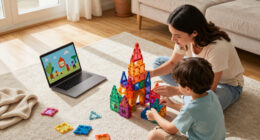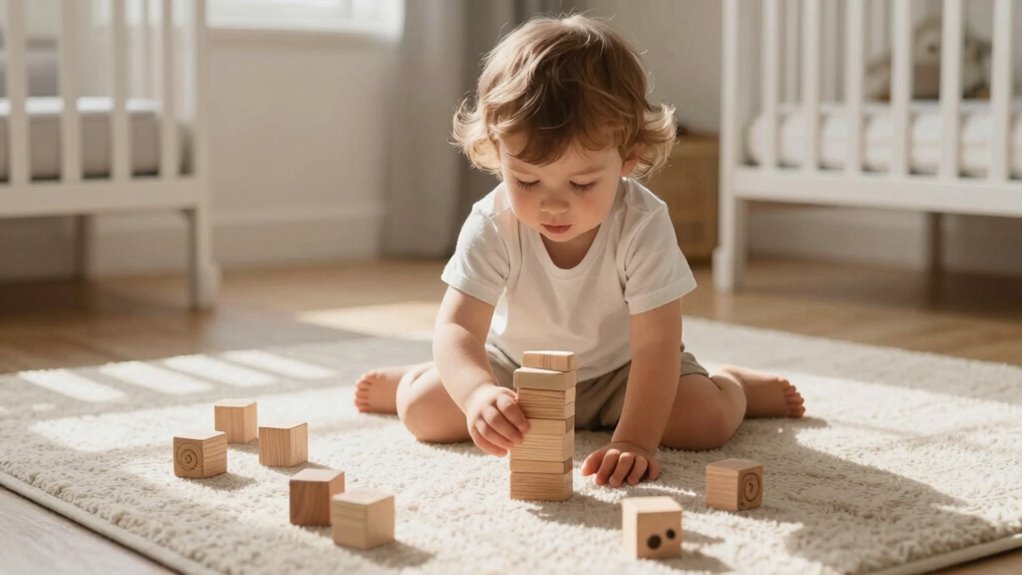

Fewer flashy toys help your child focus better during play by reducing distractions and overstimulation. Without bright lights and loud sounds, your child’s attention can stay on exploring, imagining, and problem-solving. This creates a calmer environment that encourages deeper engagement and sparks creativity. When children can concentrate on meaningful activities, they develop patience and important skills for school and life. Keep exploring how limiting stimulations can release their natural curiosity and focus.

Turn the school run and nap time into listening time
- Thousands of audiobooks, podcasts and originals
- Listen on your phone, tablet or Echo — also offline
- Cancel anytime
Key Takeaways
- Fewer flashy toys reduce sensory overload, allowing children to concentrate more fully on their activities.
- Simplified toys encourage imaginative play, fostering deeper cognitive engagement and problem-solving skills.
- Reduced distractions help children develop patience and sustain attention during longer, meaningful play sessions.
- Less overstimulation creates a calmer environment that promotes focus and emotional well-being.
- Fewer flashy toys support exploration of textures, colors, and patterns, enhancing sensory development and curiosity.
In today’s world of bright, flashy toys, kids often get distracted by flashing lights and loud sounds, which can hinder their ability to focus and use their imagination. These toys are designed to grab attention quickly, but they also contribute to digital distraction and sensory overload. When children are constantly exposed to overstimulating toys, their brains struggle to settle down, making it harder to concentrate on anything for more than a few moments. Instead of fostering creativity, these toys often encourage passive consumption, where your child simply reacts to sounds and lights rather than engaging actively with their environment.
Reducing the number of flashy toys can help your child develop deeper focus during play. Without the constant barrage of stimuli, they’re more likely to engage their senses in meaningful ways—thinking, imagining, and exploring. When children are surrounded by simpler toys, they’re encouraged to create stories, solve problems, and use their imagination rather than passively responding to external cues. This kind of play promotes concentration because the child isn’t overwhelmed by noise or flashing visuals, allowing their brain to relax and settle into a more focused state.
Simpler toys foster deeper focus, encouraging imagination and problem-solving without overwhelming sensory input.
Fewer flashy toys also mean fewer distractions, which can improve your child’s ability to stay engaged with a single activity. When the environment is calmer, it’s easier for them to immerse themselves in a task, whether it’s building with blocks, drawing, or playing pretend. This sustained attention helps develop skills like patience, problem-solving, and creativity. Your child learns to entertain themselves without constantly seeking external stimulation, which can lead to more meaningful and fulfilling play experiences. Additionally, fostering natural curiosity through simpler toys can encourage children to explore their environment more deeply and independently.
Moreover, limiting flashy toys encourages your child to use their senses in more nuanced ways. Instead of reacting to flashing lights and loud sounds, they start to notice textures, colors, and patterns. These sensory experiences are crucial for healthy brain development and help your child build a richer understanding of their environment. Sensory overload can hinder their ability to process and retain new information, so reducing overstimulation allows their brain to develop in a balanced way. Without overwhelming sensory input, they can better process and integrate new information, making their playtime more focused and educational.
In addition, research shows that overstimulation from digital and sensory overload can hinder a child’s ability to concentrate over time. By choosing fewer flashy toys, you’re providing a more balanced environment that supports healthy brain development and enhances their capacity for sustained attention. This balanced approach can also help reduce anxiety and improve overall emotional well-being, as children feel less overwhelmed by their surroundings. Without overwhelming sensory input, they can better process and integrate new information, making their playtime more focused and educational.
In essence, choosing fewer flashy toys isn’t about depriving your child of fun; it’s about creating an environment that nurtures their ability to concentrate, imagine, and explore deeply. By minimizing digital distraction and sensory overload, you give your child the space to develop skills that will serve them well in school and life. Sometimes, less truly is more when it comes to nurturing a child’s natural curiosity and focus.
simple wooden building blocks for kids
As an affiliate, we earn on qualifying purchases.
As an affiliate, we earn on qualifying purchases.
Frequently Asked Questions
How Do Children Develop Creativity With Simpler Toys?
You help children develop creativity with simpler toys by encouraging open-ended exploration, allowing them to imagine and create freely. These toys foster sensory engagement, helping kids explore textures, shapes, and colors beyond fixed functions. When you let children invent stories or build with basic objects, they strengthen their problem-solving skills and imaginative thinking. This deep focus on play promotes genuine creativity, making their experiences richer and more meaningful.
Are There Age Groups That Benefit More From Minimal Toys?
You’ll find that younger children, especially toddlers and preschoolers, benefit most from toy simplicity, as it encourages imagination and focus. Older children also gain from minimal toys, which foster creativity and problem-solving skills. Age-specific benefits show that simple toys reduce overstimulation and allow kids at different stages to explore their interests deeply. By choosing age-appropriate, simple toys, you help children develop essential skills without distraction, promoting meaningful, focused play.
How Can Parents Encourage Imaginative Play Without Flashy Toys?
You can encourage imaginative play without flashy toys by organizing simple, open-ended toys and limiting screen time. Set up dedicated toy organization spaces that make it easy for your child to choose and put away toys, fostering independence. Encourage activities like storytelling, art, or role-playing using everyday objects. Reducing screen time allows your child to explore their imagination more deeply, creating richer, more meaningful play experiences.
What Are Some Examples of Effective Non-Flashy Toys?
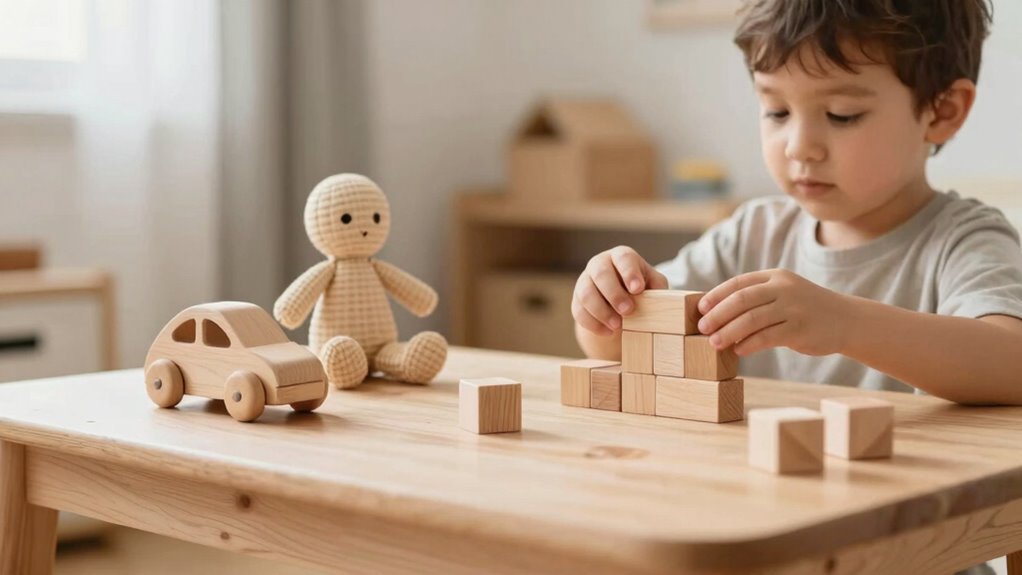
Simple wooden blocks and handcrafted dolls stand out as effective non-flashy toys. Unlike flashy electronic gadgets, these toys emphasize durability and stimulate sensory development through textures and shapes. Their understated design encourages imaginative play, fostering creativity without distraction. You’ll find that they last longer and promote deeper engagement, helping your child develop fine motor skills and problem-solving abilities, all while enjoying a more meaningful, focused play experience.
How Does Reduced Stimulation Impact a Child’s Social Skills?
Reduced stimulation can positively impact your child’s social skills by minimizing sensory overload, allowing them to better focus on interactions. When there’s less chaos and distraction, they can develop emotional regulation more effectively, helping them manage feelings during social exchanges. This calm environment encourages deeper conversations, patience, and empathy, fostering stronger relationships. As a result, your child learns to navigate social situations with confidence and understanding, building essential social skills over time.
Conclusion
You might think that fewer flashy toys mean less excitement, but in reality, it encourages you to focus more deeply on play. Without constant distractions, your child can build better concentration, creativity, and problem-solving skills. Some may worry that simple toys are boring, but often, it’s the simplicity that sparks imagination. So next time, opt for fewer toys—your child’s focus and development will thank you for it.
Halloween Picks
halloween
As an affiliate, we earn on qualifying purchases.