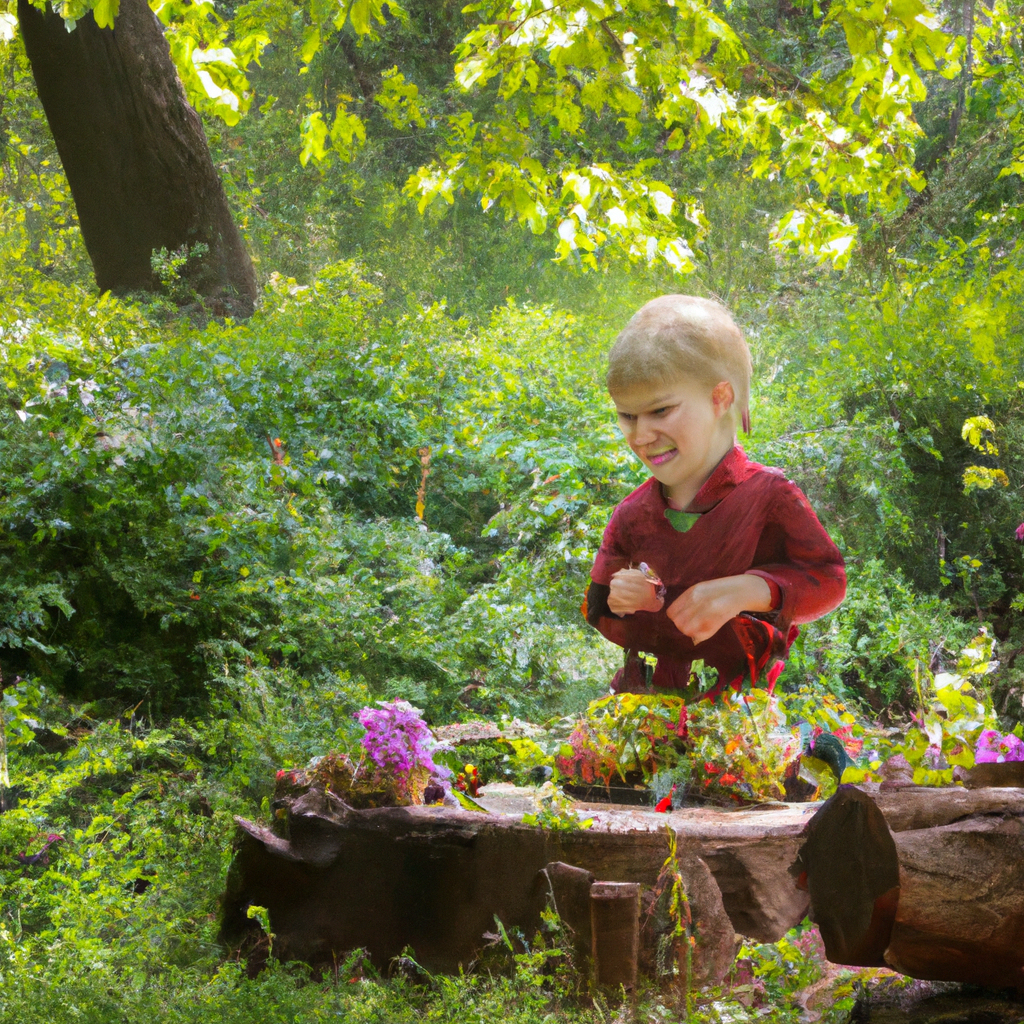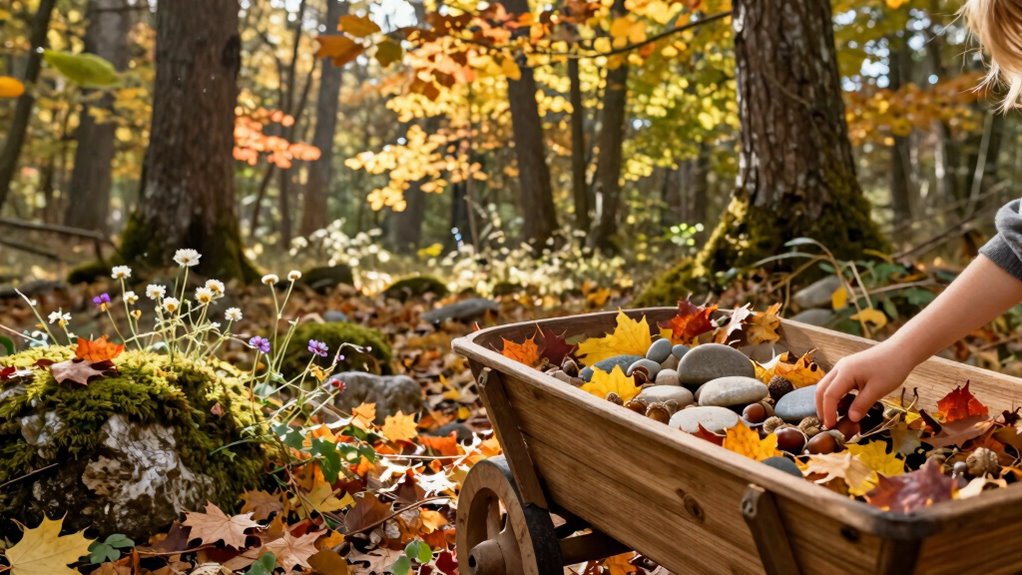

Wagon walks and nature collecting offer a Waldorf-inspired way to enhance outdoor experiences. As you explore with children, encourage sensory engagement by observing textures, sounds, and smells, and let them gather colorful natural treasures. Incorporate storytelling and mindfulness to deepen their connection with nature. Turn these outings into magical journeys that nurture imagination and curiosity. To discover more ways to enrich your outdoor rituals, keep exploring what these mindful activities can bring to your everyday adventures.

Turn the school run and nap time into listening time
- Thousands of audiobooks, podcasts and originals
- Listen on your phone, tablet or Echo — also offline
- Cancel anytime
Key Takeaways
- Wagon walks transform outdoor exploration into imaginative adventures, fostering creativity and a deeper connection with nature.
- Sensory activities like touching, listening, and smelling enhance awareness and curiosity during nature collecting.
- Collecting natural treasures encourages mindfulness, observation, and storytelling, enriching Waldorf-inspired outdoor routines.
- Integrating storytelling with sensory exploration nurtures wonder, imagination, and environmental appreciation.
- Nature-based activities like collecting and mindful observation deepen outdoor engagement and foster patience and respect.
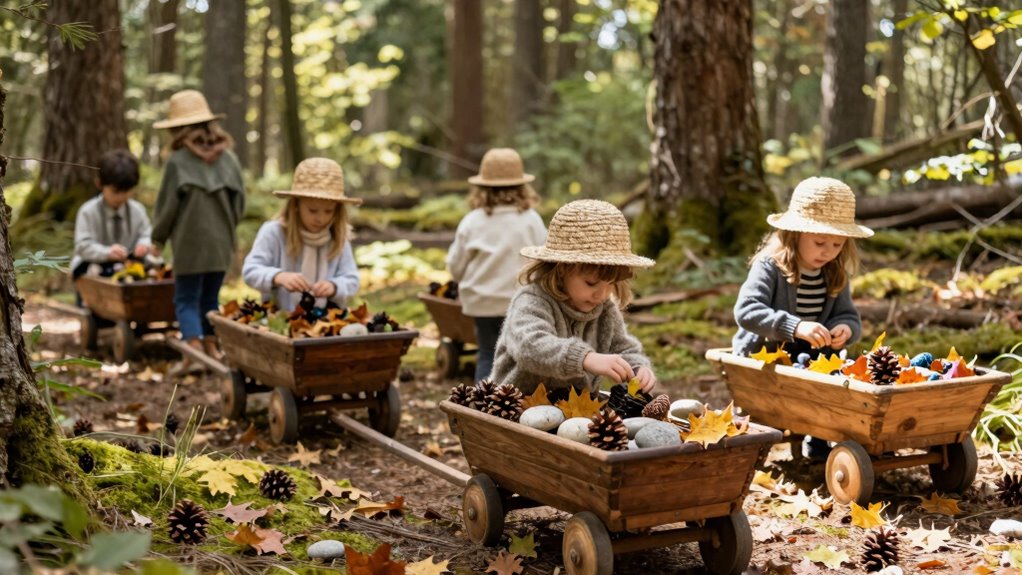
Wagon walks offer a delightful way to explore the outdoors and gather natural treasures. As you push your wagon along winding paths, you become a storyteller, weaving imaginative tales inspired by what you see, hear, and feel. This isn’t just a walk—it’s a chance to spark creativity through storytelling that brings the natural world to life. You can encourage your child to invent stories about the leaves fluttering in the breeze, animals they might encounter, or the mysterious shapes in the clouds. This creative storytelling turns an ordinary walk into a magical adventure, fostering a deeper connection with nature and nurturing their imagination.
Wagon walks ignite imagination and deepen connection with nature through storytelling and sensory discovery.
At the same time, wagon walks are perfect for sensory exploration. As you move through the landscape, you notice the textures of bark, the smoothness of stones, and the softness of moss under your feet. You might ask your child to pay attention to the sounds—the rustling leaves, birdcalls, or the gentle hum of insects. Touching different natural objects, smelling fragrant flowers, or feeling the coolness of water in a stream immerses you in sensory experiences that heighten awareness and curiosity. Incorporating sensory awareness can further enhance these experiences, creating a more mindful connection with nature. Recognizing and appreciating the natural features around you can also foster a sense of environmental appreciation.
Carrying a collection of natural treasures in your wagon makes the walk even more meaningful. You can gather colorful leaves, interesting pinecones, smooth stones, or delicate flowers. As you collect, talk about the shapes, colors, and textures, turning each find into a story or a lesson. This process encourages mindfulness and appreciation for the small details that often go unnoticed. The act of collecting becomes a gentle meditation, inviting children to slow down and observe their surroundings carefully. It also creates opportunities for later creative projects, like making nature collages or simple crafts, which extend the joy of the outdoor experience. Incorporating mindfulness practices can deepen the connection and enhance the overall experience of your outdoor adventures, helping children develop patience and attentiveness.
Wagon walks and nature collecting are about more than just observing; they’re about engaging actively with the environment. By blending creative storytelling with sensory exploration, you foster a sense of wonder and respect for the natural world. This Waldorf-friendly outdoor ritual emphasizes mindfulness, imagination, and discovery, making each walk a memorable journey. When you combine these elements, you turn an ordinary outing into a meaningful adventure that nurtures your child’s curiosity, creativity, and connection with nature—an experience that enriches both body and soul. Additionally, incorporating nature-based activities can deepen their appreciation and understanding of the environment around them.
Waldorf outdoor exploration wagon
As an affiliate, we earn on qualifying purchases.
As an affiliate, we earn on qualifying purchases.
Frequently Asked Questions
How Can I Adapt Wagon Walks for Different Weather Conditions?
To adapt wagon walks for different weather, you should prioritize weather preparedness and dress appropriately with seasonal clothing. In cold weather, bundle up in layers, hats, and gloves to keep everyone warm. During rain or snow, use waterproof gear and tarps to protect the wagon and supplies. For hot days, bring sun hats, plenty of water, and light clothing. Adjust your pace and route based on conditions to guarantee a safe, enjoyable experience.
What Safety Precautions Should I Take During Outdoor Nature Collecting?
You should supervise children closely during outdoor nature collecting, emphasizing wild plant identification and insect safety. Teach them to avoid touching unknown plants or insects, and use tools like magnifying glasses for closer inspection. Remind kids to wash hands afterward to prevent any potential irritants or toxins. Always be aware of the environment, and make certain everyone wears appropriate clothing and footwear to stay safe in varying weather conditions.
How Often Should Wagon Walks Be Incorporated Into a Routine?
Think of wagon walks as your child’s daily scroll through nature’s digital gallery. You should incorporate them weekly, adjusting for seasons to maximize sensory engagement. In spring, explore blooming flowers; in fall, gather colorful leaves. Seasonal adjustments keep the experience fresh and meaningful. Regular wagon walks foster a deeper connection with nature, spark curiosity, and support sensory development, making outdoor time both educational and delightful.
Are There Specific Age Groups That Benefit Most From Wagon Walks?
You’ll find that preschoolers and early elementary children benefit most from wagon walks, as they’re perfect for age-specific exploration and fostering developmental benefits. During these outings, your child develops gross motor skills, sensory awareness, and curiosity about nature. As they grow, you can adapt the activity to match their evolving interests and abilities, ensuring the experience remains engaging and supportive of their developmental journey.
How Can I Encourage Children to Observe and Respect Nature During Collectings?
You might think children won’t naturally respect nature, but you can foster this by encouraging respectful observation through nature journaling. Lead by example, gently guiding them to observe without picking or disturbing plants and animals. Ask open-ended questions, like “What do you notice?” This helps kids connect deeply with their surroundings, developing empathy and appreciation. With patience and consistent modeling, they’ll learn to cherish and protect the natural world.
Conclusion
By embracing wagon walks and nature collecting, you open the door to countless learning adventures. These outdoor rituals foster curiosity, connection, and a love for the natural world, all while nurturing your child’s development. Remember, a journey of a thousand miles begins with a single step—so don’t wait to start exploring. With each outing, you’re planting seeds for a lifetime of wonder, proving that sometimes, the simplest activities are the most meaningful.
Halloween Picks
halloween
As an affiliate, we earn on qualifying purchases.