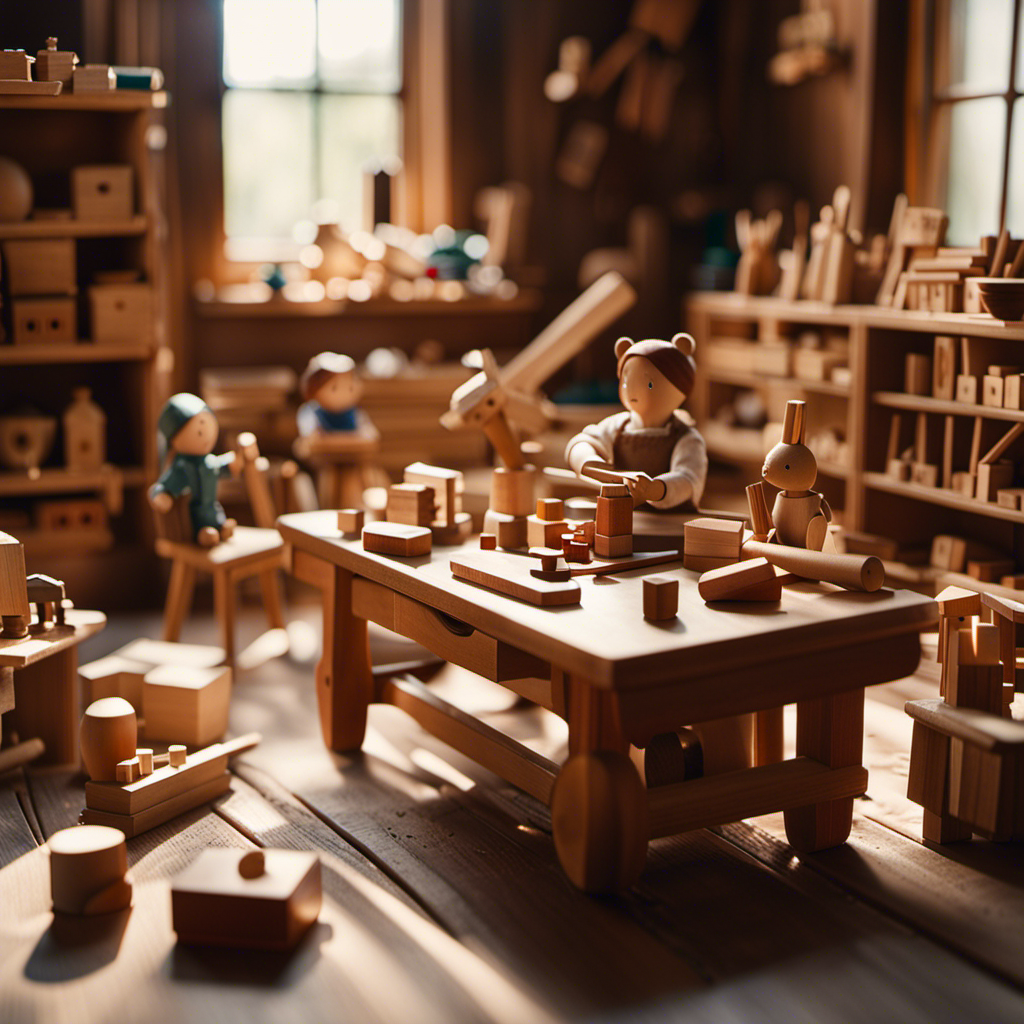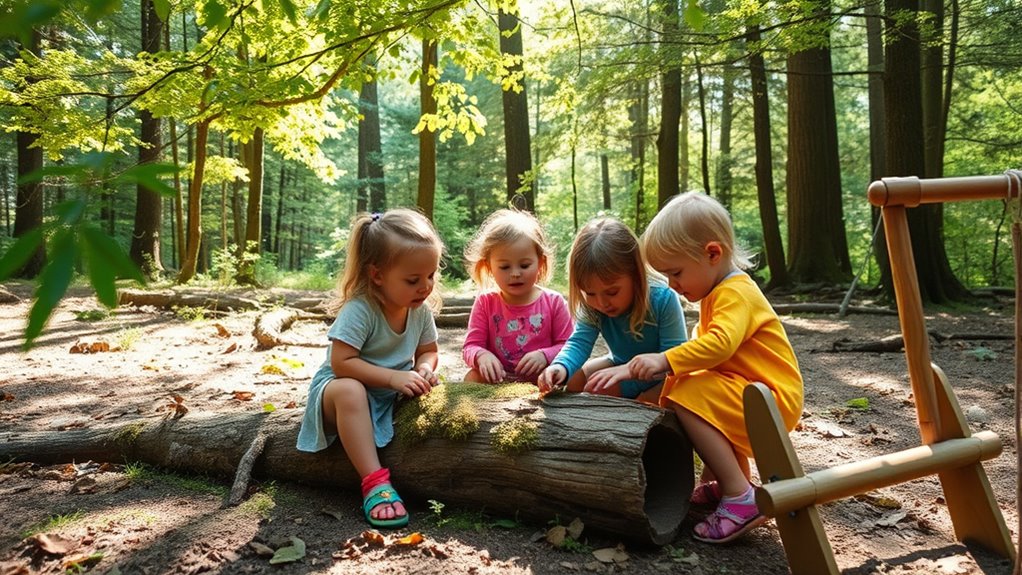

To embrace Nature Play the Waldorf Way, encourage your child to explore outdoors freely, engaging their senses with natural materials like leaves, twigs, and stones. Incorporate seasonal stories to deepen their understanding of nature’s cycles and foster imagination. This approach nurtures creativity, fine motor skills, and a respectful curiosity about the environment. Keep exploring, and you’ll discover how these activities enrich your child’s emotional and cognitive growth through meaningful outdoor adventures.

Turn the school run and nap time into listening time
- Thousands of audiobooks, podcasts and originals
- Listen on your phone, tablet or Echo — also offline
- Cancel anytime
Key Takeaways
- Emphasize unstructured, sensory-rich outdoor activities to foster imagination and a deep connection with nature.
- Use natural materials like leaves, twigs, and stones for crafting to develop fine motor skills and curiosity.
- Incorporate seasonal stories to teach children about nature’s cycles and cultural traditions.
- Connect storytelling with hands-on crafts to create meaningful, sensory experiences that deepen understanding of the environment.
- Promote outdoor exploration that nurtures creativity, respect for nature, and awareness of seasonal changes.

Nature play the Waldorf way invites children to explore the outdoors through unstructured, sensory-rich activities that nurture their imagination and connection to the natural world. When you let kids engage freely with their environment, they develop a deep sense of wonder and respect for nature. One way to do this is by encouraging forest crafts, where children gather natural materials like leaves, twigs, stones, and pinecones to create art and objects. These crafts aren’t just about making pretty things—they help children develop fine motor skills, patience, and an appreciation for the textures and shapes found in nature. As they select and assemble materials, they learn to observe closely and appreciate the details, fostering their innate curiosity. Incorporating seasonal stories into outdoor activities further deepens children’s understanding of nature’s cycles and cultural traditions associated with each time of year. In addition to crafting, seasonal stories serve as a *crucial* part of outdoor exploration. When you tell stories rooted in the changing seasons, you connect children to the rhythms of nature and the cultural traditions tied to each time of year. For example, in autumn, you might recount tales of harvest festivals or woodland creatures preparing for winter. During spring, stories about blooming flowers and baby animals can inspire awe and excitement. These stories help children understand the seasonal cycles and see themselves as part of the natural world’s ongoing story. They also spark their imagination as they picture the scenes, characters, and adventures that unfold through the seasons. Blending forest crafts with seasonal stories allows children to immerse themselves in nature’s beauty and symbolism. As they collect materials for their crafts, you can weave in stories that highlight the significance of each element—like the healing properties of certain leaves or the symbolism of acorns. This creates a meaningful, sensory-rich experience that ties their hands-on activities to the stories you share. When children hear about the changing seasons and then create art inspired by those stories, they form stronger emotional and cognitive connections to nature. This approach nurtures their creativity while reinforcing an understanding of the natural world’s cycles.
natural materials outdoor craft kit for kids
As an affiliate, we earn on qualifying purchases.
As an affiliate, we earn on qualifying purchases.
Frequently Asked Questions
How Does Waldorf Nature Play Support Emotional Development?
You might wonder how outdoor play influences emotional development. Engaging in nature play helps you build emotional resilience by facing challenges in a supportive environment. It also fosters self-awareness as you explore and connect with the natural world. Through these experiences, you learn to manage emotions, develop confidence, and gain a deeper understanding of yourself. This nurturing outdoor exploration encourages your emotional growth in a meaningful, holistic way.
What Safety Precautions Are Recommended During Outdoor Exploration?
When you plan outdoor exploration, prioritize safety by conducting a thorough risk assessment to identify potential hazards. Always guarantee kids wear appropriate protective gear like helmets, gloves, and sturdy shoes. Supervise their activities closely, and set clear boundaries to keep them safe. Regularly check the play area for dangers such as sharp objects or unstable surfaces. These precautions help create a safe environment where kids can explore confidently and enjoy nature.
Can Urban Environments Effectively Facilitate Waldorf Outdoor Activities?
You can effectively facilitate Waldorf outdoor activities in urban environments by addressing urban challenges like limited green space. By integrating small gardens, parks, and natural elements into city settings, you create opportunities for children to explore nature. You encourage outdoor play with simple, natural materials and design activities that utilize available green spaces, helping kids connect with nature despite urban constraints. This fosters their curiosity and appreciation for the natural world.
How Do Outdoor Activities Align With Waldorf Curriculum Goals?
Imagine a gentle breeze whispering stories through the trees—outdoor activities naturally align with Waldorf curriculum goals by fostering hands-on learning and imagination. You can incorporate forest crafts and seasonal storytelling, helping children connect with nature’s rhythms. These activities nurture creativity, observation, and emotional growth, creating a harmonious balance between playful exploration and educational development. By engaging with the outdoors, you support holistic learning that nurtures the child’s mind, body, and spirit.
What Are Simple Ways to Incorporate Nature Play at Home?
You can easily incorporate nature play at home by engaging your kids in simple garden activities like planting flowers or vegetables, which teach responsibility and patience. Encourage nature crafts, such as making leaf rubbings or arranging rocks, fostering creativity. These activities connect children with the outdoors, promote exploration, and develop their appreciation for nature, all while fitting seamlessly into your daily routine.
Conclusion
As you watch your kids embrace outdoor exploration, you realize that nature’s surprises often come when you least expect them. Perhaps it’s the way a leaf catches sunlight just right or how a curious bug leads to a new discovery. These spontaneous moments remind you that Waldorf-inspired outdoor play isn’t just about planning—it’s about letting nature surprise you and your children, creating memories that flourish when you least expect them.
Halloween Picks
halloween
As an affiliate, we earn on qualifying purchases.