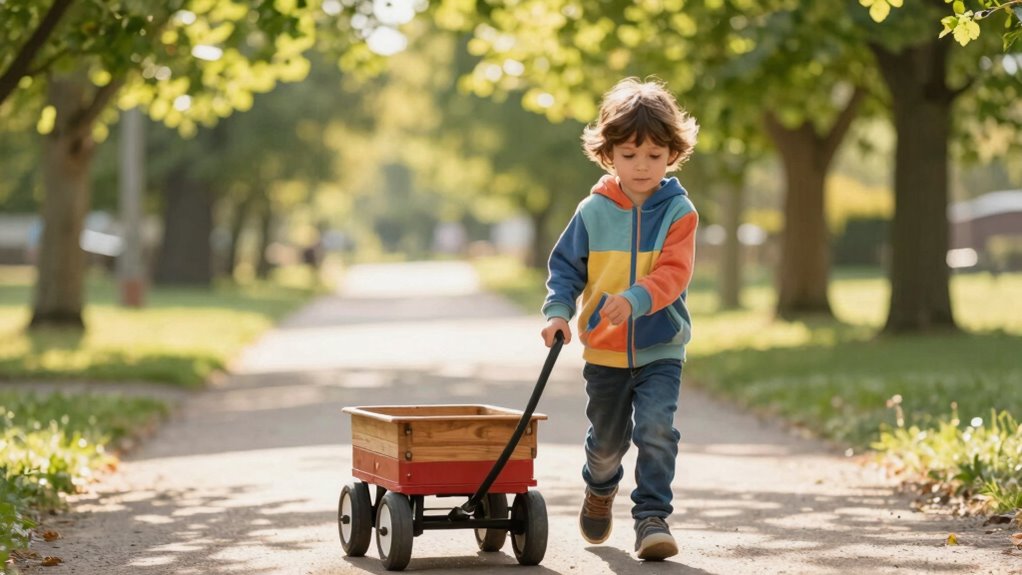

Wagon pulling offers a calming, rhythmic movement that helps you children soothe their nervous system and regain focus. It provides gentle physical input without overwhelming, making it ideal for sensory regulation. This activity supports development of coordination, strength, and body awareness while giving children a chance to explore and feel grounded. Whether indoors or outdoors, wagon pulling is simple and adaptable. If you keep exploring, you’ll discover more ways this activity can support your child’s sensory needs.

Turn the school run and nap time into listening time
- Thousands of audiobooks, podcasts and originals
- Listen on your phone, tablet or Echo — also offline
- Cancel anytime
Key Takeaways
- Provides calming, rhythmic movement that helps soothe the nervous system and reduce sensory overload.
- Offers gentle proprioceptive input to promote body awareness and self-regulation.
- Facilitates physical activity that can burn excess energy and promote focus.
- Can be easily adapted for indoor or outdoor environments to meet individual needs.
- Supports children in feeling grounded and ready to engage after sensory overload or anxiety.
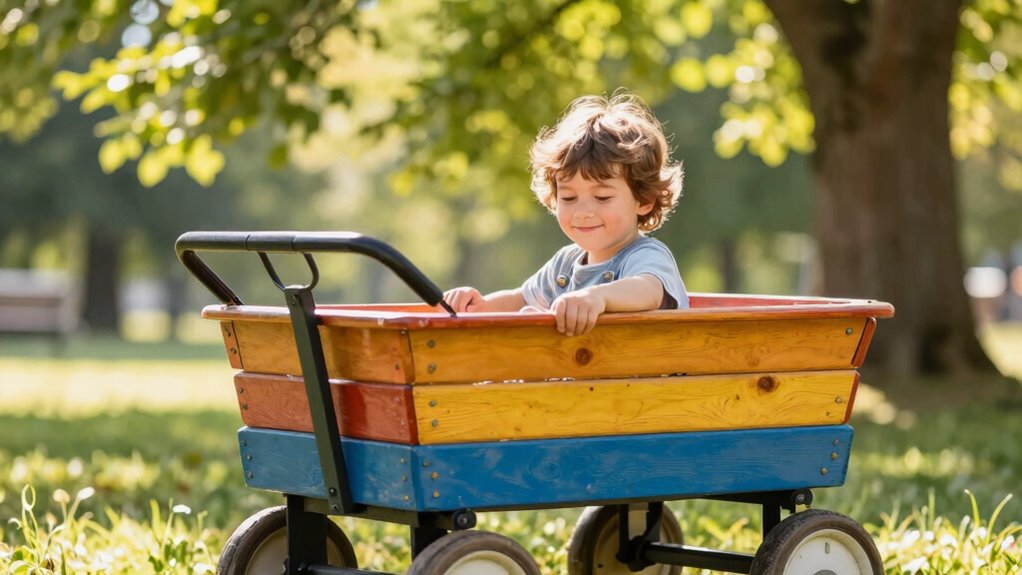
When children feel overwhelmed or overstimulated, a sensory break can make all the difference, and wagon pulling offers a simple yet effective way to provide that relief. Whether you’re indoors or outside, this activity helps kids regulate their sensory input and regain focus. Wagon pulling is versatile, making it a great option for indoor activities on rainy days or outdoor adventures in the sunshine. It provides gentle physical movement that can calm a child down, especially when they’re feeling anxious or overwhelmed.
Wagon pulling offers a simple, calming activity to help children regulate sensory input indoors or outdoors.
In indoor settings, you can incorporate wagon pulling into your routine by using a sturdy wagon or cart. You might set it up in a playroom or garage, filling it with soft blankets or favorite toys to make it more inviting. As you pull the wagon around the room or down a hallway, your child gets a calming, rhythmic movement that helps soothe their nervous system. This activity encourages sensory input without overwhelming the child, making it ideal for moments when they need a quick reset. Plus, it’s easy to modify—adding music or counting steps can make it more engaging or structured for your child’s needs.
When you venture outdoors, wagon pulling becomes an even more enriching experience. You can explore parks, neighborhoods, or trails, turning a simple activity into an outdoor adventure. The fresh air and natural surroundings stimulate the senses in different ways, helping your child process sensory input more effectively. Pulling a wagon over uneven ground or up small hills provides additional proprioceptive input, which is especially beneficial for children seeking or needing deep pressure and movement. It can be a fun way for kids to burn off excess energy, while also giving their nervous system a chance to reset. The outdoor setting also offers opportunities for other sensory activities, like feeling different textures or listening to nature sounds, enhancing the overall calming effect. Incorporating sensory processing differences awareness can help tailor the activity to meet your child’s specific needs more effectively.
Whether indoors or outdoors, wagon pulling helps children develop coordination, strength, and body awareness, all while providing the sensory input they crave. Engaging in sensory-based activities like wagon pulling can also support children in becoming more aware of their bodies and sensations, which is particularly beneficial for children with sensory processing differences. The activity is simple enough to fit into daily routines or special outings, making it a practical tool for managing sensory overload. It encourages movement, exploration, and calmness in a natural, accessible way. You can tailor the activity to your child’s preferences, making it a reliable go-to whenever they need a quick sensory reset. Ultimately, wagon pulling is a straightforward activity that offers a powerful way to help children feel grounded, balanced, and ready to engage again.
sturdy children's wagon for sensory activities
As an affiliate, we earn on qualifying purchases.
As an affiliate, we earn on qualifying purchases.
Frequently Asked Questions
How Do I Start a Wagon Pulling Activity Safely at Home?
To start a wagon pulling activity safely at home, choose a sturdy wagon based on the selection guidelines—look for a low, stable design with secure handles. Incorporate creative safety tips like checking for sharp edges, ensuring the area is clear of obstacles, and supervising closely. Begin slowly, encouraging your child to pull gently while maintaining constant supervision, so the activity stays fun and safe.
What Are Signs a Child Benefits From Wagon Pulling?
Imagine your child as a ship steering through stormy seas. If they seem calmer, more focused, and display less sensory overload, they’re likely benefiting from wagon pulling. You’ll notice improved emotional regulation, fewer meltdowns, and increased willingness to engage. These signs show that the activity helps them reset, grounding their emotions like a ship finding calm waters. Keep observing; it’s a gentle way to support their emotional journey.
Can Wagon Pulling Be Used for Children With Specific Sensory Needs?
Yes, you can use wagon pulling for children with specific sensory needs. It supports sensory integration by providing proprioceptive input, which helps children regulate their sensory systems. Additionally, pulling a wagon can enhance motor development by strengthening muscles and improving coordination. This activity offers a calming, engaging way for children to reset and better manage their sensory responses, making it a valuable tool in sensory-friendly routines.
How Long Should a Sensory Wagon Pull Session Last?
You should aim for about 10 to 15 minutes of sensory wagon pulling, as it’s enough to boost sensory integration and support motor development without overstimulating. Keep an eye on your child’s cues—if they seem tired or overwhelmed, it’s time to stop. This activity acts as a breath of fresh air, helping them reset and regain focus, making it a valuable tool in their sensory toolbox.
Are There Age Restrictions for Wagon Pulling Activities?
Age restrictions for wagon pulling activities depend on the child’s size, strength, and safety considerations. Usually, it’s suitable for preschoolers and early elementary children, but always guarantee they can sit securely and hold on properly. You should also monitor the activity closely to prevent accidents. For older or smaller children, adjust the activity or choose alternative sensory breaks to match their age appropriateness and safety needs.
Conclusion
Incorporating wagon pulling as a sensory break can truly make a difference—over 70% of children with sensory processing challenges report feeling more focused and calm afterward. It’s a simple, engaging activity that helps reset their nervous system and improve concentration. So, next time your child seems overwhelmed, consider pulling them on a wagon—you might just give them the calming boost they need to face the rest of their day with confidence.
Fall Picks
fall essentials
As an affiliate, we earn on qualifying purchases.