Moving play is essential for developing your visual tracking skills, which help you smoothly follow objects, scan text, and stay focused. When you engage in activities like running, jumping, or ball play, your eyes coordinate better with your brain, improving your ability to process visual information. These movements strengthen neural pathways critical for learning and coordination. Keep exploring to discover more about how movement boosts your overall skills and brain health.

Turn the school run and nap time into listening time
- Thousands of audiobooks, podcasts and originals
- Listen on your phone, tablet or Echo — also offline
- Cancel anytime
Key Takeaways
- Moving play naturally develops eye tracking skills through dynamic, coordinated movements like running, jumping, and ball activities.
- Effective visual tracking supports reading, writing, and overall academic success by improving focus and information processing.
- Eye movements are closely linked to brain function, with movement activities enhancing neural pathways for visual-motor integration.
- Movement-based activities strengthen hand-eye coordination, essential for tasks like catching, copying, and writing.
- Incorporating movement play fosters holistic growth by improving visual skills, physical coordination, and cognitive development.
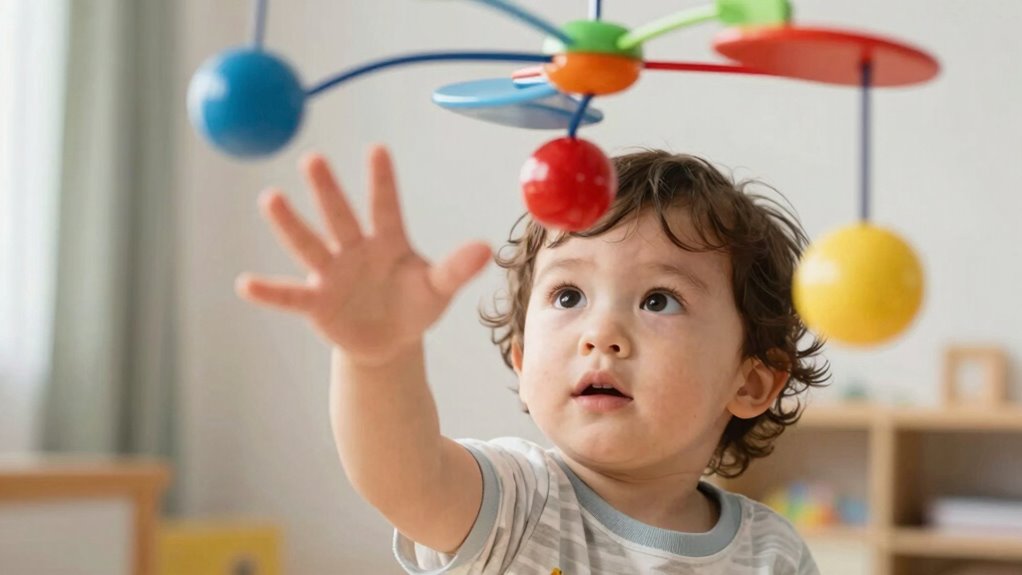
Visual tracking skills are essential for your child’s development because they enable smooth, coordinated eye movements that support reading, writing, and overall learning. When your child can follow a moving object effortlessly, they develop strong eye coordination, which is the foundation for many academic and everyday skills. This ability isn’t just about seeing; it’s about how their eyes work together to process visual information accurately and efficiently. Good eye tracking allows your child to smoothly scan a page of text, follow a ball during play, or track a moving object without losing focus. These skills are crucial for developing hand-eye integration, where visual input is seamlessly connected with physical actions. When hand-eye coordination is strong, your child can catch a ball, write neatly, or copy shapes and letters more effectively.
Moving play naturally encourages the development of these skills because it involves dynamic, multi-directional movements that challenge the eyes and body to work together. When your child runs, jumps, or plays with balls and other moving objects, their eyes constantly adjust to track motion, improving their ability to coordinate eye movements with physical actions. This active engagement helps strengthen neural pathways responsible for eye tracking and visual-motor development, making these skills more automatic over time. Playing in outdoor environments or engaging in activities like swinging, climbing, or chasing adds variety and complexity, further stimulating visual-motor development. Additionally, engaging in such activities promotes neural pathway development that supports visual-motor integration. Recognizing the importance of visual-motor skills can motivate parents and educators to incorporate more movement-based activities into daily routines.
Furthermore, understanding how eye movements are connected to overall brain function can help emphasize the importance of visual processing and its role in learning and physical coordination. You may notice that children who engage in frequent moving play tend to develop better focus and visual processing skills because their eyes are regularly practicing smooth pursuit and saccadic movements—quick jumps from one point to another. These movements are vital for reading, as they help your child move smoothly from word to word and line to line without losing their place. Additionally, moving play helps integrate visual information with motor responses, enabling your child to act quickly and accurately on what they see. This process supports not just academic success but also confidence in physical activities and social interactions. In fact, such active movement can even contribute to improved brain connectivity that enhances overall cognitive functioning.
Products Worth Considering

LEGO Boost Creative Toolbox 17101 Fun Robot Building Set and Educational Coding Kit for Kids

LEGO Icons Tranquil Garden Building Set – Japanese Zen Garden DIY Kit for Adults, 10315

LEGO Art Hokusai The Great Wave Building Set (31208)
As an affiliate, we earn on qualifying purchases.
Frequently Asked Questions
How Early Can Children Develop Visual Tracking Skills?
You can see children develop visual tracking skills as early as 2 to 3 months old. During this time, their eye coordination improves, allowing them to follow moving objects. Engaging in moving play helps strengthen focus improvement, which is essential for developing better visual tracking. As they grow, their ability to smoothly track objects continues to improve, supporting overall visual development and coordination necessary for reading and other tasks.
Can Visual Tracking Issues Affect Handwriting Development?
Imagine a child struggling to write because their eye coordination and hand-eye synchronization aren’t developing properly. Visual tracking issues can indeed affect handwriting development, making it hard to follow lines or form letters smoothly. This challenge can cause frustration, lowering confidence. When eyes don’t smoothly track moving objects or text, handwriting becomes inconsistent. Addressing visual tracking skills early helps improve eye coordination, supporting better handwriting and boosting your child’s confidence and academic success.
Are There Specific Activities to Improve Visual Tracking at Home?
Yes, you can improve visual tracking at home with indoor exercises and DIY activities. Try activities like following a moving target with your eyes, such as tracing a finger or a small ball, or playing simple games like “I Spy” that encourage tracking moving objects. Use colorful books or flashcards to practice focusing on moving images. These fun activities help strengthen eye muscles and enhance visual tracking skills effectively.
How Does Outdoor Play Influence Visual Tracking Development?
Outdoor play, like nature observation and ball games, considerably boosts your child’s visual tracking skills. When they watch moving leaves or follow a ball’s trajectory, they practice tracking objects smoothly. Nature observation encourages focused, detailed viewing, while ball games require quick eye movements and coordination. These activities make learning fun and natural, helping your child develop strong visual tracking abilities essential for reading, writing, and everyday tasks.
When Should I Seek Professional Help for Visual Tracking Concerns?
Think of your child’s vision like a lighthouse beam—if it flickers or struggles to stay steady, it’s time to seek professional help. You should consider a professional assessment if visual tracking concerns persist despite outdoor play and activities. Early intervention can open up therapy options that strengthen their skills. Don’t wait; addressing these issues promptly guarantees your child’s visual journey stays bright and on course.
Conclusion
By nurturing your child’s visual tracking skills through playful movement, you’re helping them develop essential coordination and focus. Imagine their eyes smoothly following a ball or a butterfly’s flutter—how empowering that moment can be! Isn’t it amazing how simple, active play can shape their learning and confidence? When you prioritize moving play, you’re opening the door for your child to explore, learn, and succeed with joyful ease.