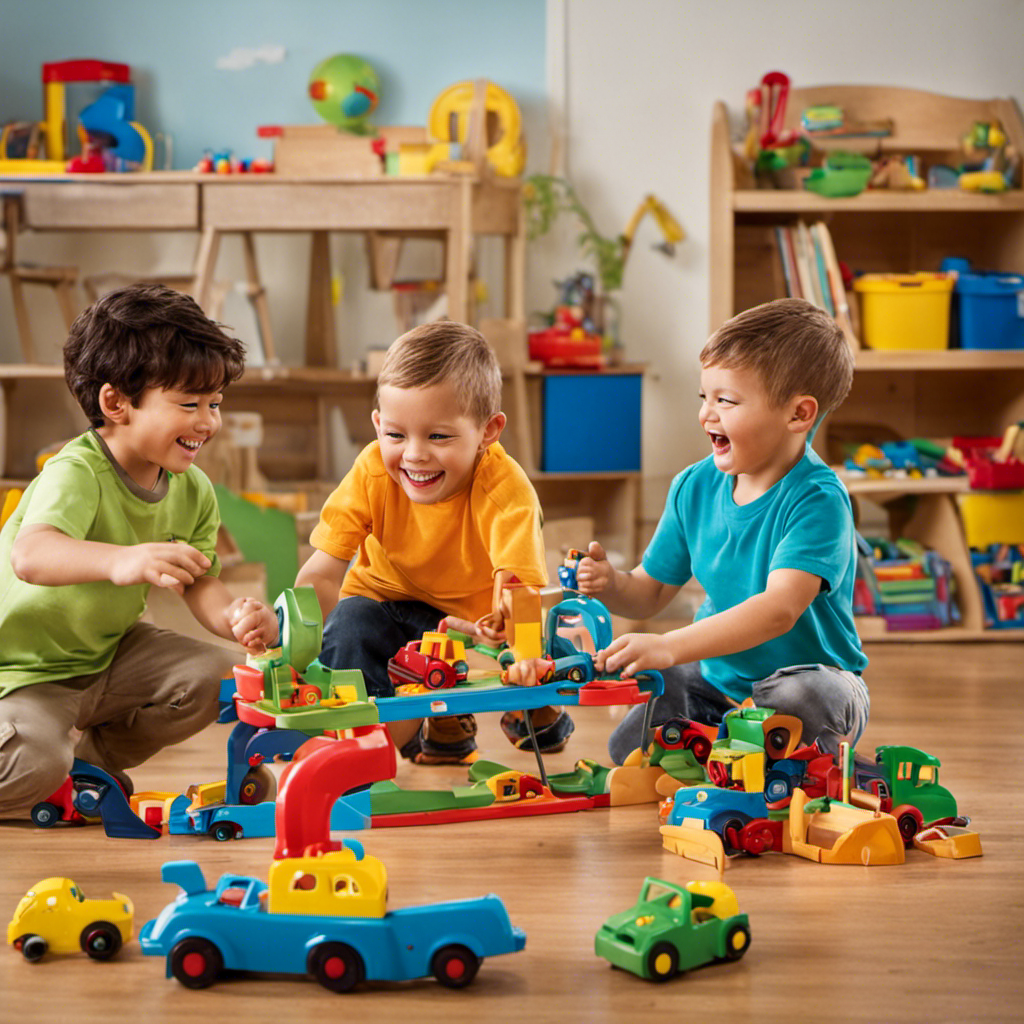
Creating a science corner with wheels and ramps is perfect for preschoolers because it offers hands-on fun while teaching key physics concepts. Kids can push cars down ramps, change angles, and see how speed and distance vary, building their understanding of cause and effect. Adding motorized vehicles introduces energy transfer and propulsion. Designing roller coasters encourages creativity and exploration of gravity and motion. Keep exploring to discover even more ways to make science exciting for young learners.

Get baby and family essentials delivered free — and shop member deals
- Fast, free delivery on millions of items
- Access to Prime Big Deal Days deals on October 6–7
- Prime Video, Amazon Music and more included
Key Takeaways
- They offer hands-on, engaging ways for preschoolers to explore physics concepts like motion and energy transfer.
- Incorporating motorized vehicles enhances understanding of propulsion and encourages critical thinking.
- Building a roller coaster station fosters creativity and demonstrates gravity, inertia, and energy conservation.
- Ramps and wheels connect scientific principles to real-world applications, promoting active experimentation and observation.
- Integrating environmental themes emphasizes sustainability and ecological responsibility alongside physics learning.
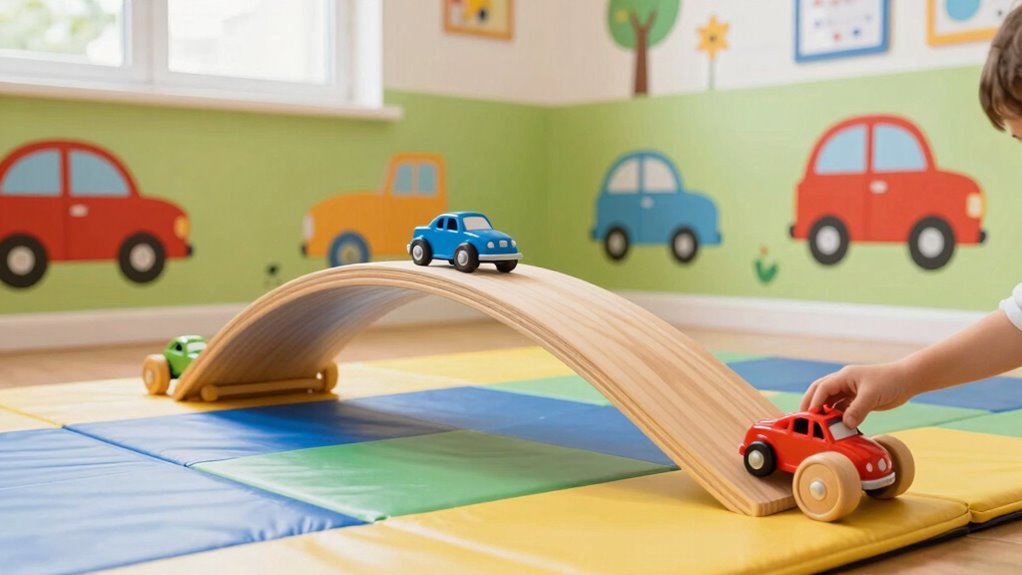
Setting up a preschool science corner with wheels and ramps offers a hands-on way for young children to explore basic physics concepts. When you introduce motorized vehicles and roller coaster design, you give kids the chance to see how movement and gravity work in real life. These simple tools help children understand cause and effect, motion, and energy transfer while having fun. As they experiment with different ramp angles, they learn how slope impacts speed and distance, building an intuitive sense of physics that forms the foundation for future scientific learning.
Exploring physics through ramps and motion builds curiosity and foundational scientific understanding in young children.
Incorporating motorized vehicles into your science corner can make the learning experience even more engaging. Kids love watching a small car zoom down a ramp or move across a flat surface. By using simple batteries or small motors, you can demonstrate how energy is transferred from the power source to the vehicle, making concepts like propulsion more concrete. You might encourage children to modify the vehicles—adding weights or changing wheels—to see how these adjustments affect speed and stability. This kind of experimentation boosts critical thinking and problem-solving skills, as they observe what happens when variables change.
Building a roller coaster design station is another excellent way to deepen understanding of physics. Kids can design tracks with twists, turns, and loops, then watch their creations come to life. As they do this, they’ll see firsthand how gravity and inertia influence motion, especially when they test their roller coaster models with small balls or marbles. Discussing why certain loops work and others don’t helps children grasp concepts like energy conservation and centripetal force. Plus, it sparks creativity, since each child or group can craft unique, imaginative roller coaster layouts. This activity makes learning about physics feel like a fun puzzle rather than a lesson.
Using ramps and wheels in your preschool science corner isn’t just about playing; it’s about building foundational scientific understanding. As children explore how different factors—like ramp angle, weight, or wheel size—affect movement, they develop a curiosity about the physical world. The hands-on nature of motorized vehicles and roller coaster design allows kids to see real-world applications of scientific principles, making abstract ideas tangible. Plus, they gain confidence in their problem-solving abilities as they test, observe, and modify their projects. With this setup, you create an engaging, educational environment that encourages young learners to discover the fascinating laws of motion and energy through active experimentation.
Adding a focus on biodiversity and conservation can help children understand the importance of sustainable practices in protecting our environment even in small, everyday ways.
preschool science ramps and wheels set
As an affiliate, we earn on qualifying purchases.
As an affiliate, we earn on qualifying purchases.
Frequently Asked Questions
How Do Wheels and Ramps Develop Preschoolers’ Fine Motor Skills?
Wheels and ramps boost your preschoolers’ motor skill development by encouraging them to push, pull, and navigate objects, which enhances their hand-eye coordination and dexterity. As they manipulate small wheels or slide objects down ramps, they also improve their cognitive understanding of cause and effect. This hands-on play promotes both physical and mental growth, making learning engaging and fun while strengthening essential motor skills for future tasks.
What Safety Precautions Should Be Taken During Activities?
You should guarantee preschoolers wear appropriate safety gear like helmets and gloves during activities. Keep supervision strategies in place, such as constant adult presence and clear safety rules, to prevent accidents. Regularly inspect the wheels and ramps for damage and keep the play area free of hazards. Encourage children to take turns and handle equipment carefully, fostering a safe environment that promotes learning and exploration without risking injuries.
How Can Parents Incorporate Wheels and Ramps at Home?
Remember, a stitch in time saves nine. You can incorporate wheels and ramps at home by encouraging your child’s creative design. Use safe, durable materials like sturdy cardboard, plastic, or wood, and let them build ramps of different angles to explore gravity. Hands-on activities like this boost their learning and problem-solving skills while having fun. Always supervise, ensuring safety as they experiment with their innovative creations.
Are There Specific Materials Best for Building Ramps?
You should choose materials that guarantee material durability and ramp stability, like sturdy cardboard, wood, or plastic. These options provide the necessary strength for safe play and long-lasting use. Avoid flimsy materials that might collapse or wobble, risking injury. Opt for smooth surfaces to make it easier for preschoolers to roll objects or toys. Secure all parts firmly, ensuring the ramp remains stable during play to keep your little ones safe and engaged.
How Do Wheels and Ramps Support Early STEM Learning?
Wheels and ramps support early STEM learning by helping you teach kids about different wheel types and ramp designs. As preschoolers explore how wheels roll and how ramp angles affect movement, they develop problem-solving skills and understand basic engineering concepts. You can encourage curiosity by letting children test various wheel types and build different ramp designs, fostering hands-on learning that sparks their interest in science and technology.
Conclusion
Creating a wheels and ramps science corner is a fantastic way to spark preschoolers’ curiosity and develop their problem-solving skills. Some might worry it’s too simple or not educational enough, but kids love hands-on activities that let them experiment and learn through play. With just a few everyday materials, you can turn a corner into an exciting space for discovery. Don’t underestimate the power of these simple tools—they truly inspire young minds and foster a love for science.
Fall Picks
fall essentials
As an affiliate, we earn on qualifying purchases.