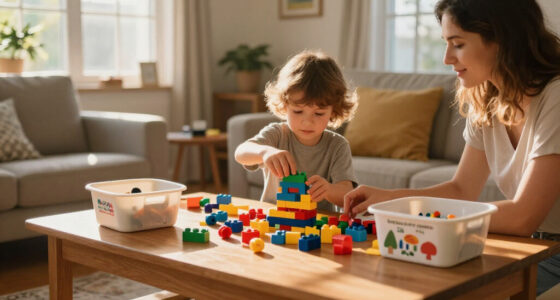
To help toddlers understand turn-taking with big toys, use simple cues like gentle taps to signal it’s their turn or a visual timer to show how long they wait. Clear phrases like “Your turn is coming” or “It’s still someone else’s turn” also work well. Consistent cues help children recognize when to wait and when to play. Keep these techniques in mind, and you’ll discover more effective strategies that make sharing easier.

Turn the school run and nap time into listening time
- Thousands of audiobooks, podcasts and originals
- Listen on your phone, tablet or Echo — also offline
- Cancel anytime
Key Takeaways
- Use visual timers or countdown signals to clearly show when it’s time to wait or take turns.
- Incorporate gentle physical cues like tapping the hand or using a special object to signal switchovers.
- Consistently use simple phrases such as “Your turn is coming” or “Now it’s your friend’s turn.”
- Reinforce patience with praise when children wait calmly and follow cues successfully.
- Establish structured routines with visual cues to help toddlers anticipate and understand turn changes.
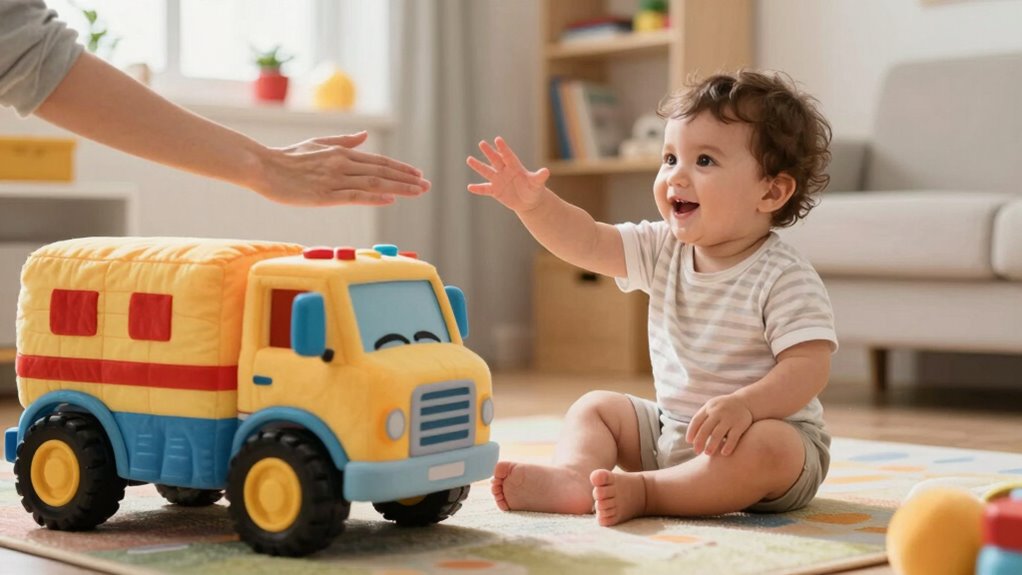
Teaching toddlers about taking turns is a vital step in their social development, helping them learn patience and cooperation. When you introduce turn-taking cues, you’re setting the foundation for better sharing strategies and encouraging patience techniques that will serve them well as they grow. Kids often struggle with sharing toys or waiting their turn, especially with big toys that seem so enticing. Your role is to guide them gently, showing clear cues and consistent responses that help them understand when it’s their turn and when to wait.
To make this process effective, start by modeling the behavior yourself. Use simple language and calm tone to explain, “Now it’s your friend’s turn,” or “Let’s wait for your turn.” Consistent cues like a gentle tap on the hand, a visual timer, or a specific phrase can signal that it’s time for a change. These cues become familiar, helping your toddler recognize the changeover from playing to waiting. When you use sharing strategies, such as passing toys back and forth or taking turns with big toys, you reinforce the idea that everyone gets a turn, gradually building patience techniques in your child. Additionally, incorporating visual cues like pictures or signals can help non-verbal children better understand the concept of waiting.
Patience techniques are essential here. When your toddler gets impatient or frustrated, acknowledge their feelings without giving in to their demands. Say, “I see you’re excited to play,” and then gently remind them, “We need to wait for your turn.” This teaches them to recognize their emotions and practice self-control. Consistent, calm responses reinforce the idea that waiting is part of playing, and it’s okay to feel a little impatient sometimes. Over time, these patience techniques help your child develop resilience and understanding that taking turns benefits everyone. Moreover, teaching children about the importance of biodiversity and respecting shared resources can also be incorporated into these routines, fostering a broader sense of cooperation and community.
Using visual cues like a timer or a special object can also work wonders with big toys. When your toddler sees the timer ticking down or notices the toy is being handed over, they learn to associate these cues with waiting. This not only makes taking turns clearer but also helps reduce frustration, since they understand what’s happening next. Incorporating structured routines and clear turn-taking cues can further support their understanding of patience and sharing. Be sure to praise your child when they successfully wait or share. Positive reinforcement strengthens sharing strategies and patience techniques, making taking turns smoother over time.
As an affiliate, we earn on qualifying purchases.
Frequently Asked Questions
How Early Can Toddlers Understand Turn-Taking Cues?
Toddlers can start understanding turn-taking cues as early as 12 to 18 months, thanks to early development and social skills. You’ll notice they begin to recognize the importance of waiting and sharing during play. By consistently using simple cues like eye contact or gestures, you help them grasp the concept. With patience and practice, your child develops essential social skills that support cooperation and positive interactions.
Are There Specific Cues That Work Better With Certain Toys?
Yes, some cues work better with specific toys to promote toy sharing and social skills. For example, using gentle prompts like “Your turn” or pointing to the toy encourages sharing during play with big toys. When playing with dolls or stuffed animals, asking questions such as “Can I play too?” helps develop social skills. Tailoring cues to the toy type makes sharing smoother, fostering positive interactions and cooperation with your toddler.
How Can I Encourage Shy or Reserved Toddlers to Participate?
Like the quiet strength of a willow, you can gently encourage shy toddlers to participate through sharing strategies and patience techniques. Use warm, inviting language, and give them plenty of time to warm up. Offer small, manageable roles or choices, and praise their efforts. By respecting their pace and creating a safe space, you help them blossom into confident players, just as a bud slowly opens to the sun.
What if My Child Keeps Interrupting During Play?
If your child keeps interrupting during play, use sharing strategies to teach patience and turn-taking. Gently remind them to wait for their turn, and offer praise when they practice patience. Incorporate patience techniques like taking deep breaths or counting to three before speaking. Consistently model respectful listening, and be patient as your child learns to wait their turn, making playtime more enjoyable for everyone.
How Do I Handle Conflicts Over Toys During Turn-Taking?
Handling conflicts over toys is like diffusing a small fire before it spreads. You can use sharing strategies by calmly asking your child how they’d feel if someone took their favorite toy. Encourage conflict resolution by guiding them to take turns and express feelings with words. Reinforce positive behavior with praise, and remind them that playing together peacefully makes everyone happier. Your calm approach helps establish healthy sharing habits.
Conclusion
By using clear, consistent turn-taking cues, you help your toddler understand patience, sharing, and cooperation. You guide them to listen, to wait, and to take turns with big toys, building essential social skills. You reinforce positive behaviors, encourage independence, and foster trust through your calm, caring approach. You make playtime smoother, more enjoyable, and more meaningful. You create a foundation of respect, understanding, and connection that will grow with your child every day.
Fall Picks
fall essentials
As an affiliate, we earn on qualifying purchases.