You can teach kids story sequencing by using vehicle cards and pretend routes, helping them understand cause and effect, safety, and vehicle maintenance. Guide them to arrange cards in logical order, like a bus stopping for passengers or a car obeying traffic signs. This hands-on activity encourages children to plan stories, recognize traffic rules, and discuss vehicle care, making learning fun and practical. Keep exploring to discover more ways to make this activity engaging and educational.

Turn the school run and nap time into listening time
- Thousands of audiobooks, podcasts and originals
- Listen on your phone, tablet or Echo — also offline
- Cancel anytime
Key Takeaways
- Using vehicle cards and pretend routes helps children develop sequencing and storytelling skills through logical order arrangement.
- Stories involving vehicles introduce traffic safety concepts like obeying signals and pedestrian right-of-way.
- Incorporating maintenance tasks in stories, such as checking tires or refueling, promotes vehicle care awareness.
- Sequencing activities foster planning, cause-and-effect understanding, and reinforce responsibility for safe vehicle operation.
- Connecting story sequences to real-world safety practices encourages responsible travel and vehicle maintenance habits.
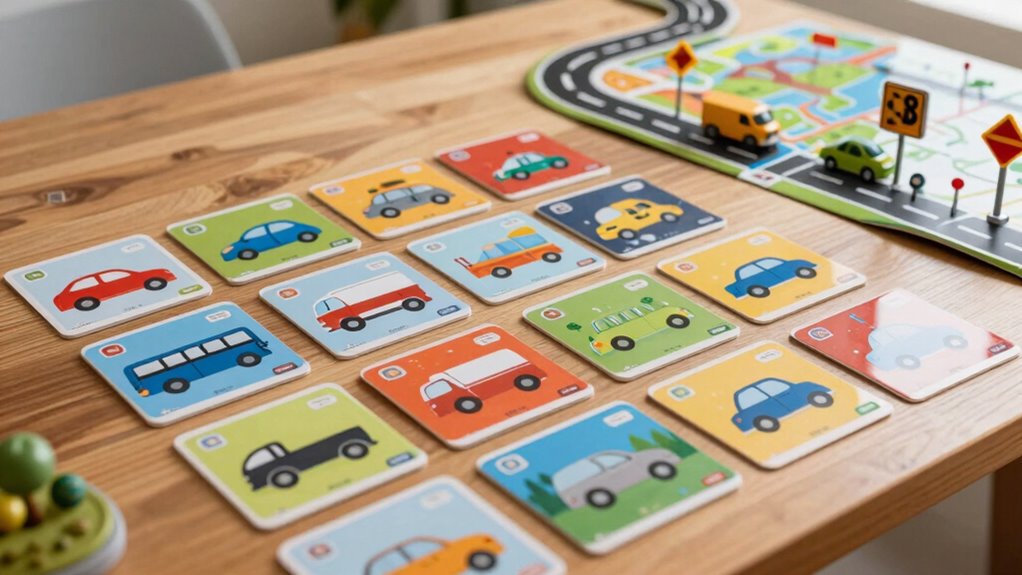
Creating a story with vehicle cards and pretend routes is a fun way to develop young children’s sequencing and storytelling skills. As you guide them through the process, you can incorporate important lessons about traffic safety and vehicle maintenance that will serve them well later in life. When children arrange vehicle cards in a logical order, they begin to understand cause and effect—why a car needs to stop at a red light or why it’s important to check oil levels regularly. These stories can be simple at first, like a car going to the park or a bus picking up passengers, but they naturally lend themselves to discussions about safe driving behaviors and vehicle upkeep.
As you encourage children to build their stories, you can introduce the concept of traffic safety. Explain that just like in real life, vehicles need to follow rules—stopping at stop signs, yielding to pedestrians, and using turn signals. You might ask questions like, “What should this car do before crossing the intersection?” or “Why is it important to look both ways?” This helps children connect the story with real-world safety practices, fostering their awareness and responsibility. Through pretend routes, they learn that careful planning and attention to traffic signs make travel safer, reinforcing the importance of traffic safety in a playful, memorable way.
Simultaneously, you can weave in lessons about vehicle maintenance. When children create stories involving vehicles, you can point out that cars need regular chores such as checking tire pressure, refilling windshield washer fluid, or ensuring oil levels are adequate. You might say, “This bus is taking a break to get its engine checked,” and then talk about why vehicle upkeep is essential for safety and reliability. This not only expands their vocabulary but also helps them understand that caring for vehicles helps prevent breakdowns and accidents. When they imagine vehicles that need repairs or refueling, they grasp the importance of maintenance for keeping everyone safe on the road. Additionally, emphasizing vehicle safety helps children recognize the vital role of proper care and attention. Furthermore, discussing routine maintenance tasks can also introduce the idea of preventive care, which is important for keeping vehicles in good working condition. Recognizing these routines helps children see the connection between maintenance and overall road safety.
As an affiliate, we earn on qualifying purchases.
Frequently Asked Questions
How Can I Adapt This Activity for Older Children?
To adapt this activity for older children, increase story complexity by adding more detailed cards and multiple storylines. Encourage critical thinking by asking them to justify their sequence choices and predict outcomes. Incorporate cognitive development tasks, like solving problems or creating alternative story routes. Use more abstract or realistic vehicle cards to challenge their reasoning skills. This approach keeps the activity engaging and developmentally appropriate for older children.
What Materials Are Needed for This Activity?
You’ll need a set of vehicle cards featuring different types of transportation, like cars, trains, boats, and planes, to explore transportation history. Include sequence cards that show the order of travel events and route maps for pretend routes. You might also add informational sheets about each vehicle type to deepen understanding. These materials help older children grasp transportation evolution and develop sequencing skills through engaging, hands-on activities.
How Long Should Each Session Last?
Think of each session like a carefully planned route—about 15 to 20 minutes works best. During this time, you keep young learners engaged without overwhelming them. For example, just as vehicle safety requires focus on details, a focused session helps children grasp route planning and sequencing skills effectively. If sessions are too long, attention wanes; too short, and they miss key concepts. Balance is key.
Can This Activity Be Done Outdoors?
Yes, you can definitely do this activity outdoors, which makes for a great outdoor exploration experience. Just keep weather considerations in mind—choose a day with good weather to prevent disruptions. Fresh air and natural surroundings can enhance engagement, and you can even extend the activity by incorporating outdoor elements. Just make certain you have a flat, safe space for the vehicle cards and pretend routes, and you’re all set for a fun outdoor session.
How Do I Assess Children’s Understanding Through This Activity?
Imagine a child arranging vehicle cards in order, then explaining their route. To assess understanding, use assessment techniques like asking them to justify their sequence or retell the story. Observe their comprehension strategies, such as identifying key details or predicting what comes next. You can also ask follow-up questions to gauge their grasp of sequencing concepts. This active approach helps you see if they truly understand the story structure and reasoning skills involved.
Conclusion
Using vehicle cards and pretend routes makes story sequencing fun and engaging, even if you think it’s just a simple activity. Don’t worry—this hands-on approach helps you develop critical thinking and storytelling skills in a natural way. It’s easy to underestimate how much you’ll learn, but by actively participating, you’ll strengthen your understanding of story order and sequencing. So, give it a try—you might be surprised at how quickly your storytelling abilities improve!
Halloween Picks
halloween
As an affiliate, we earn on qualifying purchases.