TL;DR

Turn the school run and nap time into listening time
- Thousands of audiobooks, podcasts and originals
- Listen on your phone, tablet or Echo — also offline
- Cancel anytime
A report by England’s Children’s Commissioner, Dame Rachel de Souza, finds wide differences between local areas in children’s access to services and in outcomes including mental health waits, GCSE results and dental care. It calls for minimum service standards and a national Children’s Emergency Fund; the government says it is investing in support for children and families.
A new report from Children’s Commissioner for England Dame Rachel de Souza finds substantial differences across English local areas in children’s access to services and in outcomes including mental health assessment waits, GCSE attainment and dental care. The Childhood Lottery report calls for minimum standards for children’s services and a national fund to support places where provision falls below them.
The report examines more than 160 measures of children’s lives, covering areas including education, health, safety and social care. Its findings point to a wide range of local experiences, rather than a single pattern shared by all children across England. The commissioner says a child’s location can affect access to support and opportunities.
Among the figures cited, children in Leicester waited an average of six days for mental health assessments, compared with 118 days in Hampshire and the Isle of Wight. The report says 70% of children in Richmond upon Thames achieved good grades in English and maths GCSEs, against 31% in Knowsley. For dental care, 86% of children in Redcar and Cleveland had seen a dentist in the previous year, compared with 39% in Hackney.
National figures cited in the report include more than one million children referred to mental health services in 2024-25, and 55% of children not achieving a good standard in English and maths GCSEs. The report also says four local authorities spent nothing on youth services per teenager. These measures describe different aspects of children’s lives and should not be read as a single ranking of service quality.
How Local Services Shape Childhood
The gaps matter because children’s access to support can vary according to where they live. Differences in mental health waiting times, dental visits, education outcomes and youth provision affect practical opportunities for children and their families. The commissioner’s report presents these disparities as a matter for local and national decision-makers, not simply as a reflection of household income.
The report says deprivation alone does not explain why some areas face greater challenges. It notes that some deprived communities achieve stronger results, while some less deprived areas perform worse on particular measures. That finding points to the possible role of service availability, local capacity and decisions about provision, although the figures do not by themselves establish why each area differs.
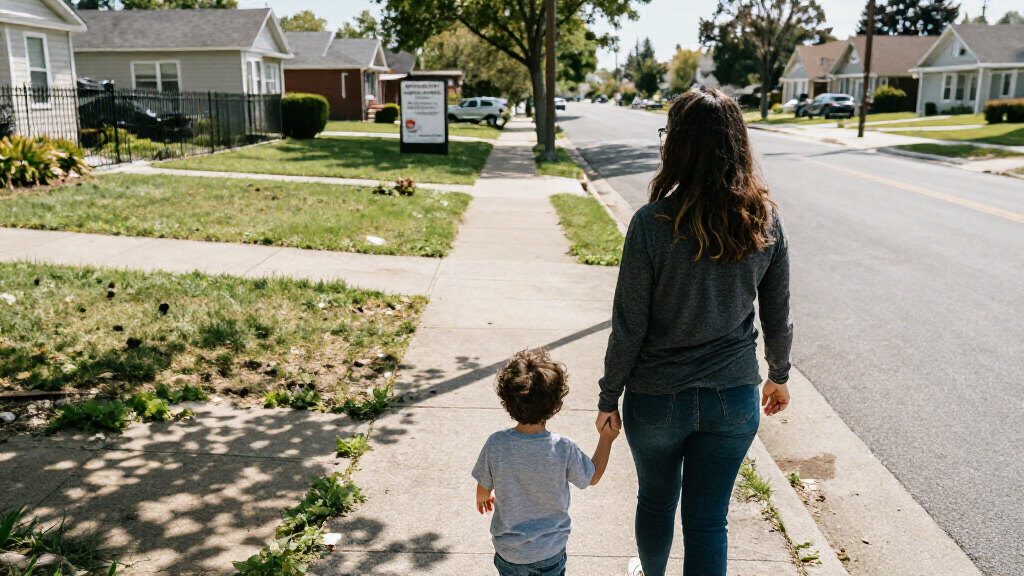
Access to safe places to play is also part of the report’s account of children’s lives. De Souza describes children concerned about crime and unable to use local parks. If those concerns restrict time outdoors or participation in community life, they can affect ordinary childhood experiences as well as how safe children feel.
mental health assessment for children
As an affiliate, we earn on qualifying purchases.
As an affiliate, we earn on qualifying purchases.
What the Report Compares
The Childhood Lottery compares more than 160 indicators across local areas in England. It names Middlesbrough, Hounslow, Bradford, Nottingham, Halton, Peterborough, Leicester, Liverpool, Sunderland and Medway among the ten most challenging places to grow up, according to its measures. Cheshire East, Merton, Surrey, Richmond upon Thames, Hertfordshire, Cheshire West and Chester, Haringey, Leicestershire, Central Bedfordshire and Wokingham are listed among the least challenging.
Those lists are summaries of the report’s assessment, not a claim that every child in a named area has the same experience. The commissioner says even areas ranked among the least challenging have gaps in support. The report points to Haringey’s performance despite high deprivation and Cambridge’s lower ranking despite being among England’s least deprived areas as examples of why income levels alone do not capture local outcomes.
The figures reflect different measures and time periods. For example, the mental health referral total is for 2024-25, while dental access refers to whether children had seen a dentist in the previous year. The supplied report summary does not provide full methodological detail for each measure, so comparisons should be understood within the definitions used by the report.
“I cannot see what I have seen, here and over my six years as Commissioner, and see the status quo as anything less than a national emergency.”
— Dame Rachel de Souza, Children’s Commissioner for England
Gaps in the Available Evidence
The report identifies differences between areas, but the figures provided do not establish what caused each gap or how much of it reflects local service decisions, demand, capacity or other factors. The supplied material also does not specify the full calculation behind the overall rankings or provide detailed results for every local authority and measure.
It is also unclear from the government’s response how much new funding would be directed to the commissioner’s proposed Children’s Emergency Fund, how a minimum standard would be defined, or how compliance would be monitored. The report’s call for action is a recommendation; the material provided does not confirm that the government has adopted those proposals.
Funding and Standards Under Debate
De Souza is calling for a minimum standard for children’s services across England, backed by a national Children’s Emergency Fund for areas where provision falls short. She also wants larger local authorities and regional mayors to take greater responsibility for children’s outcomes, with a designated leader for children and families in each strategic authority.
The Department for Education says it is investing in support at different stages of childhood, including childcare, school standards, youth services, training and employment. It also says it is opening 1,000 Best Start Family Hubs in England to bring together support for parents and children. The material available does not give a timeline for the proposed national standards or fund, or set out how the government’s existing measures will address the specific local gaps identified.
Further details from ministers on funding, accountability and implementation would clarify whether the commissioner’s proposals will become policy. Until then, the report’s local comparisons and recommendations form the clearest account of the disparities and the changes being requested.
Key Questions
What does the Childhood Lottery report say?
It compares more than 160 measures of children’s lives across England and reports major local differences in areas such as education, health, safety and social care.
Which areas are listed as most challenging for children?
The report names Middlesbrough, Hounslow, Bradford, Nottingham, Halton, Peterborough, Leicester, Liverpool, Sunderland and Medway among the ten most challenging places, based on its assessment. That does not mean every child in those areas has the same experience.
Does the report say poverty explains the differences?
No. The report says deprivation alone does not explain local differences. The commissioner also points to service provision and capacity, though the comparisons do not prove the cause of each gap.
What changes is the Children’s Commissioner seeking?
Dame Rachel de Souza is calling for minimum standards for children’s services, a national Children’s Emergency Fund and clearer local leadership and accountability for children’s outcomes.
Has the government agreed to those proposals?
The supplied material does not confirm that the government has adopted the proposed standards or fund. The Department for Education says it is investing in support for children and families and opening 1,000 Best Start Family Hubs in England.
Source: rss
Cold & flu season Picks
humidifiers
As an affiliate, we earn on qualifying purchases.