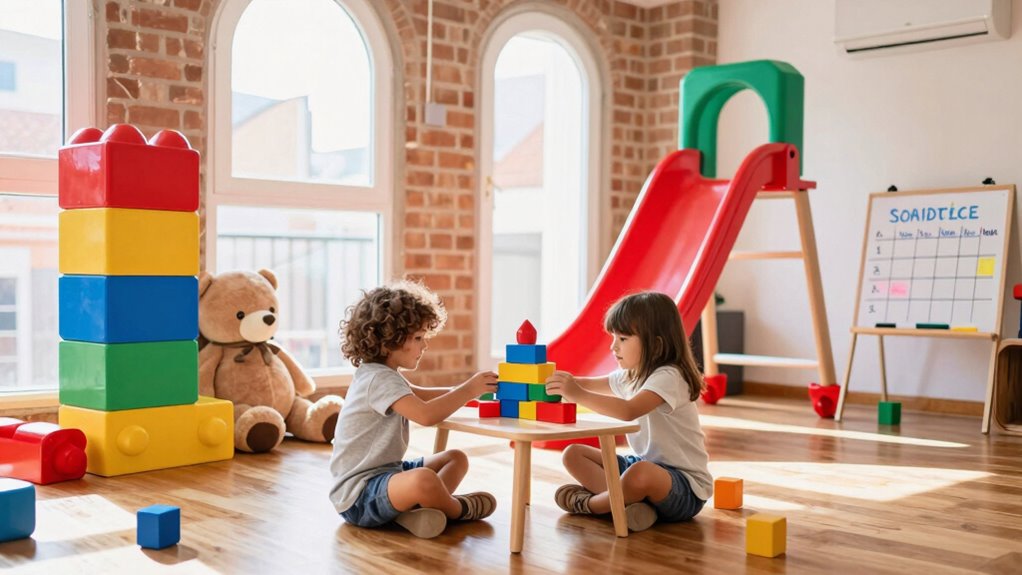

To build a sharing schedule for siblings and big toys, start by identifying which toys often cause disputes and then work with your children to set clear, specific times for each of them to play. Use visual aids like charts or timers to help everyone remember the schedule. Stay flexible for special occasions, and praise your children when they follow the plan. If you stay consistent, you’ll discover simple ways to foster cooperation and fun—more tips await you.

Turn the school run and nap time into listening time
- Thousands of audiobooks, podcasts and originals
- Listen on your phone, tablet or Echo — also offline
- Cancel anytime
Key Takeaways
- Collaboratively identify popular big toys and allocate specific times for each child’s use.
- Use visual aids like charts or timers to clearly display the schedule.
- Establish consistent routines with flexibility for special occasions or emergencies.
- Teach children safe handling and respectful sharing etiquette for big toys.
- Reinforce positive behavior through praise, calm conflict resolution, and regular communication.
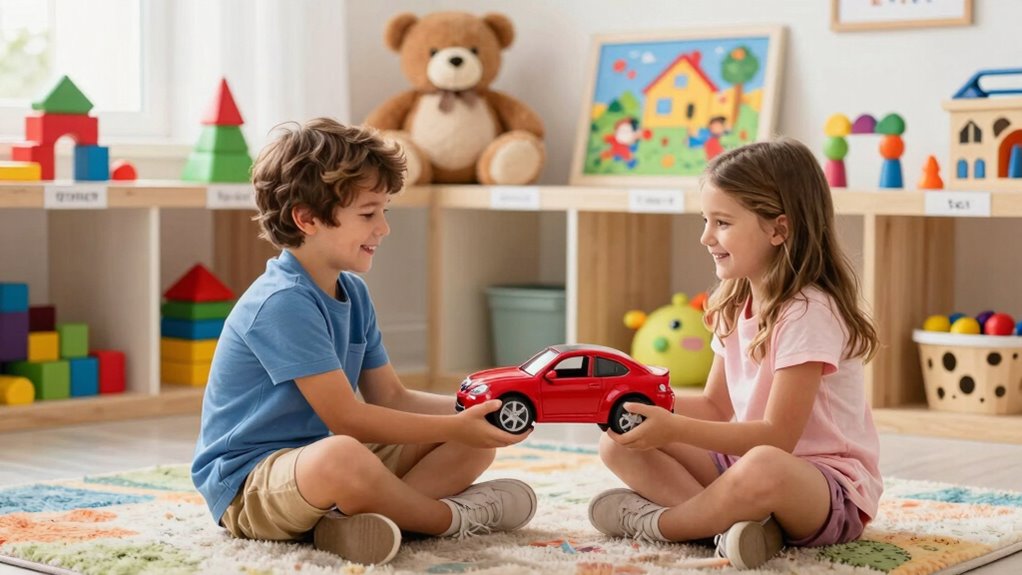
Creating a sharing schedule for siblings and big toys can help prevent conflicts and guarantee everyone gets a fair turn. When you set clear times for using large or popular toys, you help your children understand expectations and reduce disagreements. It’s vital to emphasize toy safety during this process. Teach your kids how to handle big toys carefully, highlighting the importance of keeping their play area organized and checking that toys are in good condition before sharing. This not only keeps everyone safe but also encourages responsibility and respect for shared possessions.
Sibling communication plays an essential role in making the schedule work smoothly. Talk openly with your children about their feelings and preferences. Encourage them to express their needs and listen to each other’s concerns. When everyone feels heard, they’re more likely to accept the schedule and cooperate. Reinforce the idea that sharing is about fairness and fun, not just rules. By fostering a positive dialogue, you help your kids develop skills in negotiation and empathy, which are valuable beyond toy sharing. Establishing clear communication can also help prevent misunderstandings and build trust between siblings.
Open communication fosters fairness, cooperation, and empathy in sharing big toys and resolving conflicts smoothly.
To create an effective schedule, start by identifying the big toys that tend to cause disputes. Sit down with your children and collaboratively decide on specific times for each child to play with these toys. Visual aids, like charts or timers, can make the schedule clear and easy to follow. For example, assign morning and afternoon slots or specific days of the week. Make sure the schedule is flexible enough to accommodate special occasions or urgent needs, but consistent enough to establish routine. When your kids see a predictable pattern, they’re less likely to feel frustrated or jealous. Additionally, incorporating smart home technology such as timers or alert systems can help enforce the schedule more effectively and promote consistent routines. Using Visual aids can also help children better understand and remember their designated times, making the schedule more effective.
It’s also helpful to set ground rules around toy safety and sharing etiquette. Remind your children to handle big toys gently, avoid rough play, and clean up after themselves. Encourage them to take turns talking about their experiences and feelings during playtime, reinforcing sibling communication. Praising your kids when they follow the schedule and play safely encourages positive behavior. If disagreements arise, address them calmly and remind everyone of the agreed-upon times. Consistent reinforcement makes the schedule a natural part of your daily routine, fostering a cooperative environment. Incorporating positive reinforcement strategies can further motivate your children to follow the schedule and develop good habits.
As an affiliate, we earn on qualifying purchases.
Frequently Asked Questions
How Can Parents Enforce the Sharing Schedule Consistently?
You can enforce the sharing schedule consistently by setting clear boundaries and discussing them with your kids. Reinforce sharing boundaries through gentle reminders and positive reinforcement when they follow the schedule. Stay firm but fair, calmly addressing any disagreements. Consistent enforcement helps kids understand expectations, making sharing smoother over time. Remember, consistency builds trust, so stick to the schedule even when it’s challenging, reinforcing the importance of fairness and respect.
What Should I Do if Siblings Refuse to Share?
Imagine the tension thickening as your children refuse to share, crossing boundaries you’ve set. You step in, calmly guiding them through sibling negotiation, emphasizing the importance of respecting sharing boundaries. You remind them that cooperation builds trust and friendships. By staying patient and consistent, you help them see sharing as a way to strengthen their bond, transforming the conflict into a lesson in empathy and teamwork.
How Do I Handle Conflicts Over Toy Sharing?
When conflicts over toy sharing arise, stay calm and encourage open communication. Use toy rotation to give each sibling equal access and reduce disputes. Implement sharing incentives like praise or small rewards to motivate cooperative behavior. Remind them that taking turns benefits everyone and makes playtime more fun. By establishing clear rules and positive reinforcement, you help your children learn patience and fairness, easing conflicts over their toys.
What Age Is Appropriate to Start Sharing Schedules?
You can start sharing schedules as early as age three, when your child begins to grasp sharing boundaries and sibling negotiation. At this age, kids are like tiny diplomats learning the art of fairness and patience. You’ll see them testing limits, practicing turn-taking, and understanding that sharing big toys isn’t just about toys—it’s about building trust and friendship. Early schedules help them develop these essential social skills with ease!
How Can I Encourage Fair Sharing Among Competitive Siblings?
To encourage fair sharing among competitive siblings, introduce toy rotation to keep interests fresh and reduce conflicts. Promote cooperative play by setting shared goals and praising teamwork. Establish clear rules about taking turns and listening to each other’s needs. Consistently reinforce these habits, and model fair sharing yourself. This approach helps siblings learn patience, compromise, and respect, making sharing more natural and less competitive over time.
Conclusion
Think of your sharing schedule as a garden where every plant gets sunlight and water in turn. Just like tending to your garden guarantees all flowers bloom, a well-planned schedule helps your siblings thrive with fairness. When you nurture this routine with patience and care, it becomes a beautiful landscape of cooperation. Remember, the more you tend to your sharing garden, the more vibrant and peaceful it will grow, creating harmony for everyone to enjoy.
Halloween Picks
halloween
As an affiliate, we earn on qualifying purchases.