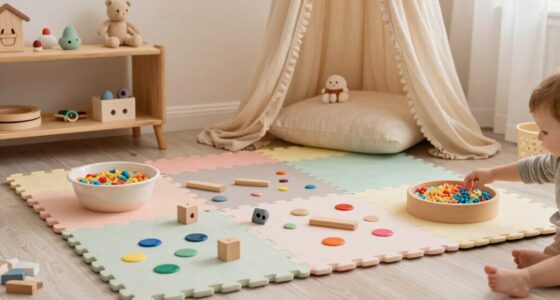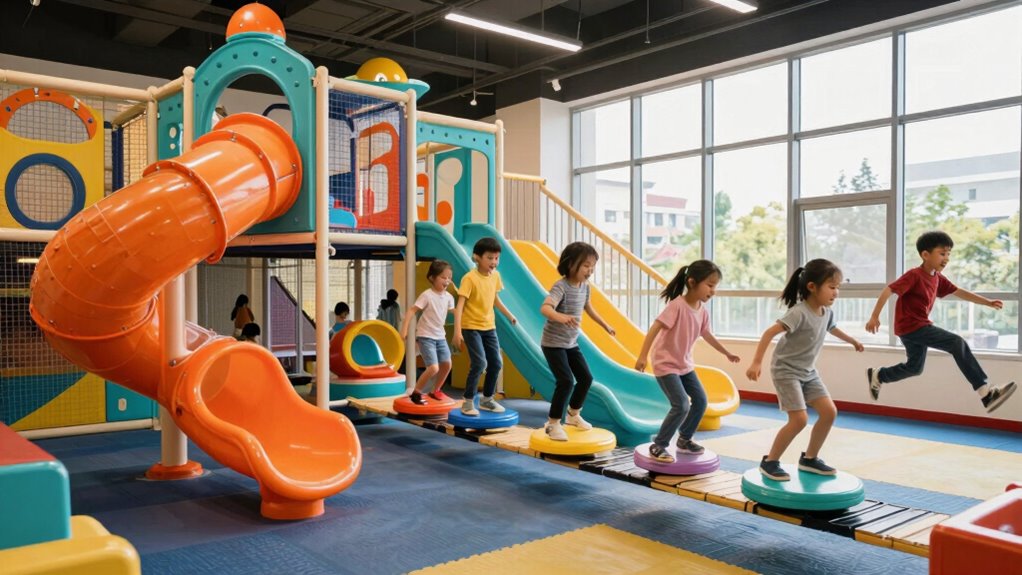

To keep vestibular play exciting without overwhelming, start with simple, gentle activities like swinging or spinning, then gradually introduce more dynamic movements such as jumping or climbing. Keep sessions short, around 10-15 minutes, and watch for signs of tiredness or distress. Vary activities regularly and build on each one’s difficulty to boost confidence and engagement. If you stick with these strategies, you’ll discover how to create fun, safe, and developmentally beneficial play routines.

Turn the school run and nap time into listening time
- Thousands of audiobooks, podcasts and originals
- Listen on your phone, tablet or Echo — also offline
- Cancel anytime
Key Takeaways
- Start with simple, gentle activities to build confidence before progressing to more dynamic, intense movements.
- Monitor cues for overload and incorporate regular breaks to prevent sensory overwhelm.
- Gradually increase difficulty and complexity to maintain excitement without causing fatigue.
- Mix diverse vestibular activities to keep engagement high and prevent monotony.
- Observe individual responses and adjust activity intensity to ensure it remains stimulating yet manageable.
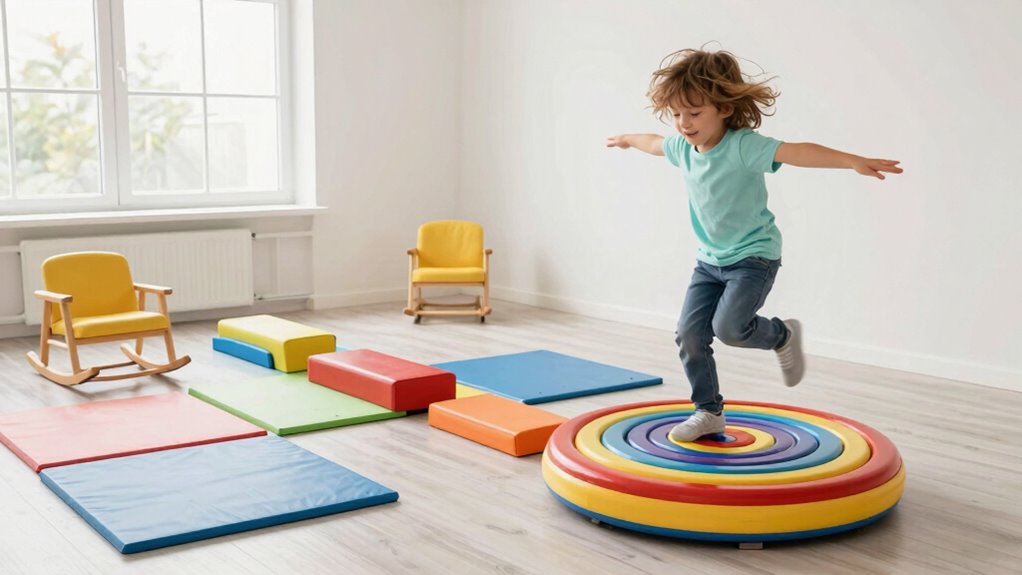
Have you ever wondered how to make vestibular play more effective for your child’s development? When you structure vestibular activities thoughtfully, you can support their sensory integration and motor planning skills while guaranteeing the experience remains enjoyable. The key is to create a balanced sequence that challenges your child without overwhelming them, fostering growth without causing fatigue or frustration.
Start by understanding that vestibular play involves movement that stimulates the inner ear, helping your child process balance, spatial awareness, and body position. To make this play meaningful, consider how each activity builds on the last, gradually increasing in complexity and intensity. For example, begin with simple swinging motions or gentle spinning, which engage their sensory systems gently. As your child becomes comfortable, you can introduce more dynamic movements, like jumping or climbing, to challenge their motor planning and coordination.
Vestibular play builds balance and coordination gradually through engaging, progressively challenging movements.
Timing is essential. You want to ensure each activity is neither too short nor too long. Short, frequent sessions—around 10 to 15 minutes—are often more effective than lengthy play, which can lead to sensory overload. Pay attention to your child’s cues: if they start to look overwhelmed or tired, it’s time to pause or switch to a calmer activity. Incorporating breaks allows their sensory systems to process information and integrate sensory input effectively. This approach prevents overstimulation and helps your child stay engaged and motivated for future sessions.
Another important aspect is variety. Mixing different types of vestibular activities keeps your child’s interest high while supporting a range of sensory and motor skills. For instance, combining swinging with spinning, gentle bouncing, and balancing on a beam offers diverse sensory input that promotes sensory integration while also challenging their motor planning abilities. When you plan these activities in a sequence, gradually increasing difficulty, you help your child develop confidence and mastery over their movements. Recognizing the importance of sensory regulation can help you tailor these activities to best support your child’s unique needs. Additionally, understanding sensory processing differences can guide you in modifying activities to better suit your child’s comfort level and responsiveness. Incorporating an understanding of sensory processing ensures that the activities you choose are appropriate and effective for your child’s individual sensory profile.
As an affiliate, we earn on qualifying purchases.
Frequently Asked Questions
How Can I Tell if My Child Is Overwhelmed During Vestibular Play?
You can tell if your child is overwhelmed during vestibular play by watching for sensory overload signs, like covering their ears, turning away, or becoming irritable. Pay attention to emotional cues such as crying, frustration, or withdrawal. If these behaviors happen, pause the activity, offer calming support, and give them time to reset. Adjust the intensity of the play to match their comfort level, ensuring it stays exciting without becoming overwhelming.
What Signs Indicate My Child Needs a Break From Vestibular Activities?
If your child shows signs of imbalance, like wobbling or losing coordination, it’s time for a break. Watch for signs of sensory overload, such as fussiness or covering ears. Balance challenges and difficulty processing sensory input suggest they need a rest to prevent overstimulation. Giving them a pause allows their sensory integration system to reset, ensuring future activities remain enjoyable and beneficial without causing exhaustion or distress.
How Do I Adapt Vestibular Play for Children With Sensory Sensitivities?
You can adapt vestibular play for children with sensory sensitivities by focusing on sensory modulation and activity customization. Start slowly, choosing gentle, predictable movements that help your child feel safe. Observe their responses carefully, and adjust intensity or duration as needed. Incorporate calming techniques and keep a close eye on their cues. This tailored approach guarantees the activity remains engaging without overwhelming, creating a safe space for exploration and growth.
Are There Specific Vestibular Activities Recommended for Different Age Groups?
For different age groups, you should tailor vestibular activities to their balancing challenges and sensory integration needs. Young children benefit from gentle rocking or swinging to develop core stability, while older kids can handle more dynamic activities like spinning or trampoline jumping. Always observe their responses, ensuring activities aren’t overwhelming. Adjust intensity to keep the experience exciting yet manageable, fostering confidence and sensory regulation without causing sensory overload.
How Often Should Vestibular Play Sessions Be Scheduled for Optimal Development?
You should schedule vestibular play sessions about 3-4 times a week, balancing intensity to keep activities exciting yet manageable. Imagine a gentle roller coaster ride—enough thrill to spark joy without overwhelming your child. Play frequency matters, so spreading out sessions allows their nervous system to process and grow stronger. Keep activities fun and varied, adjusting based on your child’s response to guarantee development stays engaging and safe.
Conclusion
By carefully sequencing vestibular play, you can keep things exciting without overwhelming your child. Remember, it’s all about finding that sweet spot where play feels engaging but not too much to handle. When you strike this balance, you’re helping your little one build confidence and sensory skills step by step. So, don’t put all your eggs in one basket—spread out the activities and keep things fun. After all, Rome wasn’t built in a day!
Halloween Picks
halloween
As an affiliate, we earn on qualifying purchases.