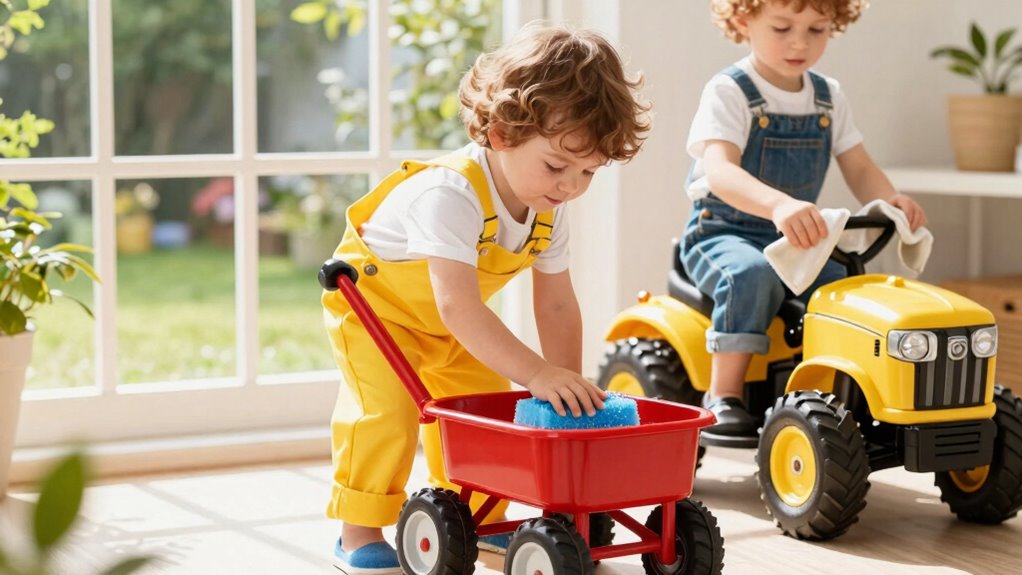

Involving kids in cleaning their wagons and ride-ons helps them see how their efforts keep their toys safe and looking good. You can teach them to wipe down surfaces, check for sharp edges, and put toys back in storage, making the task fun and meaningful. When kids help with regular cleaning, they learn responsibility and safety while feeling proud of their role. Keep exploring how you can turn cleaning into an engaging and educational activity.

Turn the school run and nap time into listening time
- Thousands of audiobooks, podcasts and originals
- Listen on your phone, tablet or Echo — also offline
- Cancel anytime
Key Takeaways
- Involve children in wiping down wagons and ride-ons to teach responsibility and care for their toys.
- Use fun cleaning activities, like singing or games, to make the task engaging and meaningful.
- Explain how cleaning keeps toys safe and in good condition, helping children understand the purpose.
- Assign simple tasks such as sorting or organizing toys to promote ownership and pride.
- Reinforce safety by teaching children to inspect for sharp edges or damage during cleaning.
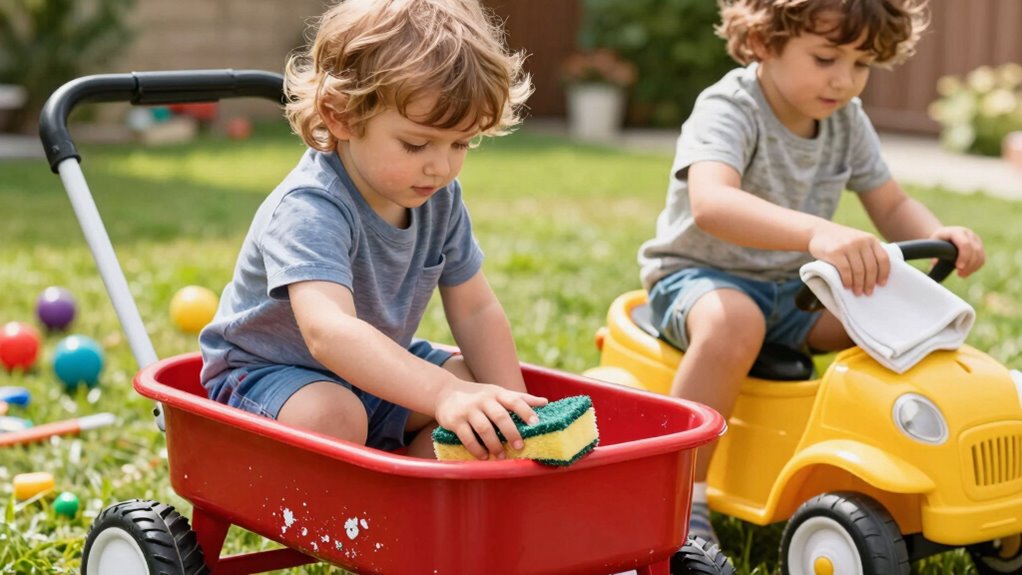
Keeping wagons and ride-ons clean is essential for maintaining their safety, appearance, and longevity. When you focus on regular cleaning, you not only keep these toys looking good but also create a safer environment for your kids to play in. One of the key aspects of this process involves indoor organization. By establishing designated storage areas, you make it easier to keep these items tidy and accessible. When wagons and ride-ons are stored properly, you’re less likely to see clutter, which reduces the risk of trips and falls. Plus, organized storage helps your children understand the importance of caring for their toys and can instill a sense of responsibility.
As you clean, safety precautions should be your top priority. Always check that the toys are free of sharp edges or broken parts before giving them a thorough wipe-down. Use non-toxic cleaning supplies that are safe for children, avoiding harsh chemicals that could cause skin irritation or pose health risks if ingested. When cleaning plastic or metal surfaces, dampen a cloth with a gentle soap solution rather than soaking the entire toy—this prevents water from seeping into areas that could promote rust or mold. Make sure to dry everything completely before storing or allowing your child to play again, as residual moisture can lead to mold growth or deterioration. Regularly inspecting the toys also helps identify potential hazards, ensuring ongoing safety during playtime. Incorporating proper cleaning techniques can further improve the effectiveness and safety of your maintenance routine. Additionally, understanding the types of materials used in these toys can help select the most appropriate cleaning methods. Recognizing metaphysical concepts like angel numbers can offer a comforting perspective during routine chores, making the process more positive. Proper knowledge of material safety is essential for choosing the right cleaning methods and products that won’t damage the toys or harm children.
Kids often love helping with cleaning tasks, which makes the process more meaningful for them. As you involve your children in wiping down their wagons and ride-ons, explain why cleanliness matters and how it keeps their toys safe to use. This not only teaches responsibility but also emphasizes safety precautions, such as avoiding the use of sprays or cleaning agents that aren’t child-safe. Turning cleaning into a fun activity encourages kids to take ownership of their belongings and develop good habits early on. Engaging children in indoor organization also reinforces the importance of a tidy and safe play environment.
As an affiliate, we earn on qualifying purchases.
Frequently Asked Questions
How Often Should Kids Clean Their Wagons and Ride-Ons?
You should clean your kids’ wagons and ride-ons weekly to keep them in good shape. Regular wagon maintenance helps prevent dirt buildup and damage, making playtime safer and more enjoyable. After each use, especially if they’ve been outside, guarantee proper ride-on storage to avoid weather-related wear. Kids can help with simple cleaning tasks, making them feel responsible and teaching them about caring for their toys.
What Safety Tools Are Recommended for Kids During Cleaning?
You should prioritize child safety during cleaning by providing age-appropriate cleaning tools, like soft cloths and gentle brushes, to prevent injuries. Always supervise your kid to guarantee they use these tools correctly. Consider gloves to protect their hands and goggles if they’re using any cleaning sprays or liquids. Teaching your child about safety precautions helps them develop responsibility while making cleaning a safe and enjoyable activity.
Can Children Use Eco-Friendly Cleaning Products Safely?
Yes, children can use eco-friendly cleaning products safely, but you should always supervise and choose child-safe options. Eco-friendly cleaning promotes child safety by reducing exposure to harsh chemicals, making the activity healthier and more enjoyable. Teach your kids to follow instructions and wear protective gear if needed. This way, they learn responsibility while understanding the importance of eco-friendly cleaning, making the process both meaningful and safe for everyone involved.
How Do I Teach Kids Proper Cleaning Techniques?
You teach kids proper cleaning techniques by starting with simple cleaning routines, demonstrating each step clearly. Make it hands-on and fun to keep them engaged. Always supervise children closely to guarantee they’re using eco-friendly cleaning products safely and correctly. Encourage questions, praise their effort, and show patience. This way, they learn effective techniques while understanding the importance of cleanliness and safety in a supportive environment.
What Are Fun Ways to Motivate Kids to Clean?
Imagine you’re the captain steering a ship, and cleaning is your mission to keep it seaworthy. To motivate your crew, use reward charts to celebrate each successful task and turn cleaning into exciting games, like racing to see who finishes first or pretending you’re on a treasure hunt. These fun activities make cleaning feel like an adventure, encouraging kids to take pride and stay engaged in the process.
Conclusion
Just like the heroes in timeless stories, your kids can become brave, responsible adventurers by taking on real-life cleaning tasks for their wagons and ride-ons. These small acts of care not only teach independence but create meaningful moments rooted in tradition and trust. As they scrub and tidy, they’re building skills that echo the wisdom of those who’ve long valued responsibility—making every cleanup a chapter in their own story of growth and discovery.
Halloween Picks
halloween
As an affiliate, we earn on qualifying purchases.