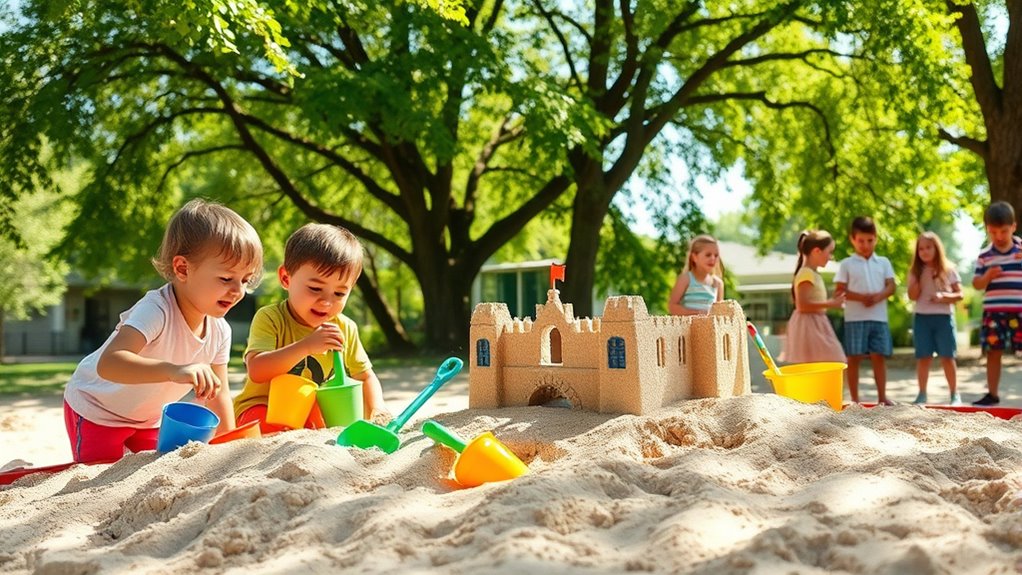

Playing in the sandbox is a great way to develop your child’s social skills through outdoor peer interactions. It encourages sharing, taking turns, and communicating needs effectively. Children learn to resolve conflicts peacefully and recognize social cues like body language and facial expressions. These activities build confidence, cooperation, and empathy, laying a strong foundation for future friendships. Keep exploring how sandbox play can further boost your child’s social development and connection with others.

Turn the school run and nap time into listening time
- Thousands of audiobooks, podcasts and originals
- Listen on your phone, tablet or Echo — also offline
- Cancel anytime
Key Takeaways
- Sandbox play encourages sharing, turn-taking, and communication, fostering essential social skills among children.
- Playing outdoors helps children recognize social cues like body language and facial expressions.
- Conflict resolution during sandbox activities teaches patience, empathy, and peaceful negotiation.
- Social interactions in the sandbox build confidence, independence, and cooperation skills.
- Early outdoor peer interactions promote positive relationships, problem-solving, and social development.

Playing in the sandbox isn’t just about building castles; it’s an essential opportunity to develop social skills. When you’re in the sandbox with other children, you’re learning how to navigate interactions, which includes mastering sharing strategies and conflict resolution. These skills are crucial for your overall social development and will serve you well beyond playtime.
One of the first things you’ll notice is how important sharing strategies are. When you’re working with others to build a mound or share a bucket, you learn to take turns, communicate your needs, and respect each other’s space. For example, you might say, “Can I use the shovel next?” or “You can have a turn after I finish.” These simple exchanges teach patience and cooperation. Sharing strategies don’t come naturally at first, but practicing them in the sandbox helps you understand that sharing isn’t just about giving up something; it’s about creating a positive experience for everyone involved. As you practice, you’ll find it easier to negotiate and find common ground, making playtime more enjoyable for all.
Sharing in the sandbox teaches patience, cooperation, and creating positive play experiences.
Conflict resolution is another critical skill you develop during sandbox play. Disagreements over toys, turns, or space are common, but how you handle them can make a big difference. Instead of arguing or grabbing, you learn to express your feelings calmly and listen to others’ perspectives. For instance, if someone takes your shovel, you might say, “I was using that. Can I have it back?” or suggest a solution like sharing or taking turns. Over time, you realize that conflicts are natural, but resolving them peacefully helps build trust and mutual respect. You might also learn to apologize if you’ve made a mistake or to forgive if someone else has. These moments teach you patience, empathy, and problem-solving skills that extend beyond the sandbox. Additionally, understanding social cues like body language and tone of voice enhances your ability to respond appropriately in various situations.
Playing outdoors with peers also encourages you to observe social cues—like body language, tone of voice, and facial expressions—which helps you better understand how others are feeling. This awareness makes it easier to respond appropriately and develop empathy. As you get more comfortable with sharing strategies and conflict resolution, your confidence grows, and you become more independent in social settings. The sandbox becomes more than just a place to dig; it’s a classroom where you learn how to connect, cooperate, and resolve issues with others. These early lessons in social skills are foundational, shaping how you interact with friends, classmates, and even family members later in life.
sandbox toys for social skills development
As an affiliate, we earn on qualifying purchases.
As an affiliate, we earn on qualifying purchases.
Frequently Asked Questions
How Does Outdoor Play Influence Long-Term Social Development?
Outdoor play crucially influences your child’s long-term social development by encouraging nature exploration and teamwork building. As they navigate natural environments, they learn to cooperate, share, and problem-solve with peers, strengthening social bonds. These experiences help children develop confidence and empathy, which are essential for future relationships. By engaging in outdoor activities, your child builds essential social skills that will benefit them throughout their life.
What Are Signs of Social Skill Struggles During Sandbox Play?
Think of the sandbox as a stage where social skills perform their dance. If you notice your child withdrawing socially or avoiding eye contact, it signals trouble. Struggling with conflict resolution can also appear as frequent disagreements or inability to share. These signs indicate they may be having difficulty managing peer interactions. Addressing these cues early helps them learn to communicate, cooperate, and build friendships, turning challenges into opportunities for growth.
How Can Parents Foster Inclusive Peer Interactions Outdoors?
You can foster inclusive peer interactions outdoors by implementing inclusive strategies like encouraging sharing, turn-taking, and inclusive games. Promote peer engagement by actively involving all children and modeling positive social behaviors. Observe how kids interact and step in gently to facilitate connections if needed. Creating a welcoming environment helps children feel safe and valued, which naturally encourages them to engage more fully and inclusively with their peers during outdoor play.
Are There Specific Activities That Enhance Sharing and Cooperation?
Imagine you set up a group activity like building a large sandcastle together. This sharing activity encourages kids to work cooperatively, enhancing their teamwork skills. Incorporate cooperative games such as tug-of-war or relay races to boost cooperation. These activities foster communication, patience, and mutual respect, helping children learn the importance of sharing and collaborating naturally through fun, engaging outdoor play.
How Does Peer Interaction Outdoors Differ From Indoor Socialization?
You notice that peer interaction outdoors differs from indoor socialization because of nature-based bonding opportunities. Outside, kids engage in spontaneous collaboration, which encourages teamwork and sharing naturally. The outdoor environment fosters more relaxed, unstructured play, prompting children to connect through activities like building or exploring together. This setting helps them develop social skills more organically, making interactions more genuine and dynamic than those typically found indoors.
Conclusion
Playing outdoors in the sandbox isn’t just fun—it boosts your child’s social skills too. Did you know that children who engage in outdoor play are 30% more likely to develop strong peer relationships? By encouraging your kids to share, take turns, and collaborate during sandbox time, you help them build essential social skills that last a lifetime. So, next time they dig and build, remember you’re nurturing their ability to connect and communicate effectively.
Halloween Picks
halloween
As an affiliate, we earn on qualifying purchases.