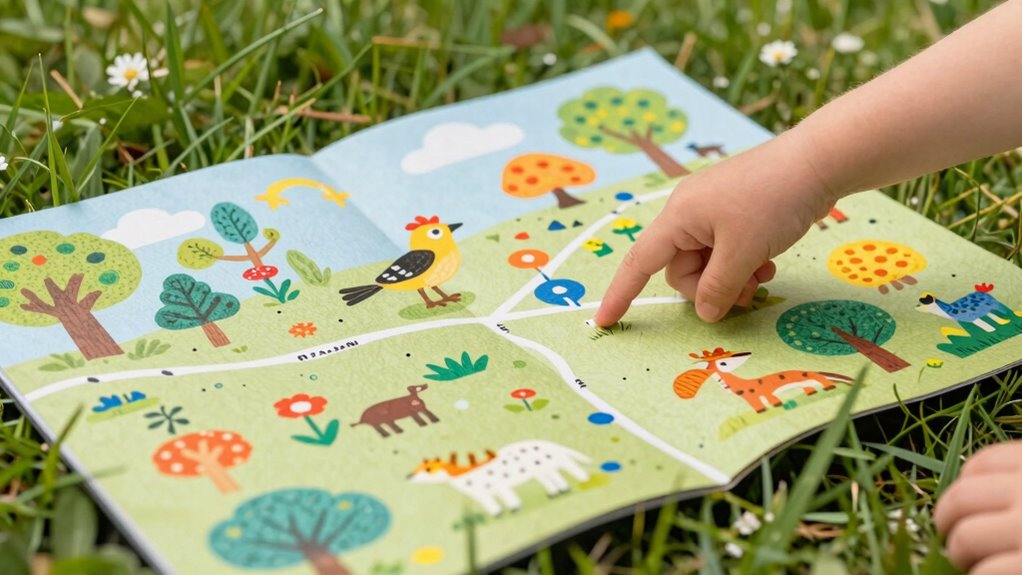
Create a simple, colorful backyard safari map for toddlers and preschoolers that highlights areas for spotting animal tracks, feathers, and plants. Use easy pictures or symbols for each spot, like footprints, bird feathers, or flower icons, to make it fun and understandable. Add designated zones for exploring different natural elements, encouraging curiosity and exploration. Keep it engaging and age-appropriate, so your little explorer stays excited. If you continue, you’ll discover ways to make the adventure even more magical.

Turn the school run and nap time into listening time
- Thousands of audiobooks, podcasts and originals
- Listen on your phone, tablet or Echo — also offline
- Cancel anytime
Key Takeaways
- Use simple, colorful visuals and large labels to make the map easy for young children to understand.
- Include interactive zones for spotting animal footprints, feathers, and plant clues to engage toddlers actively.
- Design the map with clear, distinct areas for wildlife, plants, and sensory exploration to suit preschool attention spans.
- Incorporate sensory prompts like touch and smell stations to deepen engagement for young explorers.
- Keep the map lightweight and portable for easy outdoor use, encouraging spontaneous discovery.
Turning your backyard into a mini safari can be a fun and educational adventure for toddlers. It’s a perfect way to introduce them to the natural world, sparking curiosity and encouraging exploration. Creating a simple safari map tailored for little explorers can make the experience even more engaging. When designing your map, think about including spots where your child can practice wildlife tracking. This could be as straightforward as marking areas where they might see footprints or signs of animals, like bird feathers or squirrel trails. As they observe, encourage them to look for clues that animals have been in the area, helping develop their observation skills and understanding of wildlife behavior. Incorporating wildlife signs into your map can make the activity more realistic and educational.
Transform your yard into a fun, educational safari with kid-friendly spots for tracking footprints and discovering wildlife signs.
Plant identification is another essential part of the safari map. You can designate sections where your child can learn to recognize common plants, flowers, or trees in your yard. Bring along a small guidebook or create a simple chart with pictures and names of familiar plants. When they spot a plant, they can match it to the guide, fostering their ability to identify different species. This activity teaches patience and sharpens their attention to detail, key skills necessary for both wildlife tracking and plant identification. Adding nature observation to your activities can further enhance their understanding of the environment and encourage mindful exploration. Engaging your child in sensory exploration by encouraging them to touch, smell, and listen to their surroundings can deepen their connection with nature. Using visual aids like drawings or photographs can also help children remember what they’ve learned and stay engaged during the activity.
As an affiliate, we earn on qualifying purchases.
Frequently Asked Questions
What Materials Are Safest for Toddler-Friendly Maps?
You should choose map materials that are non-toxic, eco-friendly, and sturdy for toddler-friendly maps. Opt for thick, washable paper or laminated sheets to prevent tears and make cleaning easy. Always follow safety precautions by avoiding sharp tools or small parts that could pose choking hazards. Using safe materials guarantees your little explorer stays safe while having fun, and the map remains durable during outdoor adventures.
How Can I Involve Children in Creating the Map?
Imagine your toddler wielding a paintbrush like a tiny cartographer, turning your backyard into an interactive storytelling adventure. You involve children by letting them place labeled stickers, draw landmarks, and explore sensory elements like textured leaves or smooth stones. This hands-on activity transforms map-making into a delightful journey, engaging their senses and imagination, making them proud explorers of their own backyard wilderness.
What Safety Tips Should I Follow During Outdoor Map Exploration?
During outdoor map exploration, you should prioritize safety by keeping children close and attentive. Use trail markers to stay on designated paths, preventing wildlife spotting in unsafe areas. Always supervise wildlife encounters, teaching kids respectful distances. Carry a first aid kit, and remind children to look out for uneven ground or obstacles. Make certain everyone wears appropriate footwear, and establish clear boundaries to keep kids safe while exploring your backyard safari adventure.
How Do I Adapt the Map for Different Outdoor Environments?
To adapt your map for different outdoor environments, start by observing landscape features like trees, streams, and rocks, then incorporate them into your map. Consider environmental variations, such as different terrains or weather conditions, and adjust your map details accordingly. Use clear symbols and labels to reflect these features, making it easier for your child to recognize and navigate new settings. This approach helps create a versatile, engaging outdoor exploration experience.
When Is the Best Age to Introduce This Activity?
Perfectly poised for preschoolers, the best age to introduce your little explorers to backyard maps is around three to four years old. During this stage, their curiosity for nature exploration blossoms, fueling their enthusiasm for outdoor adventure. At this age, they develop the skills to follow simple maps, recognize landmarks, and enjoy discovering new things, making outdoor adventures more engaging, educational, and exciting for your young explorers.
Conclusion
Think of your backyard safari map as a treasure map leading your little explorers on a wild adventure right in your own yard. With a little imagination and some simple clues, you turn everyday outdoor space into a magical jungle. As you guide your toddlers and preschoolers through this mini jungle, you’re planting seeds of curiosity and wonder that will grow for years to come. So grab your map and let the adventure begin—your backyard is waiting!
Cold & flu season Picks
humidifiers
As an affiliate, we earn on qualifying purchases.