TL;DR

Turn the school run and nap time into listening time
- Thousands of audiobooks, podcasts and originals
- Listen on your phone, tablet or Echo — also offline
- Cancel anytime
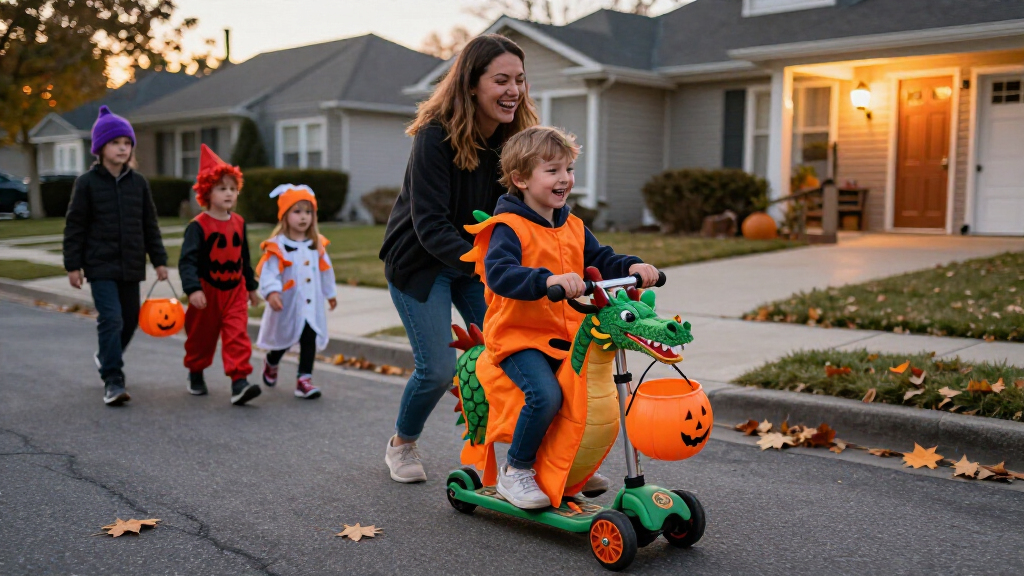
Kids’ Halloween ride-on costumes use a fabric shell or an inflatable shape held around the waist with shoulder straps, making a child look like they’re riding or being carried. Choose by the maker’s size guidance, then have your child practice walking, turning, sitting, and using the bathroom in it before Halloween. Clear vision, secure straps, nighttime visibility, and adult supervision matter as much as the costume’s look.
Your child’s legs can become a dinosaur’s feet, a horse’s hooves, or the wheels beneath a tiny spaceship—and suddenly every step gets a laugh. Kids’ Halloween ride-on costumes create that playful illusion with a shell or inflated shape worn around the waist.
This guide explains what they are, how to compare styles, and what to check before your child heads out for candy. A few minutes of practice at home can help turn a funny costume into a more comfortable night on the sidewalk.
Use the costume maker’s height and weight guidance, then check fit with the clothes and shoes your child will wear.
Have your child practice seeing, walking, turning, climbing, sitting, and using the bathroom in the full costume.
Inflatable styles need a working fan, batteries, clear airflow, and a plan for safe movement if power stops.
Keep hems and accessories from dragging, add nighttime visibility aids, and supervise children near roads.
Check the care instructions and look up the product in CPSC recall listings before Halloween.
How a ride-on costume creates the floating-legs illusion
A kids’ Halloween ride-on costume is an outfit that makes your child look like they’re sitting on or being carried by a character, animal, or vehicle. Most use a lightweight fabric shell with shoulder straps, while inflatable versions use a small fan to hold their shape. Your child’s own legs stay visible underneath, often appearing to belong to the figure.
That’s the trick: the shape sits around the waist, but the child walks underneath it. A child riding a green dinosaur might stomp down the path while their legs seem to be the dinosaur’s legs. A hobby horse or unicorn design can create a similar photo-ready gag with less bulk.
The design changes how the illusion works and how it feels. A shell relies on its fabric and structure to keep its shape, so it may hang or shift if the straps do not sit securely. An inflatable costume gets its volume from moving air, which can create a more dramatic outline but adds a fan, batteries, and an air intake to manage. That extra volume also changes the space your child needs to turn, pass through a doorway, or walk beside other trick-or-treaters.
When you shop, compare how the costume is held up, what parts are included, and whether it uses batteries. Those details affect more than setup: they help you judge what your child will need to wear it comfortably and what to check if the costume shifts or loses its shape.
Pick between a simple shell and an inflatable costume
Non-inflatable ride-on costumes usually have fewer parts to manage, while inflatable styles create a larger shape with the help of a battery-powered fan. The right choice depends on your child’s comfort, the event, and how much room they’ll need to move. A dinosaur that gets a big reaction in an open yard may feel cumbersome on a crowded sidewalk.
| Feature | Fabric or padded shell | Inflatable style |
|---|---|---|
| Look | Shaped but often less bulky | Large, full-volume silhouette |
| What to manage | Straps, seams, and closures | Straps, fan, batteries, and clear airflow |
| Movement check | Test steps, turns, and sitting | Test movement and sitting while inflated |
| Before buying | Check fit and any loose pieces | Check instructions and what happens if power stops |
Think about the whole evening, not just the costume’s appearance. A lighter shell may be easier to wear through narrow doorways or for a quick bathroom break, though its shape may be less dramatic. An inflatable can create a larger visual payoff, but the fan, batteries, and air intake become part of the wearing experience. If the shape deflates, it may hang differently and make it harder for your child to move; learn the maker’s guidance for that situation before heading out.
Imagine your child wearing an inflatable dragon to a school parade, then climbing into a car afterward. If the inflated shape makes sitting awkward, the parent carrying a spare tote may appreciate a less bulky design. Check recent customer reviews, because online listings often offer more styles and size choices than a local costume rack.
Use this five-step fit check before Halloween
To check a ride-on costume, put it on with the clothes and shoes your child plans to wear, then practice ordinary movements in a clear space. Use the manufacturer’s height and weight guidance as your starting point, since age alone won’t tell you how the straps and shell will fit. A costume that is too large can shift or catch on things; one that is too small may pull at the shoulders or be difficult to take off. Try this quick sequence at home:
- Check the view. Ask your child to look forward, down, and to each side; the costume should not cover their face or block their view. Clear sight matters when they are approaching a curb, watching for a driveway, or responding to an adult.
- Walk and turn. Watch for fabric that drags, a shape that bumps into things, or steps that look unsteady. Turning is useful to test because a wide costume may stay in your child’s way even when walking straight seems easy.
- Try a curb and a few stairs. Keep a hand close by and see whether the costume makes climbing awkward. If your child cannot lift a foot or judge a step comfortably, plan a route with fewer stairs or choose a design with less bulk.
- Sit and stand. Test a chair, car seat, or stroller if your child will use one during the evening. This reveals whether the shape compresses, tips, or needs to come off before a ride.
- Practice bathroom breaks. Have your child get in and out of the costume with the help they’ll have on Halloween. If removal takes time or requires an adult, factor that into the evening rather than discovering it when your child is already uncomfortable.
For example, the unicorn that fits over a T-shirt might press against a winter coat or slip off the shoulders. Repeat the check with the actual outer layers, and make sure straps stay secure without digging in. A short practice run can reveal problems a mirror selfie won’t, and gives you time to adjust the fit or change the plan.
Keep the costume visible and easy to move in after dark
Kids can trick-or-treat more comfortably when they can see clearly, walk freely, and stand out to adults nearby. Test the full outfit in the dim light of your porch or hallway, especially if it has dark fabric or a wide shape. A bulky outline may hide a child’s movements from people nearby, while dark fabric can blend into a dim street. Reflective details or a flashlight can help others see your child, and an adult should supervise children near roads.
Loose fabric and oversized accessories can catch on steps or drag along the pavement. That can turn a minor snag into a trip, especially when a child is looking at a house or carrying a treat bag. Keep the costume away from candles and other open flames, and check whether its label identifies it as flame-resistant; that label does not mean fireproof. Stable shoes also help more than decorative footwear that makes walking wobbly.
Comfort changes with the weather and the child. A costume worn over a coat can affect the fit, while an inflatable shape may feel warm when your child is walking briskly. If your toddler keeps tugging at the straps during your practice lap, that can be a sign the fit or design is distracting or uncomfortable; a simpler, lighter design may suit them better. Follow the costume maker’s age guidance, and check the U.S. Consumer Product Safety Commission (CPSC) recall listings for the product before buying or using it.
Make battery and care checks before the big night
Inflatable ride-on costumes need a working fan and the batteries specified by the maker, though the exact setup varies by product. Read the instructions for battery placement and expected runtime, and keep the fan’s air intake clear while your child wears it. The fan is what maintains the costume’s shape, so a blocked intake or depleted battery can change how the fabric hangs around your child. Before the event, find out what happens to the costume if the fan stops so you can help your child move safely.
Give the whole outfit a trial run rather than testing the fan alone. A child may enjoy the inflated look in the living room, then discover they can’t sit comfortably on the porch steps. For a long evening, consider where you’ll keep spare batteries if the instructions recommend them. Also consider how far you’ll be from a place to adjust the costume; a parade or walk through a busy neighborhood may make small issues harder to fix.
Cleaning needs vary, too. Follow the care label; some costumes call for spot cleaning or gentle hand cleaning, and electrical parts on inflatable styles must stay dry. Keeping the fan and battery compartment dry helps avoid damaging parts the costume needs to inflate. Let the costume dry fully before putting it away, so it’s ready for the next parade or dress-up day.
Shop online by measurements, materials, and recent reviews
When you shop online, use the maker’s measurements and product instructions to judge fit, included parts, materials, care, and any battery requirements. Those details help you predict whether the costume will work with your child’s height, outer layers, and plans for the night. Photos can show the grin-worthy look, but they rarely show whether a child can turn around or climb stairs in the costume. Read recent reviews for comments about sizing, straps, and movement; repeated mentions of slipping or restricted movement can help you decide what to test closely.
For example, a listing might show a spaceship with a snug shell, but leave unclear whether it arrives with batteries or fits over a coat. Check those details before ordering, along with shipping timing, so the costume doesn’t arrive too late for a trial run. That timing matters because the trial gives you an opportunity to adjust the fit or choose a different costume if your child cannot see or move comfortably. Designs, prices, and popular characters change from year to year, so current listings matter more than an old roundup.
Simple ride-on shapes can also leave room for personalization. If you add an accessory, keep it lightweight and firmly attached; a paper star or soft decoration may work better than a heavy piece that swings as your child walks. A dangling or loose decoration can snag or alter the costume’s balance, so check it during the same walk-and-turn practice. Let your child help choose the theme, then make the fit check part of the fun.
Frequently Asked Questions
How does a kids’ ride-on costume work?
A shell or inflated shape sits around the child’s waist and usually stays up with shoulder straps. The child’s legs show beneath it, creating the illusion that they’re riding or being carried by the costume’s character.
What age is a ride-on costume suitable for?
Suitability depends on the particular design, its fit, and your child’s coordination. Follow the maker’s age and size guidance, then check that your child can see and move comfortably; younger children may need a simpler costume and close adult help.
Are ride-on costumes safe for trick-or-treating?
A costume is easier to manage when it fits securely, leaves your child’s view clear, and allows steady walking. Practice at home, add visibility aids after dark, supervise near roads, and keep the costume away from open flames.
Can my child sit down in a ride-on costume?
It depends on the design. Inflated or bulky shapes can make sitting difficult, so test a chair, car seat, or stroller before Halloween.
Do inflatable ride-on costumes need batteries?
Most inflatable versions use a small battery-powered fan, but setups vary. Check the product instructions for battery type, placement, and runtime, and follow the maker’s advice about spare batteries.
Conclusion
Pick the costume your child can see and move in, then test the full outfit before Halloween. The funniest floating legs are even better when they can make it all the way down the block.
Halloween Picks
halloween
As an affiliate, we earn on qualifying purchases.