
Use this guide to choose a ride-on toy that fits your toddler, prepare it for use, and teach your child to ride in a safe area. It is written for caregivers with no prior experience selecting or setting up these toys. Allow 30-60 minutes for checking the product, assembling it if needed, and supervising a short first ride.
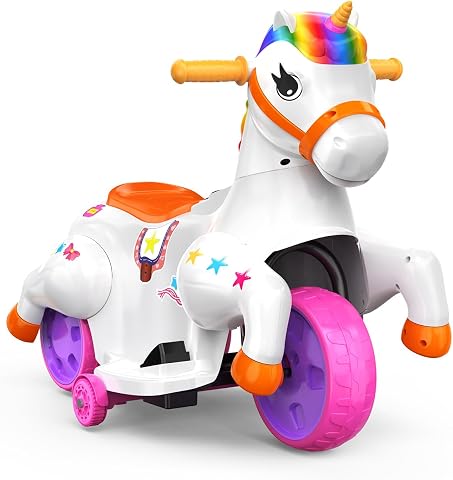
12V Electric Unicorn Ride-On Toy for Kids, 2-in-1 Riding and Rocking Horse, White
- ✔ Recommended age: 2–5 years
- ✔ Battery: 12V, 4.5Ah
- ✔ Motors: 2 × 25W

YOHOPO Licensed Porsche Cayenne 24V Two-Seater Ride-On Car with Remote Control, Pink
- ✔ Recommended age: 3 years and up
- ✔ Seating: Two seats
- ✔ Battery: 24V, 7Ah rechargeable
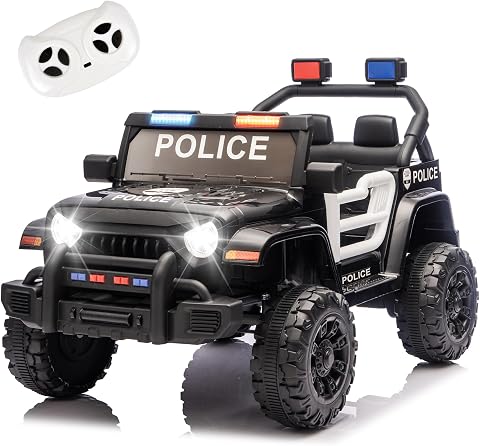
OKYBABY 12V Kids’ Ride-On Police Car with Parental Remote Control
- ✔ Recommended age: 3–8 years
- ✔ Maximum child height: Under 3.6 ft
- ✔ Battery: 12V rechargeable
Difficulty: Beginner | Time: 30-60 minutes for selection, setup, and a first supervised ride
What You’ll Need
Tools & Materials:
- The toy’s instruction manual and any included assembly tools
- A tape measure or ruler
- A helmet if the manufacturer recommends one for the toy
- A flat, clear indoor or outdoor practice area
Knowledge:
- The child’s age, height, and approximate weight
- Basic ability to follow simple directions while supervised
Choose a toy whose age, height, and weight limits include your child. Check the packaging or manufacturer’s current instructions; labels and assembly details vary by model. Do not assume that a toy is suitable because another child uses it.
12V Electric Unicorn Ride-On Toy for Kids, 2-in-1 Riding and Rocking Horse, White
This unicorn is the most toddler-centered choice in the group. Its ages 2–5 recommendation reaches younger riders than either car, and the maximum speed of 1.86 MPH is lower than the OKYBABY’s listed upper setting of 3.2 MPH and the Porsche’s 4.3 MPH remote setting. That gives it a simpler pace for families who want a gentle first powered ride. The wide body and training wheels are intended to help resist tipping, although caregivers should still supervise riding and use it on an appropriate surface.Its defining advantage is that it can switch between riding and rocking, extending play without asking a toddler to steer a car. The cars offer parent remote controls, whereas this model uses pedal operation and forward/reverse controls, so it gives caregivers less direct control over movement. Its stated runtime is up to 60 minutes, shorter than the Porsche’s up to 110 minutes and the police car’s up to 1–2 hours. Choose it for age fit and dual-mode play; skip it if remote supervision or a passenger seat is essential.
Pros:
- Riding and rocking modes add two kinds of play.
- Recommended age begins at 2 years.
- Training wheels and a wide body are designed to help prevent tipping.
- Forward/reverse controls, music, and a battery indicator are included.
Cons:
- No parent remote is listed; driving uses pedal operation.
- Maximum speed is 1.86 MPH, and stated runtime is up to 60 minutes.
Best for: Families seeking a first powered ride for a child ages 2–5 who may also enjoy a rocking mode.
Not ideal for: Caregivers who want a parent remote, two seats, or a longer stated playtime.
Bottom line: For the youngest riders in this comparison, the unicorn’s low stated speed and rocking option make it the most toddler-focused all-rounder.
“For the youngest riders in this comparison, the unicorn’s low stated speed and rocking option make it the most toddler-focused all-rounder.”
YOHOPO Licensed Porsche Cayenne 24V Two-Seater Ride-On Car with Remote Control, Pink
When the goal is a shared ride, the Porsche is the only product here with two seats. That distinction outweighs its extra car features for families with siblings or a friend who will ride together. Its parent remote includes three speed settings and an emergency stop, providing a way to manage driving that the unicorn does not offer. The car is recommended for ages 3 and up, however, so the more toddler-specific unicorn remains the better fit for a younger beginner.It also has the lineup’s longest stated playtime—up to 110 minutes—but the manufacturer says duration depends on conditions. That figure should not be treated as a guaranteed session length. Suspension, anti-slip tires, soft start, lockable doors, and dual three-point harnesses add practical considerations for a two-child vehicle; Bluetooth, MP3 playback, and LED headlights are secondary entertainment features. Compared with the single-seat OKYBABY, it is better suited to shared play but needs assembly and is a larger-format choice. Its listed remote speeds reach 4.3 MPH, so its greater flexibility comes with a faster top setting.
Pros:
- Two seats accommodate siblings or a friend.
- Parent remote offers three speeds and an emergency stop.
- Suspension, anti-slip tires, soft start, and harnesses are included.
- Manufacturer states up to 110 minutes of play, depending on conditions.
Cons:
- Requires some assembly despite being 70% pre-assembled.
- Playtime varies with terrain, load, and driving conditions.
- Its 4.3 MPH top remote setting is faster than the unicorn’s stated maximum.
Best for: Families with two children ages 3 and up who want shared seating and parent remote operation.
Not ideal for: A younger toddler’s first ride, a compact play area, or families who want a ready-to-use toy with minimal setup.
Bottom line: Pick the Porsche when shared seating and remote oversight matter more than a younger age recommendation or a compact, simple ride.
“Pick the Porsche when shared seating and remote oversight matter more than a younger age recommendation or a compact, simple ride.”
OKYBABY 12V Kids’ Ride-On Police Car with Parental Remote Control
The OKYBABY is a useful middle ground for families who want a child to steer while keeping a parent control available. It supports child-operated and remote modes, with three speed levels from 1.86 to 3.2 MPH and a slow-start design. Compared with the unicorn’s lower fixed maximum speed, it offers more room to adjust as a child gets comfortable; compared with the Porsche, it is a one-child vehicle with a lower listed top speed. The remote makes it easier for an adult to guide the ride, but does not change the stated fit limit: one child under 3.6 feet tall.Four-wheel shock absorption, a seat belt, opening doors, lights, and a horn round out the police-car setup. The product also lists an MP3 player, though those extras matter less to toddler fit than the speed controls and remote. The main planning constraint is charging: the 8–12-hour charge precedes a stated one to two hours of play. That playtime overlaps the Porsche’s claim but is not directly comparable because the manufacturers describe conditions differently. Choose this model for remote-supervised practice in a single-seat car; choose the unicorn for younger ages and rocking, or the Porsche for two passengers.
Pros:
- Offers both child driving and parent remote control.
- Three speed settings and slow start allow a more gradual driving pace.
- Four-wheel suspension and a seat belt are included.
- Adds opening doors, lights, horn, and MP3 playback.
Cons:
- Charging is listed as 8–12 hours.
- Stated playtime is up to 1–2 hours per charge.
- Designed for one child under 3.6 feet tall.
Best for: Caregivers of a child ages 3–8, under 3.6 feet tall, who want remote control and adjustable speeds in a single-seat car.
Not ideal for: Two-child households seeking shared seating, children above the height limit, or families who need a quick recharge between sessions.
Bottom line: The OKYBABY suits families prioritizing remote-supervised driving practice, provided its height limit and overnight-length charge fit their routine.
“The OKYBABY suits families prioritizing remote-supervised driving practice, provided its height limit and overnight-length charge fit their routine.”
As an Amazon Associate we earn from qualifying purchases.
Before You Start
Read the manual and all warning labels before assembling or using the toy. Ride-on toys are not all intended for the same surfaces or skills: some are pushed with the feet, while others have pedals, handles, or battery power. Use the product only as directed, keep an adult within arm’s reach during early rides, and stop if the child is tired or upset. Keep the toy away from stairs, traffic, pools, driveways, steep slopes, and other hazards.
Step-by-Step Instructions
Step 1: Match the toy to your child
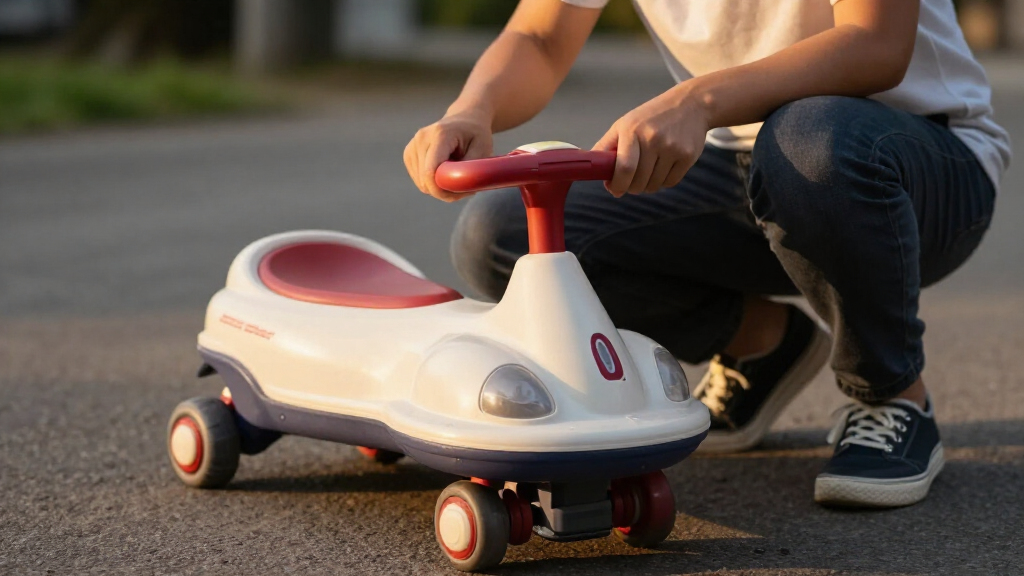
Check the product’s age range, maximum weight, and any stated height or development requirements. Compare them with your child’s current size and abilities. For a foot-powered toy, look for a seat height that lets the child sit upright and place both feet flat on the ground with slightly bent knees. For a pedal toy, check the manufacturer’s fit guidance and confirm the child can reach the pedals without stretching.
Tip:Do not buy a toy for a child to grow into if they cannot control it now. A child who cannot put their feet down or reach the controls may have trouble stopping.
Check: The child falls within the listed limits and can reach the floor or controls as the manufacturer specifies.
Step 2: Choose a suitable style and location
Select a design suited to the child’s current coordination and the place where they will ride. A stable, low foot-powered toy can suit a beginner who can sit and push with their feet. Choose a powered model only if the child meets the maker’s age and skill requirements and you can supervise according to its instructions. Plan to use the toy on a level, dry surface with enough open space to turn and stop.
Tip:Check whether the toy is made for indoor, outdoor, or both types of use. Hard wheels can mark floors, and some toys handle uneven ground poorly.
Check: You have identified a permitted surface with a clear area away from steps, vehicles, water, and obstacles.
Step 3: Inspect the toy and assemble it
Lay out the parts and compare them with the manual’s parts list. Assemble the toy in the order shown, using only the supplied or specified fasteners and tools. Tighten connections as directed, attach any required handles or guards, and remove packaging, ties, and small loose parts from the child’s reach. Do not modify the toy or substitute hardware.
Tip:Keep the manual for future checks. If a part is missing, damaged, or does not fit, contact the seller or manufacturer before use.
Check: All listed parts are present, fittings are secure, and the toy matches the manual’s assembled diagrams.
Step 4: Check the toy before the first ride
Place the toy on the intended riding surface and inspect it at child height. Check that wheels or other moving parts turn as intended, the seat and handles are secure, and there are no sharp edges, cracks, or exposed pinch points. For a battery-powered model, follow the manual’s charging and battery instructions and check that controls stop the toy as described.
Tip:Never test a powered toy with the child aboard until you have read how to start, steer, and stop it.
Check: The toy sits steadily, operates as the maker describes, and has no visible damage or loose fittings.
Step 5: Prepare the child and practice area
Move the toy to the cleared, level area and remove objects the child could collide with. Have the child wear clothing that will not catch in wheels or moving parts and shoes that stay on securely. Follow the manual’s protective-gear guidance. Explain one simple rule at a time: stay in the practice area, move slowly, and stop when asked.
Tip:Keep pets and other children out of the riding path. Avoid wet, loose, or slippery surfaces that can affect steering and stopping.
Check: The riding space is clear, the child is dressed for safe movement, and the child can attend to a simple stop instruction.
Step 6: Help the child mount and get comfortable
Hold the toy steady while the child sits down. Show them where to place their feet and hands, and confirm that they can stay balanced in the position specified by the manufacturer. For a toy with pedals or powered controls, demonstrate the controls while the toy is stationary and explain how to stop before allowing movement.
Tip:Do not pull or push the toy to make the child ride. Let them decide whether they feel ready, and pause if they seem frightened or cannot sit steadily.
Check: The child can sit securely, hold on where needed, and follow your stop cue while stationary.
Step 7: Supervise a short first ride
Stay close and let the child begin at a slow pace in the open practice area. For a foot-powered toy, let them push with their feet, glide briefly, and put their feet down to stop. For another style, follow its operating instructions and supervise the controls directly. Practice starting, steering gently, and stopping for a few minutes, then end the session while the child is still comfortable.
Tip:Keep the first ride away from slopes and boundaries. Do not allow riding near roads, driveways, stairs, or water, even if the child appears confident.
Check: The child can move slowly, remain in the clear area, and stop with your help or the toy’s instructed stopping method.
Step 8: Put the toy away and schedule checks
After the ride, park or store the toy where it cannot roll into a walkway or be reached by younger children. Follow the manual for cleaning, battery charging, and storage. Before later rides, quickly check for loose parts, worn wheels, damage, and changes in fit as your child grows.
Tip:Stop using the toy if a fastener loosens repeatedly, a part cracks, or a control does not work as described. Arrange repair through the manufacturer or replace the toy.
Check: The toy is stored safely, and you know what to inspect before the next session.
Common Mistakes to Avoid
- Choosing a toy based only on age or appearance. — Check the full age, height, weight, and ability guidance, then confirm the child can reach the floor or controls.
- Skipping assembly instructions or tightening parts by feel. — Use the manual’s assembly order and specified hardware. Do not let the child ride until the required checks are complete.
- Starting practice on a slope, rough ground, or a crowded path. — Begin on a level, dry, open surface with an adult close by and hazards removed.
- Leaving a toddler to ride without direct supervision. — Stay close enough to intervene, especially during early rides, and follow the product’s supervision guidance.
Troubleshooting
Problem: The child’s feet do not reach the ground comfortably.
Solution: Stop the ride and recheck fit guidance and seat adjustment, if the model allows it. If the child still cannot reach as directed, choose a smaller suitable toy.
Problem: The toy wobbles, pulls to one side, or makes an unusual sound.
Solution: Take it out of use. Check assembly and wheels against the manual; contact the manufacturer if the cause is unclear or a part is damaged.
Problem: The child is afraid or refuses to move.
Solution: Let them get off and watch you demonstrate the toy while it is stationary. Try again another time without pressure, or choose a simpler toy that fits their current comfort and coordination.
Problem: A powered toy will not start or stop as expected.
Solution: Remove the child, switch it off, and follow the manual’s battery and control checks. Do not use it until the controls behave as specified.
What Success Looks Like
The toy fits the child and complies with its limits; it is assembled and in working condition; the practice area is level and clear; and the child can sit securely, move slowly, and stop with supervision. Continued use is appropriate only while the toy remains in good condition and the child stays within its stated limits.
Next Steps
Keep early sessions short and supervised, then extend them only as the child becomes comfortable and can follow safety directions. Recheck fit as the child grows and inspect the toy before each ride. Follow the maker’s maintenance and battery guidance, and stop use if damage or a control problem appears.
Frequently Asked Questions
What age is right for a toddler ride-on toy?
There is no single suitable age for every model. Use the manufacturer’s age and size limits, and consider whether the child can sit steadily and reach the floor or controls as directed.
Does my toddler need a helmet?
Follow the toy manufacturer’s instructions and local guidance for the specific toy. If a helmet is recommended, use one that fits the child correctly and is intended for that activity.
Can a ride-on toy be used indoors?
Only use it indoors if the maker permits indoor use. Check that the floor is suitable, protect fragile surfaces if needed, and clear furniture, stairs, and other obstacles from the route.
How long should the first ride last?
Keep the first session brief and end it if the child becomes tired, frustrated, or unsteady. The manual may give additional guidance for powered models.
When should I replace the toy?
Stop using it if it is cracked, unstable, missing a required part, outside the child’s size limits, or has controls that fail. Contact the manufacturer about repair or replacement guidance.