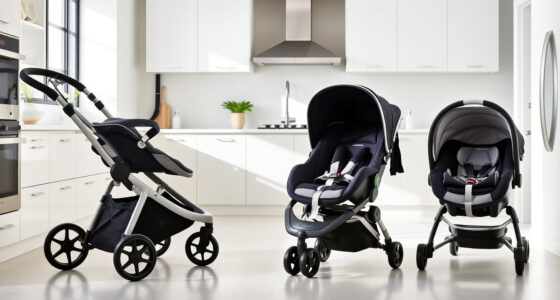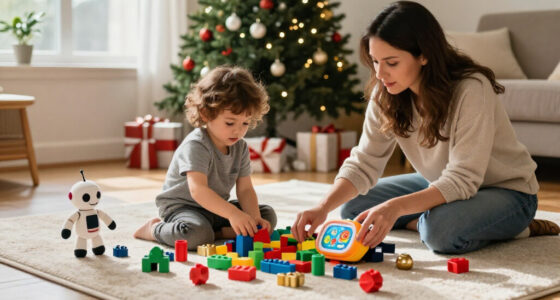
Choosing a ride-on toy for a toddler comes down to how much control and independence you want the child to have. A push ride-on uses the child’s feet for movement, so it suits short indoor or outdoor trips and early practice with balance and steering. A battery-powered ride-on adds motorized movement, often with a pedal, steering wheel, and vehicle-style details, but also calls for a suitable riding area, close supervision, charging, and a larger budget.
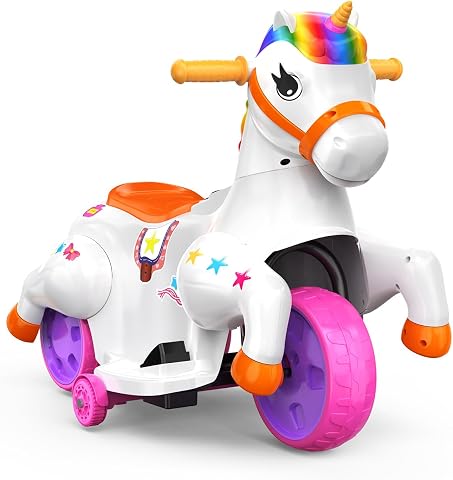
12V Electric Unicorn Ride-On Toy for Kids, 2-in-1 Riding and Rocking Horse, White
- ✔ Recommended age: 2–5 years
- ✔ Battery: 12V, 4.5Ah
- ✔ Motors: 2 × 25W
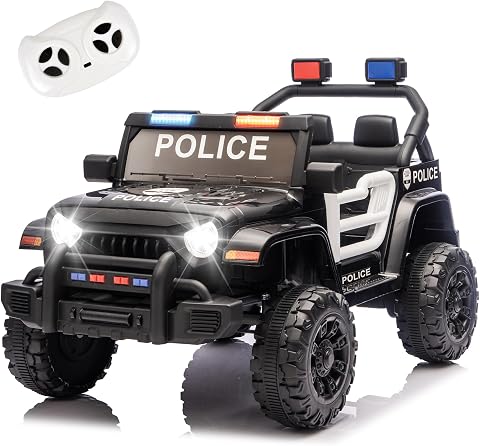
OKYBABY 12V Kids’ Ride-On Police Car with Parental Remote Control
- ✔ Recommended age: 3–8 years
- ✔ Maximum child height: Under 3.6 ft
- ✔ Battery: 12V rechargeable

YOHOPO Licensed Porsche Cayenne 24V Two-Seater Ride-On Car with Remote Control, Pink
- ✔ Vehicle: Licensed Porsche Cayenne
- ✔ Seating: Two seats
- ✔ Motor: Dual 120W motors
The key tradeoff is simplicity versus powered play. Push models are generally easier to store, less expensive, and more directly controlled by the child; powered models can feel more exciting and cover ground with less effort. Choose a push toy for a compact first ride or a young toddler still learning to steer. Consider a powered model when the child meets the maker’s age and size guidance and has a safe, flat area for supervised rides.
At a Glance
| Criteria | Push ride-on toys | Battery-powered ride-on toys | Winner |
|---|---|---|---|
| Movement and control | Child propels it with feet; some models allow adult pushing | Motor moves the vehicle; child steers and operates controls, depending on model | Depends |
| Age and learning fit | Often a practical first ride for toddlers who can sit steadily and reach the floor | Fit depends on the product’s minimum age, weight, and control requirements | A |
| Space and terrain | Usually manageable indoors or in a small, flat outdoor area | Needs clear riding space; performance varies across surfaces | A |
| Safety and supervision | Low speed, but stability, fit, and adult oversight still matter | Powered movement raises the need for close supervision and suitable boundaries | A |
| Setup and upkeep | Usually ready with little setup; no battery to charge | Requires charging and may need battery or parts care | A |
| Play features | Varies by model; often emphasizes simple steering and imaginative play | May include lights, sounds, pedals, or vehicle styling | B |
| Cost and value | Typically lower purchase and ongoing costs | Usually costs more; extra features matter only if they will be used | A |
12V Electric Unicorn Ride-On Toy for Kids, 2-in-1 Riding and Rocking Horse, White
The unicorn earns our top spot because it can serve two kinds of play without asking a toddler to master a more car-like driving setup. Its riding and rocking modes make it a flexible choice for ages 2–5, and training wheels plus a wide body are intended to help the toy feel stable. It also has forward and reverse controls, pedal operation, music, and a battery indicator, so the feature set stays focused on simple, visible functions.At a stated maximum of 1.86 MPH, it is slower than the police car’s upper setting and the Porsche’s fastest remote setting. That can be a useful tradeoff for families who value a gentler pace, though it also means children seeking a faster vehicle may outgrow the excitement sooner. Its stated runtime is up to 60 minutes, shorter than the other two manufacturers’ claims. Treat that figure as a ceiling rather than a guarantee, since the supplied details do not establish directly comparable test conditions.Compared with the OKYBABY, the unicorn has no listed parent remote or seat belt, but it offers rocking mode and is recommended from age two. Compared with the Porsche, it is a simpler single-child toy with less speed and no passenger seat. Choose it for versatility and an early age recommendation; skip it if remote intervention, a passenger seat, or longer stated playtime is central to your decision.
Pros:
- Switches between riding and rocking modes
- Training wheels and a wide body are intended to support stability
- Forward and reverse controls with pedal operation
- Includes music and a battery indicator
Cons:
- Maximum speed is limited to 1.86 MPH
- Manufacturer-stated runtime is up to 60 minutes
Best for: Families seeking one toy for riding and rocking, especially for a child in the stated 2–5 age range.
Not ideal for: Buyers who need parent remote control, a second seat, or a higher maximum speed.
Bottom line: We recommend the unicorn for its uncommon riding-and-rocking flexibility and slower stated speed, provided its shorter runtime and lack of a parent remote fit your needs.
“We recommend the unicorn for its uncommon riding-and-rocking flexibility and slower stated speed, provided its shorter runtime and lack of a parent remote fit your needs.”
OKYBABY 12V Kids’ Ride-On Police Car with Parental Remote Control
For a child ready to steer a small vehicle, the OKYBABY brings child-operated driving and parent remote control together in one 12V police car. The remote offers three speed settings, and a slow-start design is intended to make acceleration more controlled. A seat belt, four-wheel shock absorption, opening doors, horn, lights, and MP3 player give it a more vehicle-like experience than the unicorn, which is better suited to basic riding and rocking.The fit details deserve close attention: it is recommended for ages 3–8, but the supplied maximum height is under 3.6 feet. A child’s height may therefore matter more than the broad age range when deciding whether it will remain useful. The manufacturer states up to 1–2 hours of play after an 8–12-hour charge. That charging window can make spontaneous repeat sessions difficult, even though the stated playtime exceeds the unicorn’s 60-minute claim.Against the Porsche, the OKYBABY is a one-child vehicle with a 12V battery and a lower stated top speed of 3.2 MPH. It does not offer the Porsche’s second seat or listed harnesses for two riders, but its speed settings and remote make it a more focused choice for one beginner who benefits from adult control. Pass if your child is above the stated height limit or if long charging delays do not suit your routine.
Pros:
- Child driving and parental remote control
- Three speed settings and slow-start design
- Includes a seat belt, four-wheel suspension, and opening doors
- Lights, horn, starting sound, and MP3 player add vehicle-style play
Cons:
- Charging takes 8–12 hours
- Playtime is stated as up to 1–2 hours per full charge
- Designed for one child under 3.6 feet tall
Best for: Families with one beginner driver who want both child controls and the option for an adult to use a remote.
Not ideal for: Households wanting two seats, a quicker recharge, or a vehicle suited to children at or above 3.6 feet tall.
Bottom line: We favor the OKYBABY when parent remote control and adjustable speed matter more than shared seating or short charging time.
“We favor the OKYBABY when parent remote control and adjustable speed matter more than shared seating or short charging time.”
YOHOPO Licensed Porsche Cayenne 24V Two-Seater Ride-On Car with Remote Control, Pink
The YOHOPO is the clearest choice when one ride-on needs to carry two children. Its two seats and dual three-point harnesses give siblings or friends a way to ride together, a use neither the unicorn nor the single-seat OKYBABY is designed to serve. Adults can also take control with the remote, which has three speed settings and an emergency stop. Soft start and lockable doors add further controls aimed at a more managed ride.This is the most involved vehicle in the group. Dual 120W motors and a 24V battery support a stated remote speed range up to 4.3 MPH, above the unicorn’s 1.86 MPH maximum and the police car’s 3.2 MPH upper setting. That extra pace may appeal to children ready for a more substantial driving experience, but families should consider their available riding area and comfort with the speed range. Suspension and anti-slip tires are intended to support a smoother ride across varied surfaces; they do not remove the need to choose an appropriate surface and supervise children.The manufacturer states up to 110 minutes of play per charge, depending on conditions, and says the car arrives 70% pre-assembled. Both details need context: actual playtime varies with load, terrain, and driving, and some assembly remains. Bluetooth, MP3 playback, and LED headlights add entertainment, but they do not make this a better toddler fit than the unicorn’s simpler dual mode or the OKYBABY’s more compact single-child focus. Pick the Porsche for shared seating and remote-managed driving; skip it if you need a small, simple first ride-on.
Pros:
- Two seats with dual three-point harnesses
- Parent remote includes three speeds and an emergency stop
- Soft start, lockable doors, suspension, and anti-slip tires
- Bluetooth, MP3 playback, and LED headlights
Cons:
- Requires some assembly despite arriving 70% pre-assembled
- Stated playtime varies with terrain, load, and driving conditions
- Its 4.3 MPH top remote setting is faster than the other listed models
Best for: Families with two children who want shared seating, parent remote control, and a larger vehicle format.
Not ideal for: Buyers with limited riding space, a preference for a slower and simpler first ride-on, or no need for two seats.
Bottom line: We recommend the Porsche for households that will use its second seat and remote controls, while its size, speed range, and assembly make it a specialized pick.
“We recommend the Porsche for households that will use its second seat and remote controls, while its size, speed range, and assembly make it a specialized pick.”
As an Amazon Associate we earn from qualifying purchases.
Key Differences
The biggest practical difference is who supplies the movement. On a push ride-on, the child starts, stops, and changes speed largely through their own effort; an adult may help with a handle on some designs. A powered ride-on does the moving once its controls are engaged. That can make play feel more like driving, but the child needs to understand the controls and an adult needs to manage the riding area. The motor does not make a toy suitable for every toddler: follow its stated age, height, and weight limits.
Space and upkeep also separate the choices. Many push models can fit into a playroom or a small patio and need little beyond basic cleaning. Powered vehicles need somewhere appropriate to ride, room to turn, and a place to charge and store them. The higher price buys motorized movement and often extra effects, not automatically better developmental play or a longer useful life. For many first-time buyers, a well-sized push toy is the stronger value; pay more for a powered model when the child is ready and the family can use it regularly in a safe space.
Detailed Comparison
Movement and control (moderate difference)
Push ride-ons win for direct, simple control: the child moves by pushing against the ground and can stop by ceasing to push. Some designs also let an adult guide or push. Battery-powered models win for vehicle-like movement, with controls that vary by product. This is a moderate tradeoff: powered motion can be more engaging for a child who understands it, while foot-powered movement gives the child a straightforward way to set the pace.
Age and learning fit (Push ride-on toys wins — moderate)
Push ride-ons are usually the easier starting point for toddlers who can sit steadily and reach the floor, though the product’s own age and size guidance still governs. Powered models can suit older or developmentally ready toddlers who can operate the controls and respond to adult direction. The gap is moderate because readiness differs by child and by vehicle. Check the manufacturer’s limits rather than choosing by appearance or age alone.
Space and terrain (Push ride-on toys wins — major)
Push models take the win in small homes and compact outdoor areas because they are typically easier to maneuver and store. A motorized vehicle needs room to travel, turn, and stop, and the surface affects how it performs. This difference is major for families without a suitable riding area: a powered toy can be difficult to use safely if the only available space is crowded or uneven.
Safety and supervision (Push ride-on toys wins — moderate)
Push ride-ons have the simpler safety profile because they do not add motorized speed, but falls and tip-overs remain possible. Powered ride-ons demand closer attention to the toy’s speed, stopping method, boundaries, and nearby people or obstacles. Both call for an adult nearby, stable footwear, and use on a surface suitable for that model. Push models have a moderate advantage for toddlers still learning basic control; neither type should be treated as a substitute for supervision.
Setup and upkeep (Push ride-on toys wins — moderate)
Push toys usually win clearly: assembly is often limited and there is no battery to charge. Powered vehicles add charging routines, battery care, and more components that may need attention. The gap is moderate rather than major for families comfortable with routine upkeep, but it matters if the toy will be used spontaneously or stored in a tight space.
Play features (Battery-powered ride-on toys wins — minor)
Battery-powered vehicles often win on built-in effects such as lights, sounds, pedals, or realistic styling, although features vary and may raise the price. Push toys can still support imaginative play and steering practice with fewer controls. This is a minor-to-moderate advantage: choose powered features if they are part of the child’s appeal, but they do not by themselves make a toy easier to use or a better fit.
Cost and value (Push ride-on toys wins — moderate)
Push ride-ons generally offer better value for a first ride because their initial cost and ongoing needs are lower. Powered models cost more, and the premium makes sense when the child is ready to operate one, the family has suitable space, and motorized play will see regular use. This is a moderate difference: the cheaper option is not automatically better if the child specifically wants powered driving and can use it safely, but extra features alone are a weak reason to pay more.
Push ride-on toys: Pros and Cons
Pros:
- Usually more affordable and simple to maintain
- Often suits smaller play areas and indoor use, subject to the model’s guidance
- Child-powered movement offers straightforward practice with steering and coordination
Cons:
- The child must push to move, which may limit play for some toddlers
- Usually lacks motorized motion and powered vehicle effects
- An adult-push handle, when available, does not make every model suitable for every child
Battery-powered ride-on toys: Pros and Cons
Pros:
- Motorized movement can make play feel more like driving
- Some models offer features such as pedals, lights, or sounds
- May suit a child who is ready for its controls and has a safe riding space
Cons:
- Higher price and ongoing charging or battery care
- Needs room to ride and store
- Powered movement calls for close supervision and careful attention to product limits
Who Should Choose What
Choose Push ride-on toys if:
- You want a first ride-on for a toddler who can sit steadily and push with their feet.
- Your home or outdoor area is small, or you want a toy that is easy to bring out and put away.
- You prefer a lower-cost toy with little upkeep and straightforward movement.
Choose Battery-powered ride-on toys if:
- The child meets the specific vehicle’s age, weight, and control requirements.
- You have a flat, clear place for supervised rides and room to store and charge the vehicle.
- Motorized driving is a feature the child will use often enough to justify the additional cost.
Skip both if: Skip both for now if the toddler cannot sit steadily or use the toy within its maker’s fit guidance, or if you cannot provide a safe area and close supervision.
Value for Money
For most families choosing a first ride-on, the push model is the better value. It costs less, asks little of the owner, and can offer useful play without a battery or a dedicated riding area. Paying more for a powered vehicle is worthwhile when the child is ready for its controls and will have regular access to a clear, suitable place to ride. If those conditions are missing, the motor and added effects can become expensive features that see little use.
Final Verdict
Choose a push ride-on for a toddler’s first vehicle, especially when space, simplicity, and value matter most. It is the more practical default for early riding because the child supplies the movement and the toy is typically easier to store and maintain. Choose a battery-powered ride-on when the child meets the specific product’s limits, enjoys operating its controls, and can ride under close supervision in a suitable space. The deciding factor is readiness plus a safe place to use it; without both, the powered model’s price premium is hard to justify.
Frequently Asked Questions
Which type is better for a toddler’s first ride-on?
A push ride-on is often the more practical first choice for a toddler who can sit steadily and reach the ground. Check the toy’s age and size guidance, and stay nearby during play.
Are battery-powered ride-ons worth the higher price?
They can be worth paying more for when the child can operate the controls, the family has a suitable riding area, and the toy will be used regularly. Otherwise, a simpler push model usually offers stronger value.
Can a ride-on toy be used indoors?
Some push models may work indoors if the manufacturer allows it and there is enough clear, level space. Powered vehicles generally need more room; follow their surface guidance and keep them away from stairs, traffic, and obstacles.
What should I check before buying either type?
Check the maker’s age, height, and weight limits, the child’s ability to sit and control the toy, the stability and stopping method, and the space where it will be used. For powered models, also check charging and battery requirements.