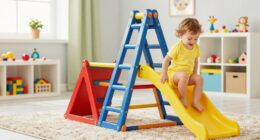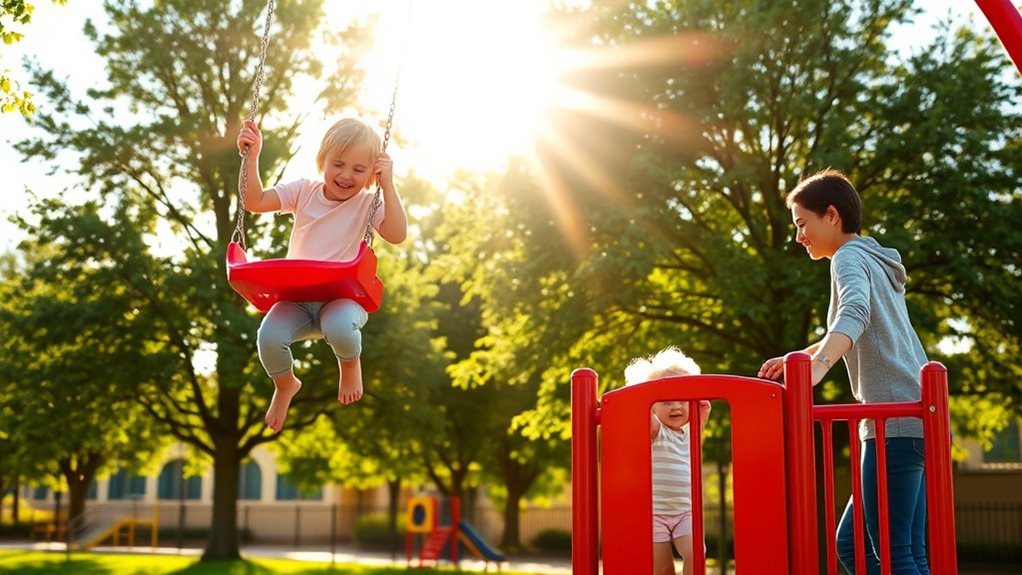

To encourage safe risk-taking in play and boost confidence, create a balanced environment with low-height structures and hazard-free spaces while allowing children to explore limits gradually. Guide them with reassurance, model risk-taking behavior, and praise their efforts. Support setbacks as part of growth and foster independence through decision-making. By supporting them thoughtfully, you help build resilience and confidence, ensuring safety as they learn to navigate challenges. Keep exploring for more ideas on balancing safety and independence.
Key Takeaways
- Create a safe, hazard-free environment with low-height structures to encourage adventurous play without excessive risk.
- Offer children choices and guide decision-making to foster independence and confidence in their actions.
- Model positive risk-taking behaviors and share personal challenges to inspire children to try new activities.
- Praise effort and resilience, emphasizing that setbacks are normal parts of growth and learning.
- Provide appropriate safety gear and support to balance safety with opportunities for safe exploration.

Risk-taking in play is an essential part of childhood development, offering children the opportunity to explore their limits and build confidence. As a caregiver or parent, your role is to create an environment where children can safely take risks while feeling supported. Striking the right balance between safety and fostering independence is key. You want children to experience the thrill of trying new activities and overcoming challenges, but you also need to guarantee they’re protected from serious harm. This balance encourages children to develop resilience and problem-solving skills, which are crucial for their growth.
Creating a safe environment that encourages children to take risks fosters independence and resilience.
To promote safe risk-taking, start by evaluating the environment carefully. Check that play areas are free from hazards, but don’t eliminate all risks—this would inhibit their learning. For example, a climbing structure with low heights can give children a sense of adventure without the danger of severe injury. Allow children to push their boundaries gradually, so they learn their limits and gain confidence in their abilities. When they fall or stumble, support them in getting back up and trying again, reinforcing a growth mindset. This approach not only builds resilience but also shows that setbacks are part of the learning process.
Fostering independence involves encouraging children to make decisions and solve problems on their own. You might set up activities that challenge them to navigate spaces or complete tasks without constant supervision. Giving children choices—such as which activity to try or how to approach a task—helps them develop decision-making skills and a sense of ownership over their play. Remember, your role isn’t to control every aspect but to provide guidance and reassurance. When children take risks, they learn to evaluate situations, gauge potential dangers, and develop self-confidence. Your support should be gentle yet firm, emphasizing that trying and failing is okay as long as they’re safe.
Additionally, modeling risk-taking yourself can inspire children to be brave. Share stories of times you faced challenges or took chances, showing that everyone encounters setbacks. Praise their efforts and resilience rather than just the outcome, reinforcing the idea that the process matters more than perfect results. Creating a safe space for risk-taking requires ongoing attention: stay alert to potential dangers, but also give children room to grow and learn from their experiences. When you balance safety with opportunities for independence, you empower children to develop confidence that will serve them well throughout life. Incorporating appropriate equipment and technology, such as protective gear or age-appropriate toys, can also support safe exploration and risk-taking.
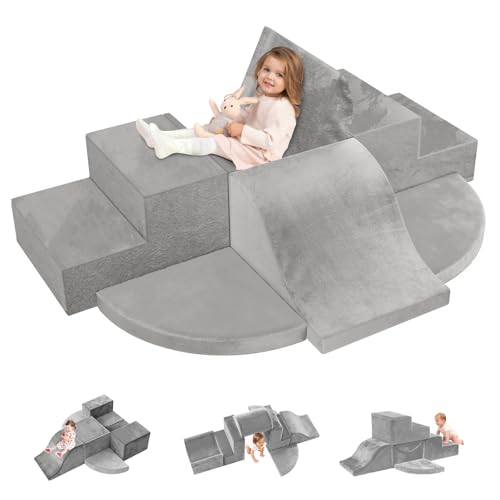
JWPEHOE 7-Piece Toddler Climbing Toys Indoor, Foam Climbing Blocks Soft Play Structures, Climbing Toys for 1 Year Old, Multi-Color Combinations Climbing Blocks, Indoor for Toddler1-3, Infant, Baby
【6 Different Shapes】Our baby climbing blocks consist of 6 Different Shapes. The varied shapes and colors are perfect…
As an affiliate, we earn on qualifying purchases.
As an affiliate, we earn on qualifying purchases.
Frequently Asked Questions
How Can Parents Balance Safety and Encouraging Independence?
You can balance safety and independence by conducting risk assessments of play activities and setting clear boundaries. Use supervision strategies that allow your child to explore within safe limits, gradually increasing their independence as they demonstrate responsibility. Trust their judgment, provide guidance, and stay alert. This approach helps your child build confidence while you guarantee their safety, fostering a healthy sense of risk-taking and independence.
What Are Signs a Child Feels Overwhelmed by Risk?
You might notice your child feeling overwhelmed by risk if they show emotional cues like trembling, tears, or frustration, or behavioral signals such as hesitating, withdrawing, or avoiding activities. It’s like they’re carrying a mountain of anxiety. Pay close attention to these signs, and gently check in with them. Recognizing these cues helps you support their confidence-building safely while respecting their limits, preventing overwhelm from taking over.
How Does Risk-Taking Influence Long-Term Confidence Development?
Risk-taking plays a vital role in long-term confidence development because it helps you learn about risk assessment and build resilience. When children face manageable challenges, they develop a sense of achievement and self-trust. You encourage this by supporting safe exploration, which boosts confidence. Over time, children become more comfortable taking risks, knowing they can handle setbacks, leading to stronger self-esteem and a positive outlook on challenges ahead.
Are There Age-Specific Risks Appropriate for Children?
Yes, age-appropriate risks are essential for children’s development. You should consider developmental considerations when encouraging children to take risks, ensuring activities match their physical and emotional maturity. For younger kids, simple challenges like climbing low structures build confidence safely, while older children can handle more complex risks. By tailoring risks to their age and development, you help them grow confidence while minimizing potential harm.
How Can Educators Support Safe Risk-Taking in School Settings?
They say “fortune favors the bold,” so you can support safe risk-taking by conducting thorough risk assessments and setting clear play boundaries. You guide children to explore confidently while minimizing danger, encouraging independence within limits. By actively overseeing activities and adjusting boundaries as needed, you foster resilience and decision-making skills. This balanced approach helps children learn to assess risks themselves, building confidence in a safe, supportive environment.

Kids Bike Helmet Set,CPSC Certified with Knee Elbow Wrist Pads Guards,Toddler Adjustable Black Helmet for Ages 2-3-5-8 Girls Child,Sports Protective Gear Set for Bicycle Skate Scooter
🛡️ 【Certified Safe, Kid-Approved Cool!】 US CPSC-certified helmets with shockproof PC shells and EPS foam shield against impacts….
As an affiliate, we earn on qualifying purchases.
As an affiliate, we earn on qualifying purchases.
Conclusion
Encouraging risk-taking in play helps build your child’s confidence and resilience. When you allow safe challenges, they develop problem-solving skills and independence. Did you know that children who engage in risky play are 50% more likely to develop better decision-making abilities? By supporting their adventures, you’re fostering their growth in a way that prepares them for life’s uncertainties. So, trust their instincts, set safe boundaries, and watch them thrive with confidence.

Hapfan 660lbs Swing Set with Slide,Crawl Tunnel and Monkey Bars for Backyard,5 in 1 Metal Swingset Outdoor for Kids Aged 3-12 (Patent Pending)
Safety First – The playset meets or exceeds ASTM safety standards. Adopting heavy duty A-frame design with 12…
As an affiliate, we earn on qualifying purchases.
As an affiliate, we earn on qualifying purchases.

Forest School Adventure: Outdoor Skills and Play for Children
Orders are despatched from our UK warehouse next working day.
As an affiliate, we earn on qualifying purchases.
As an affiliate, we earn on qualifying purchases.