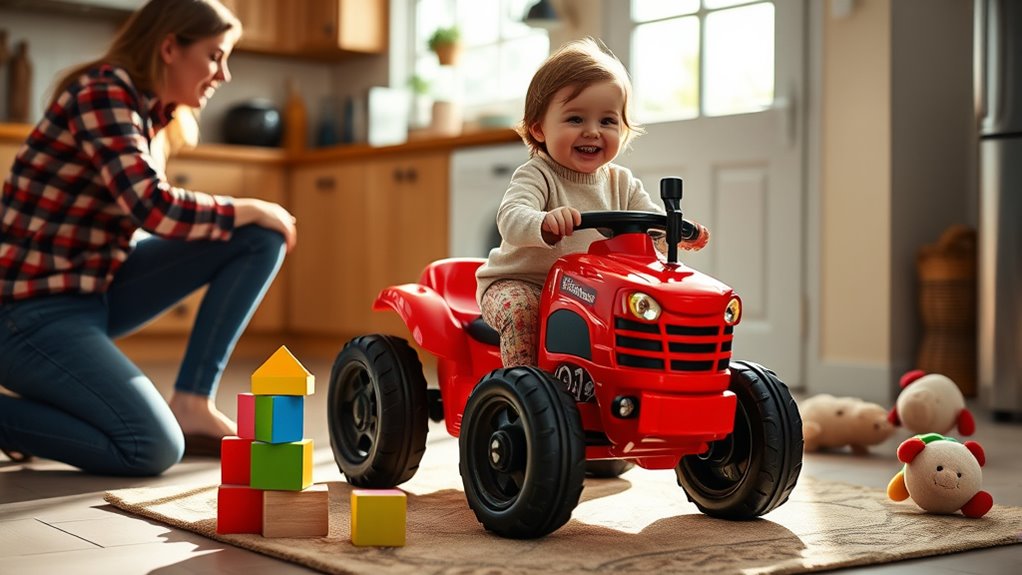

To incorporate ride-on toys into daily routines, start by choosing age-appropriate models that promote safety and development. Use them during outdoor play, errands, or visits to parks to make everyday activities fun and active. Supervise your child closely, teach proper riding habits, and set clear boundaries to guarantee safety. Including ride-ons in your routine encourages physical activity and responsible behavior, with more tips on making the most of these play tools just ahead.

Turn the school run and nap time into listening time
- Thousands of audiobooks, podcasts and originals
- Listen on your phone, tablet or Echo — also offline
- Cancel anytime
Key Takeaways
- Integrate ride-on toy play into daily outdoor activities to promote physical activity and movement.
- Use ride-ons during errands or neighborhood walks to make routines more engaging.
- Establish specific times for supervised riding to build consistency and safety habits.
- Encourage children to practice safe riding rules, such as proper posture and helmet use, during daily play.
- Choose age-appropriate ride-on toys with safety features to support development and prevent accidents.
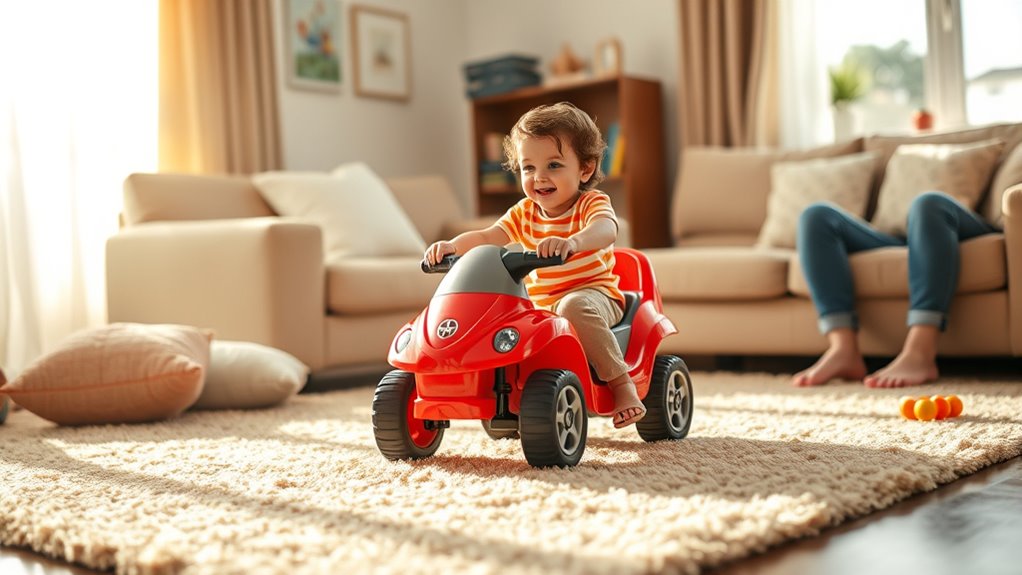
Ride-on toys have become a popular addition to daily routines, blending fun with practical benefits for children. They encourage movement, help develop coordination, and can turn ordinary outings into engaging adventures. However, to guarantee your child enjoys these benefits safely, it’s essential to follow some key safety tips and consider age appropriateness.
First, always prioritize safety by selecting ride-on toys suited to your child’s age and skill level. Manufacturers typically provide age recommendations for their products, and adhering to these guidelines can prevent accidents. For example, a toy designed for toddlers generally has lower speed capabilities and more stable structures, reducing the risk of falls or injuries. If your child is on the younger side, choose a model with features like a low center of gravity, supportive handles, and secure footrests. As your child grows, you can gradually introduce more advanced ride-ons, but never push them beyond their comfort or developmental stage.
Prioritize safety by choosing age-appropriate ride-on toys with suitable features for your child’s developmental stage.
When incorporating ride-on toys into daily routines, supervising your child is vital. Always stay nearby, especially during outdoor play or in busy environments. Make sure the play area is safe—free from obstacles, uneven surfaces, or traffic—so your child can focus on riding without hazards. Regularly inspecting the toy for damage, loose parts, or worn wheels helps prevent malfunctions that could lead to falls or injuries. Setting clear boundaries about where and when they can ride also promotes safe habits.
Teaching your child basic safety rules from the start will boost their confidence and awareness. Show them how to sit properly on the ride-on, keep their hands on the handles, and avoid sudden stops or sharp turns. Encourage them to wear protective gear, like helmets and knee pads, especially as they start riding in more dynamic environments. Consistent reinforcement of these safety tips builds habits that can last a lifetime and minimizes the chances of accidents.
Incorporating ride-on toys into daily routines isn’t just about fun; it’s also about fostering responsible habits early on. By selecting age-appropriate toys, following safety tips, and supervising their play, you create an environment where your child can enjoy riding while staying safe. This balanced approach ensures that ride-on toys become a positive part of your child’s development, offering both entertainment and physical activity that benefits their growth. Additionally, choosing ride-on toys with safety features can further enhance their security during play.
age-appropriate ride-on toy for toddlers
As an affiliate, we earn on qualifying purchases.
As an affiliate, we earn on qualifying purchases.
Frequently Asked Questions
How Can I Ensure My Child’s Safety While Using Ride-On Toys?
To guarantee your child’s safety while using ride-on toys, always emphasize helmet safety and make sure they wear a properly fitted helmet. Keep outdoor supervision constant to monitor their actions and prevent accidents. Teach your child to ride carefully, stay within safe areas, and avoid busy roads. Regularly check the toy for any damage, and set clear rules to promote safe riding habits. Your active oversight keeps play fun and secure.
What Are the Best Age-Appropriate Ride-On Toys for Daily Use?
You should choose ride-on toys suitable for your child’s age, focusing on those that promote balance development and motor skills. For toddlers, look for stable, low-to-the-ground options with easy-to-grip handles. As they grow, consider ride-ons with pedals or steering for more challenge. Always guarantee the toys are sturdy, have safety features, and match your child’s size to encourage safe, enjoyable daily use that supports their physical development.
How Do I Encourage My Child to Take Regular Breaks From Ride-On Toys?
Did you know that children should take a break every 30 minutes of play? To encourage your child to take regular breaks from ride-on toys, set a timer and introduce a fun routine, like stretching or a quick outdoor activity. Emphasize playtime balance by mixing ride-on fun with outdoor adventures, making breaks feel natural and exciting. This approach helps your child develop healthy habits and enjoy varied activities.
Are There Any Health Benefits Associated With Riding Toys?
Riding toys offer health benefits like improving muscle development and coordination. When your child rides, they strengthen their leg and core muscles while enhancing their balance and coordination skills. These activities promote physical activity, which supports overall health and development. By encouraging regular use, you help your child build stronger muscles and better coordination, setting a foundation for healthy growth and more active play in the future.
How Can I Store Ride-On Toys to Maximize Space and Safety?
Ever wonder how to keep your space tidy and safe? You can store ride-on toys by using designated storage solutions like bins, shelves, or wall hooks. Make certain to follow safety precautions by keeping toys in accessible yet out-of-the-way spots, preventing tripping hazards. Regularly organizing and inspecting the storage area ensures your child’s toys stay safe, accessible, and easy to put away, maximizing space and peace of mind.
Conclusion
Incorporating ride-on toys into your daily routines transforms mundane moments into playful adventures. While they encourage physical activity and independence, they also remind you to slow down and enjoy your child’s curiosity. The contrast between busy mornings and joyful rides highlights how simple toys can enrich daily life. Embrace these moments, blending structure with spontaneity, and watch your child’s confidence and happiness grow alongside their favorite ride-on toy.
Cold & flu season Picks
humidifiers
As an affiliate, we earn on qualifying purchases.