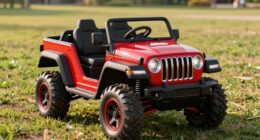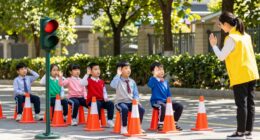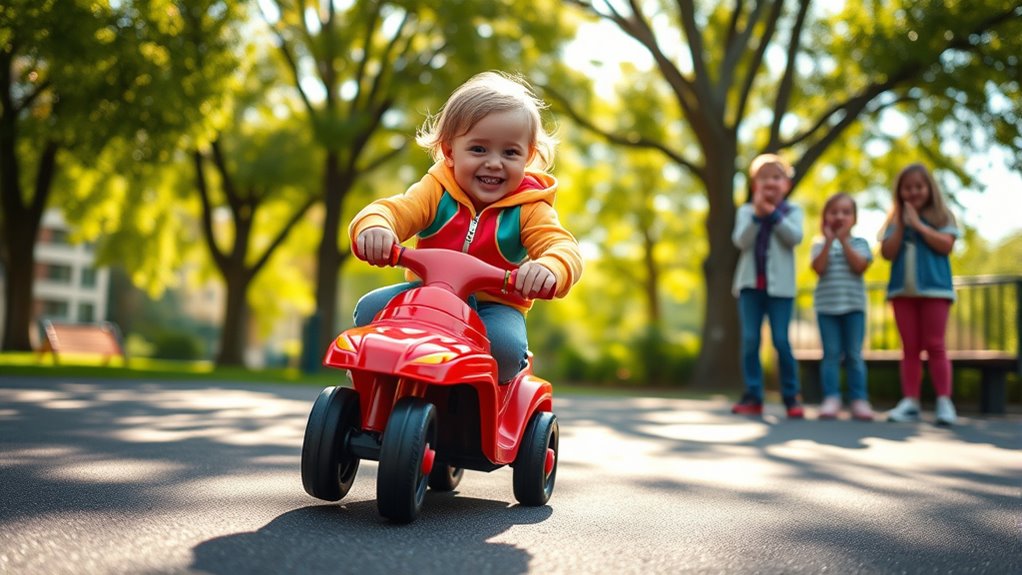

Encouraging risk-taking and resilience with ride-on toys helps your child develop confidence as they navigate obstacles and try new maneuvers. By creating a safe environment for experimentation, you let them learn from small setbacks, teaching perseverance and patience. As they master balancing and overcoming challenges, they build emotional strength and problem-solving skills. Keep exploring ways to support their growth, and you’ll discover even more ways to foster resilience through active play.
Key Takeaways
- Creating a safe environment with obstacle courses encourages children to explore their limits confidently.
- Allowing children to fall and recover teaches resilience and persistence in facing challenges.
- Supporting effort and celebrating progress foster a growth mindset and emotional resilience.
- Navigating obstacles helps develop problem-solving skills and adaptability.
- Emphasizing patience and focus during play builds self-efficacy and emotional strength.

Ride-on toys aren’t just fun for kids—they also serve as valuable tools for building risk-taking and resilience. When your child maneuveres a balance challenge, like steering around obstacles or climbing onto a ride-on vehicle, they’re developing more than just coordination. These moments push them out of their comfort zones, encouraging them to face new situations with confidence. Each wobble or stumble becomes a stepping stone for emotional growth, teaching them how to handle setbacks and persevere. As they learn to maintain their balance, they gain a sense of mastery over their body, which translates into a stronger sense of self-efficacy.
You might notice your child wobbling or faltering during play, but instead of intervening immediately, giving them space to attempt recovery helps build resilience. When they fall or lose balance, they learn to get back up, which reinforces their ability to cope with challenges. These experiences foster a mindset that mistakes are part of learning, not failures. Over time, they develop a more resilient attitude that’s vital for tackling bigger obstacles in life. The physical act of balancing on a ride-on toy also cultivates patience and focus, as your child must pay attention to their movements and surroundings. Incorporating active play into their routine further enhances their physical and emotional development.
Allow your child to recover from falls—building resilience and patience through every attempt.
Encouraging your child to take risks with ride-on toys doesn’t mean pushing them into dangerous situations. Instead, it involves creating a safe environment where they can explore their limits. This might mean setting up a gentle obstacle course or encouraging them to try a new maneuver that stretches their abilities. As they succeed or even fail, they learn that effort and persistence matter more than perfection. This mindset nurtures emotional growth by helping them manage feelings of frustration or disappointment constructively. You’ll see how their confidence grows as they realize they can overcome small setbacks, which prepares them for more significant challenges later.
Furthermore, maneuvering balance challenges on ride-on toys helps your child develop problem-solving skills. When they encounter difficulties, they learn to adjust their approach, fostering adaptability. These moments of trial and error contribute to resilience, as they understand that setbacks are temporary and surmountable. By supporting their efforts and celebrating progress, you reinforce a positive attitude towards risk-taking. Ultimately, this combination of physical challenge and emotional learning empowers your child to become more resilient, capable of handling the unpredictable nature of life with courage and confidence.

KidsBuddy Pikler Triangle Set with Cushion 9 in 1 Climbing Toys for Toddlers 1-3 Indoor Baby Climbing Gym Toddler Montessori Toys Wooden Toy with Maze Toy, Shape Sorter, Dinosaur Car
Patented Dinosaur Design: Our Pikler Triangle Set features a patented dinosaur design with a unique frame, detailed cushion,...
As an affiliate, we earn on qualifying purchases.
Frequently Asked Questions
How Do Ride-On Toys Promote Emotional Resilience?
Ride-on toys promote emotional resilience by helping you build resilience and emotional confidence as your child learns to navigate different terrains and challenges. When they fall or face obstacles, they develop problem-solving skills and perseverance. You see them gain confidence with each ride, which encourages them to take on new challenges. This process fosters resilience, teaching your child that setbacks are part of growth and empowering them to handle future difficulties confidently.
Are Ride-On Toys Suitable for All Age Groups?
Ride-on toys are suitable for various age groups, but you should consider age appropriateness and developmental suitability before choosing one. Younger children benefit from smaller, stable models that support their motor skills, while older kids enjoy more advanced, faster options that challenge their coordination. Always check the manufacturer’s guidelines to verify the toy matches the child’s age and developmental stage, guaranteeing safe and engaging play experiences.
What Safety Precautions Should Parents Take?
You should always prioritize helmet safety by ensuring your child wears a properly fitted helmet before riding. Keep a close eye on them through supervision strategies like staying nearby and setting clear boundaries. Regularly check the ride-on toy for any damages or loose parts, and teach your child safe riding habits. These precautions help minimize risks while encouraging their confidence and resilience on ride-on toys.
How Can Parents Encourage Safe Risk-Taking?
You can encourage safe risk-taking by guiding your child through risk assessment, helping them recognize potential hazards while they explore their ride-on toys. Support their developmental milestones by gradually increasing challenges, like balancing or steering, in a supervised environment. Praise their efforts to build confidence, and remind them of safe practices. This approach fosters resilience and independence, all while ensuring they stay safe as they learn new skills.
Do Ride-On Toys Support Physical Development?
Ride-on toys definitely support physical development. They boost your child’s motor skill development by encouraging them to push, steer, and balance. Plus, they enhance spatial awareness as your little one learns to navigate their environment. Think of it as giving them a head start in understanding their body’s capabilities. These toys turn playtime into a fun way for kids to build strength and coordination, setting a solid foundation for future physical activities.
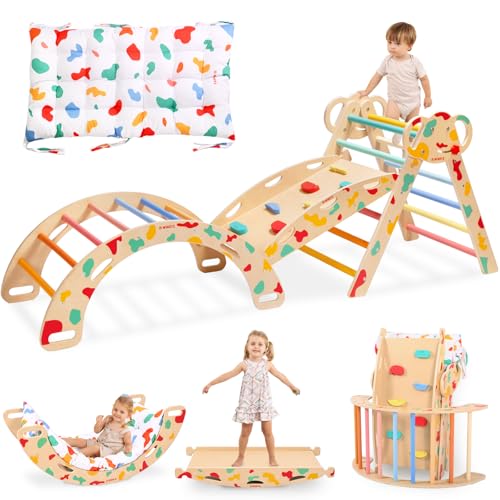
WINGYZ Pikler Triangle Set, Montessori Foldable 8-in-1 Jungle Gym & Reversible Animal Slide, Patent-Protected Climbing Set, Safe 2.35" Gap ASTM F963 Standards for Toddlers 18 Months-7 Years (Rainbow)
PICTURE THIS: YOUR CHILD’S EYES LIGHT UP — Imagine the delight as they discover a rainbow climbing wonderland....
As an affiliate, we earn on qualifying purchases.
Conclusion
So, as you watch your child navigate their ride-on toy, remember this moment isn’t just about fun. It’s about building their courage and resilience for life’s challenges ahead. Every wobble, every fall, pushes them closer to confidence. But what if this simple ride becomes the start of something bigger? Keep encouraging their adventures—because you never know, the next big leap might be just around the corner. Are you ready to see where it leads?
Amazon Product B0DZ3R72NS
As an affiliate, we earn on qualifying purchases.

ENYOPRO 2 Seater Ride On Car for Kids, 24V Licensed Ford Bronco Raptor Electric Power Ride On Truck Toy with Remote Control, 4 Wheels Shock Absorption, Soft Start, Bluetooth, Radio, 3 Speed - Blue
[Excellent Power & Longer Drive] - The ENYOPRO 24V 2 seater battery powered car for kids boasts dual...
As an affiliate, we earn on qualifying purchases.