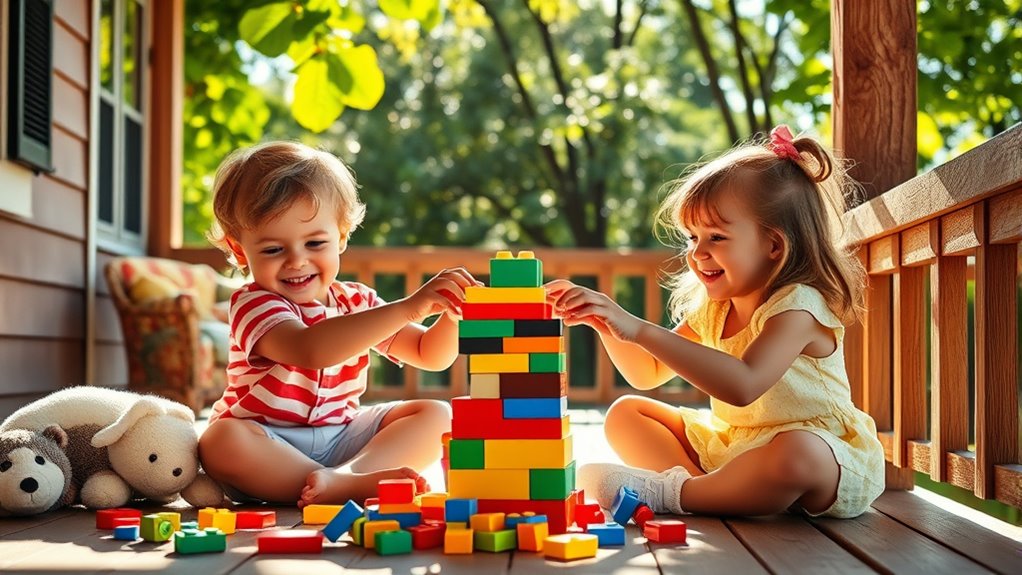

To encourage cooperative play with siblings and peers, model sharing and patience by demonstrating kind behaviors and praising efforts. Organize activities that require teamwork, like building puzzles or shared games, and gently guide conflict resolution by encouraging children to express feelings and listen to others. Use fun, practical settings such as movie nights or group projects to reinforce social skills. Keep fostering positive interactions, and you’ll help them build lasting relationships—there’s more to explore on how to do this effectively.

Turn the school run and nap time into listening time
- Thousands of audiobooks, podcasts and originals
- Listen on your phone, tablet or Echo — also offline
- Cancel anytime
Key Takeaways
- Model sharing, patience, and turn-taking behaviors to set positive examples for children.
- Use praise and gentle reminders to reinforce cooperative behaviors during play.
- Organize team activities like puzzles or shared games to promote communication and collaboration.
- Teach conflict resolution skills by encouraging children to express feelings and find mutual solutions.
- Create fun, practical environments such as movie nights to practice patience and respectful interactions.

Encouraging cooperative play helps children develop essential social skills and learn how to work with others. When you foster an environment where kids play together, you’re helping them build crucial abilities like sharing strategies and conflict resolution. These skills are vital for their overall growth and future relationships. As you guide them, you want to teach your children how to navigate interactions smoothly, focusing on ways to share and resolve disagreements calmly.
Fostering cooperative play builds social skills like sharing and resolving conflicts for lifelong healthy relationships.
One effective way to promote sharing strategies is to model generous behavior yourself. Show your child how to take turns with toys, share snacks, or exchange ideas during play. When your child sees you sharing your belongings or patiently waiting their turn, they’ll pick up those habits more naturally. Reinforce these behaviors with gentle reminders and praise when they successfully share or collaborate. This positive reinforcement encourages them to continue practicing sharing strategies in different situations.
Conflict resolution is another key component of cooperative play. Kids will inevitably encounter disagreements, but your role is to help them learn how to resolve conflicts constructively. Teach your child to express their feelings clearly without yelling or hitting. Encourage them to listen to the other person’s perspective, fostering empathy and understanding. When conflicts arise, guide them to find solutions together, such as taking turns or finding a compromise. Over time, this process helps children develop patience and problem-solving skills, which are essential for maintaining healthy relationships.
You can also set up specific activities that promote teamwork, like building a puzzle together or playing a shared game. These activities require kids to communicate, negotiate, and cooperate, naturally reinforcing their sharing strategies and conflict resolution skills. During play, step in when necessary to gently mediate and remind them of the importance of listening and respecting each other’s ideas. Avoid taking sides or rushing to solve the problem for them; instead, ask guiding questions that lead them to discover their own solutions. Incorporating home theater projectors into shared movie nights can also provide a fun setting for children to practice patience and taking turns in selecting films or controlling the remote.
children's cooperative board games
As an affiliate, we earn on qualifying purchases.
As an affiliate, we earn on qualifying purchases.
Frequently Asked Questions
How Can I Handle Conflicts During Sibling Play?
When conflicts arise during sibling play, step in to facilitate conflict resolution by encouraging them to share responsibilities and express their feelings calmly. Guide your children to listen to each other and find common ground. Remind them that sharing responsibilities helps prevent future disagreements. Stay patient, model respectful communication, and praise cooperative behavior to foster a positive environment where they learn to resolve conflicts peacefully.
What Activities Promote Cooperative Behavior?
Imagine a garden where children plant seeds of teamwork. Activities like building a shared fort or cooking together symbolize sharing responsibilities, teaching kids to collaborate. Playing team sports fosters empathy as they learn to celebrate wins and accept losses. Puzzle-solving and group art projects also encourage cooperation, helping children understand others’ perspectives. These activities nurture trust and kindness, creating a harmonious environment where children grow together, appreciating each other’s strengths.
When Is the Right Age to Start Encouraging Peer Cooperation?
You can start encouraging peer cooperation around age three, when children begin to develop age-appropriate skills and reach key peer interaction milestones. At this stage, they start understanding sharing, taking turns, and playing cooperatively. By fostering these behaviors early, you help your child build social skills and confidence. Keep activities simple, supportive, and fun to promote positive peer interactions that grow with their developmental progress.
How Do I Balance Individual and Group Play?
Like balancing a tightrope, you can manage individual and group play by sharing responsibilities and fostering independence. Allocate specific times for solo activities that help your child build confidence, then switch to group play to encourage cooperation. This approach nurtures self-reliance while strengthening social bonds. By maintaining this balance, you help your child develop a well-rounded sense of self and community, much like a skilled acrobat mastering their craft.
What Are Signs of Improving Cooperative Skills?
You’ll notice signs of improving cooperative skills when your child starts sharing responsibilities more willingly and shows developing empathy for others. They listen better, take turns, and consider their peers’ feelings. You might see them resolving conflicts calmly or offering help without being asked. These behaviors indicate they’re learning to work together, understand different perspectives, and build stronger friendships through active, cooperative play.
Conclusion
By encouraging cooperative play, you help your child develop essential social skills that last a lifetime. Did you know children who engage in cooperative activities are 30% more likely to build strong friendships? Keep fostering these opportunities, and you’ll see your child’s confidence and teamwork grow. Remember, your support makes all the difference in helping them learn to share, take turns, and enjoy playing together. Together, you’re shaping a happier, more connected future for your little one.
Halloween Picks
halloween
As an affiliate, we earn on qualifying purchases.