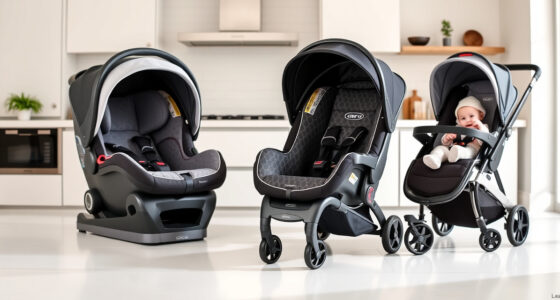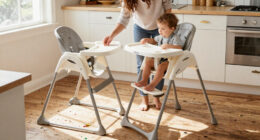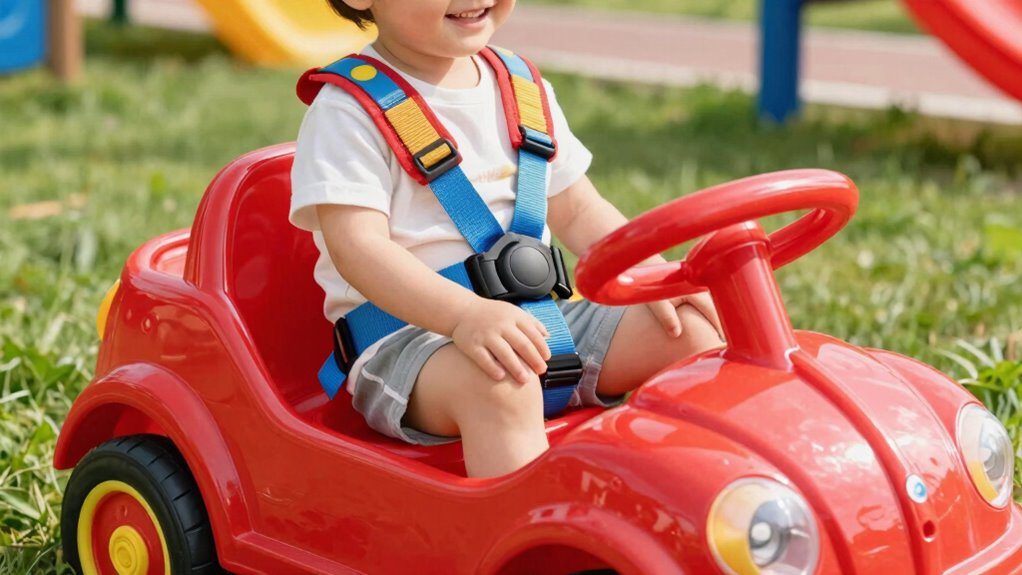
Seat belts on kids ride-ons help keep your child securely seated, reducing the risk of falls or injuries during play. They act as adjustable straps that fit snugly and are easy to fasten or unfasten, making supervision simpler. However, they don’t prevent all accidents, like collisions or tip-overs caused by external factors. Regular maintenance and a safe environment are also essential. To discover more about safety tips and what limits seat belts, keep exploring.

Turn the school run and nap time into listening time
- Thousands of audiobooks, podcasts and originals
- Listen on your phone, tablet or Echo — also offline
- Cancel anytime
Key Takeaways
- Seat belts keep children securely seated, reducing the risk of falls during sudden stops or sharp turns.
- They help prevent children from slipping out but do not stop collisions or impacts with objects.
- Safety harnesses are adjustable and easy to fasten, aiding supervision and quick assistance.
- Seat belts alone do not eliminate all riding risks, such as tipping or loose parts.
- Combining seat belts with supervision and a safe environment enhances overall ride safety.

When kids ride on their favorite toys, ensuring their safety should be a top priority—this is where seat belts on kids ride-ons come into play. These safety features are designed to keep your child secure while they enjoy their ride, minimizing the risk of falls or injuries. Many ride-on toys come equipped with safety harnesses that act as seat belts, providing an extra layer of protection. These harnesses are typically adjustable, fitting snugly around your child’s body, and are easy to fasten and unfasten, making it simple for you to supervise and assist. The primary purpose of safety harnesses is to keep kids seated properly and prevent them from slipping out of the ride-on during sudden stops or sharp turns.
Ride on features often include built-in safety elements like high sides, footrests, and steering controls that help maintain stability and control. When used together with safety harnesses, these features greatly reduce the chance of tipping over or falling out. However, it’s important to remember that safety harnesses and ride-on features aren’t foolproof. They help prevent common accidents but don’t eliminate all risks. For example, a child might still fall if the toy is pushed too quickly or if they attempt risky maneuvers. That’s why supervision remains essential, even when safety harnesses are in place. You should always stay close, especially with younger children, who might be more prone to sudden movements or loss of balance.
Safety features like high sides and steering controls reduce falls, but supervision is essential for full safety.
While safety harnesses improve security, they don’t address every hazard associated with riding toys. For instance, they don’t prevent collisions with objects or other children, nor do they make the ride completely accident-proof. It’s equally important to ensure the ride-on toy is in good condition, with no broken parts or loose screws, and that your child wears appropriate footwear and clothing. Proper maintenance of the ride-on toy is essential to ensure all safety components function correctly and remains reliable over time. Regularly inspecting the ride-on for wear and tear can help prevent unexpected failures that could compromise safety. Additionally, implementing preventive safety measures can further reduce risks during play. These measures include creating a safe riding environment free of obstacles and hazards, which greatly enhances overall safety. Never rely solely on the seat belt or harness to protect your child—use them as part of a comprehensive safety approach that includes careful supervision, age-appropriate ride-on features, and a safe riding environment. Additionally, proper maintenance of the ride-on toy is essential to ensure all safety components function correctly.
Ultimately, safety harnesses on kids ride-ons serve as a valuable tool to help keep your child securely seated, reduce the risk of falls, and enhance the effectiveness of the ride-on’s built-in features. But they aren’t a substitute for attentive supervision. When you combine these safety measures with mindful riding habits, you create a safer experience for your child, allowing them to enjoy their ride with confidence and peace of mind.
As an affiliate, we earn on qualifying purchases.
Frequently Asked Questions
Are Seat Belts on Kids Ride-Ons Adjustable for Different Sizes?
Yes, seat belts on kids ride-ons are adjustable for different sizes. You can typically modify the fit to guarantee child comfort by adjusting the straps or buckles. Various seat belt styles are designed to accommodate growing children and provide a snug, secure fit. Always check the specific model’s features, as some may have more adjustable options than others, helping you keep your child safe and comfortable during play.
How Often Should I Inspect the Seat Belt for Wear and Tear?
You should inspect the seat belt weekly for wear and tear to guarantee safety. Check for frayed straps, loose stitching, or damaged buckles, as these affect material durability. Following safety standards, regular inspections help maintain the belt’s integrity, preventing accidents. If you notice any signs of deterioration, replace the belt immediately to keep your child secure during rides. Staying vigilant guarantees the seat belt continues to function effectively and safely.
Can Seat Belts Be Added to Existing Ride-On Toys?
Yes, you can add seat belts to existing ride-on toys, but you should prioritize safety standards and age recommendations. Check if the toy’s design allows for modifications and choose seat belts compatible with the toy’s structure. Always verify the added seat belt meets safety standards and suits your child’s age. Proper installation is vital to prevent accidents, so consider consulting a professional if you’re unsure about the process.
Are There Legal Requirements for Seat Belts on Kids Ride-Ons?
You should know that legal requirements for seat belts on kids ride-ons vary by location. Generally, safety standards and manufacturer regulations guide these rules, and some regions mandate seat belts for certain age groups or toy types. It’s essential to check local laws and manufacturer instructions to guarantee compliance. By doing so, you help keep your child safe and avoid potential legal issues while using ride-on toys.
Do Seat Belts Affect the Fun or Mobility of Ride-On Vehicles?
Seat belts can slightly affect the fun or mobility of ride-on vehicles, but safety considerations outweigh this. You might notice a minor reduction in freedom of movement, but most kids adapt quickly. Comfort concerns are minimal if the seat belt fits properly. Ultimately, adding seat belts prioritizes safety without compromising the enjoyment, ensuring your child stays secure while still having plenty of fun on their ride-on vehicle.
Conclusion
So, next time your little speedster insists on zooming without a seat belt, remember—those tiny harnesses aren’t just for show. They might prevent a minor tumble or two, but they definitely won’t turn your kid into a superhero. Sure, safety features are great, but don’t forget: a helmet, common sense, and a good sense of humor are what really keep the fun (and the parents) intact. Buckle up—because chaos is just part of the ride!
Halloween Picks
halloween
As an affiliate, we earn on qualifying purchases.