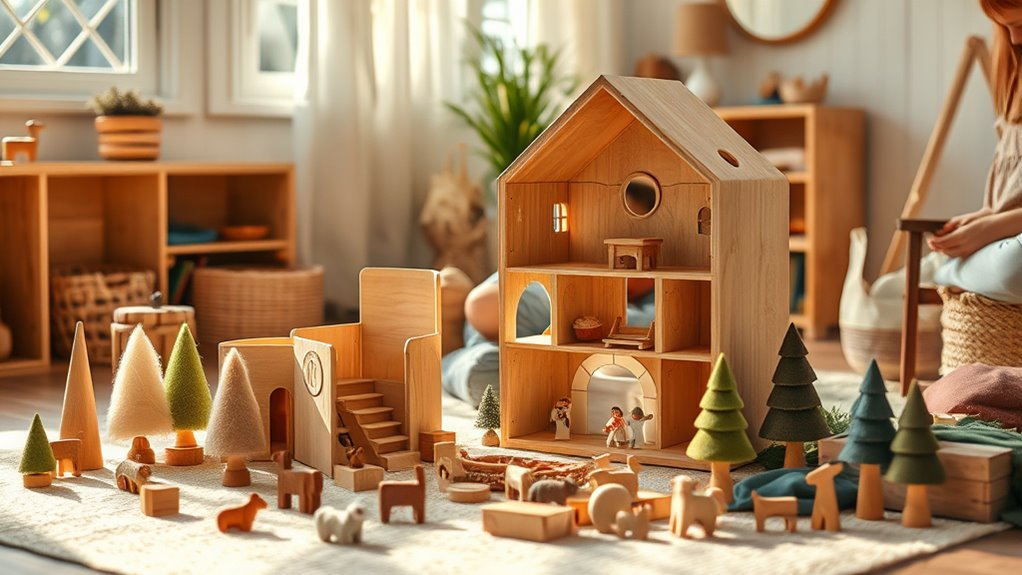

Waldorf toys boost your child’s imagination and creativity by encouraging open-ended play with natural, sensory-rich materials. These toys inspire purposeful exploration, allowing children to transform simple objects into castles, spaceships, or whatever their minds envision. By engaging multiple senses and promoting mindful, slow play, they help your child develop confidence, emotional awareness, and problem-solving skills. To discover how these toys support overall growth and how you can incorporate them, keep exploring this natural approach.
Key Takeaways
- Waldorf toys promote open-ended play, encouraging children to invent and explore their own creative stories and scenarios.
- They stimulate imagination through simple, natural materials that invite versatile and inventive use.
- The tactile experience enhances sensory awareness, fostering deeper engagement and creative thinking.
- These toys support holistic development by integrating emotional, cognitive, and physical growth.
- Their slow, mindful play environment nurtures patience, focus, and independent problem-solving skills.

Have you ever wondered why Waldorf toys are gaining popularity among parents and educators? The answer lies in their ability to nurture a child’s natural curiosity and creativity through simple, intentional design. One of the key benefits of Waldorf toys is their emphasis on sensorial play. These toys are crafted to engage multiple senses—touch, sight, sound, and even smell—encouraging children to explore and understand their environment in a deeper way. When you give a child a Waldorf wooden block or a soft fabric doll, you’re offering more than just a toy. You’re providing a tool for immersive, hands-on learning that stimulates their senses and sparks their imagination.
The use of natural materials in Waldorf toys plays a vital role in this process. Unlike plastic or brightly colored mass-produced toys, Waldorf toys are made from wood, wool, cotton, and other organic substances. These materials have a warm, authentic feel that invites children to touch and manipulate them freely. Because natural materials tend to have subtle textures and gentle colors, they help children focus on the sensory experience without overwhelming them. This focus on high-quality, natural materials also guarantees that the toys are safe and environmentally friendly, giving parents peace of mind while supporting sustainable practices.
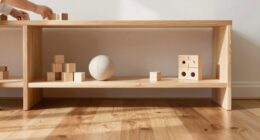
By engaging with natural materials and sensorial play, children develop important skills like fine motor control, hand-eye coordination, and concentration. As they manipulate a wooden ring or shape a piece of soft felt, they learn to refine their movements and build a sense of accomplishment. These activities also encourage imaginative thinking; a simple wooden block can become a spaceship, a castle, or a piece of abstract art—all limited only by the child’s imagination. This open-ended play fosters a sense of independence and confidence, as children realize they can create and explore without rigid rules or predefined outcomes.
Furthermore, Waldorf toys encourage slow, mindful play—an essential counterbalance to the fast-paced digital world. When children interact with natural, sensorial toys, they learn patience, focus, and how to entertain themselves creatively. They become more attuned to their own sensations and feelings, which nurtures emotional development. Additionally, incorporating Eye Patch benefits into self-care routines can further enhance a child’s comfort and well-being while playing and exploring. Overall, the combination of sensorial play and natural materials in Waldorf toys creates a rich environment that promotes holistic growth—intellectual, emotional, and physical—making them a valuable addition to any child’s developmental journey.
Waldorf wooden toys for open-ended play
As an affiliate, we earn on qualifying purchases.
As an affiliate, we earn on qualifying purchases.
Frequently Asked Questions
How Do Waldorf Toys Compare to Mainstream Plastic Toys?
You might notice that Waldorf toys differ from mainstream plastic toys in several ways. They emphasize sustainability benefits, often made from natural, eco-friendly materials. These toys encourage open-ended play, allowing your child to use their imagination creatively. Unlike plastic toys, Waldorf options promote a more mindful and eco-conscious approach to play. This can foster a deeper connection to nature and support your child’s development in a meaningful, sustainable way.
Are Waldorf Toys Suitable for Children With Sensory Processing Issues?
You might find Waldorf toys suitable for children with sensory processing issues because they support sensory integration by offering natural textures and simple designs. These toys often have calming effects, helping children stay focused and relaxed. Unlike overstimulating plastic toys, Waldorf options encourage gentle exploration, making them ideal for soothing sensory needs and fostering a peaceful play environment.
What Materials Are Commonly Used in Waldorf Toy Manufacturing?
You’ll find that Waldorf toys are made from natural materials like wood, wool, silk, and cotton, which create a warm, inviting feel. These toys are crafted using traditional handcrafted techniques, ensuring each piece is unique and safe for children. By choosing toys made from these natural materials, you support sustainable practices and provide your child with sensory-friendly, durable options that encourage imaginative play and development.
At What Age Can Children Start Playing With Waldorf Toys?
You can introduce Waldorf toys to your child around 6 months old, as they reach early milestones like grasping and exploring. These toys support developmental benefits by encouraging sensory exploration, fine motor skills, and imaginative play. As your child grows, Waldorf toys continue to foster creativity and problem-solving skills. Starting early helps your little one develop essential skills while enjoying simple, natural materials that adapt to their changing needs.
How Do Waldorf Toys Support Emotional Development?
Oh, because nothing says emotional resilience like a handcrafted felted sheep! Waldorf toys support emotional development by helping you build social skills and emotional resilience through open-ended play. You get to nurture empathy, patience, and self-awareness as your child interacts with simple, natural materials. Unlike flashy electronics, these toys encourage genuine connection and emotional growth, making your little one better equipped to handle life’s ups and downs.
natural sensory toys for children
As an affiliate, we earn on qualifying purchases.
As an affiliate, we earn on qualifying purchases.
Conclusion
So, next time you toss aside those flashy, battery-operated toys, remember the true magic of Waldorf toys. While they may seem simple, they spark your child’s imagination, encouraging endless stories and adventures. Ironically, the most “basic” toys often lead to the most extraordinary creativity—something those high-tech gadgets can’t quite match. In the end, you might just find that the simplest toys hold the greatest power to shape bright, imaginative minds.
eco-friendly Waldorf toys set
As an affiliate, we earn on qualifying purchases.
As an affiliate, we earn on qualifying purchases.
handmade fabric dolls for imaginative play
As an affiliate, we earn on qualifying purchases.
As an affiliate, we earn on qualifying purchases.