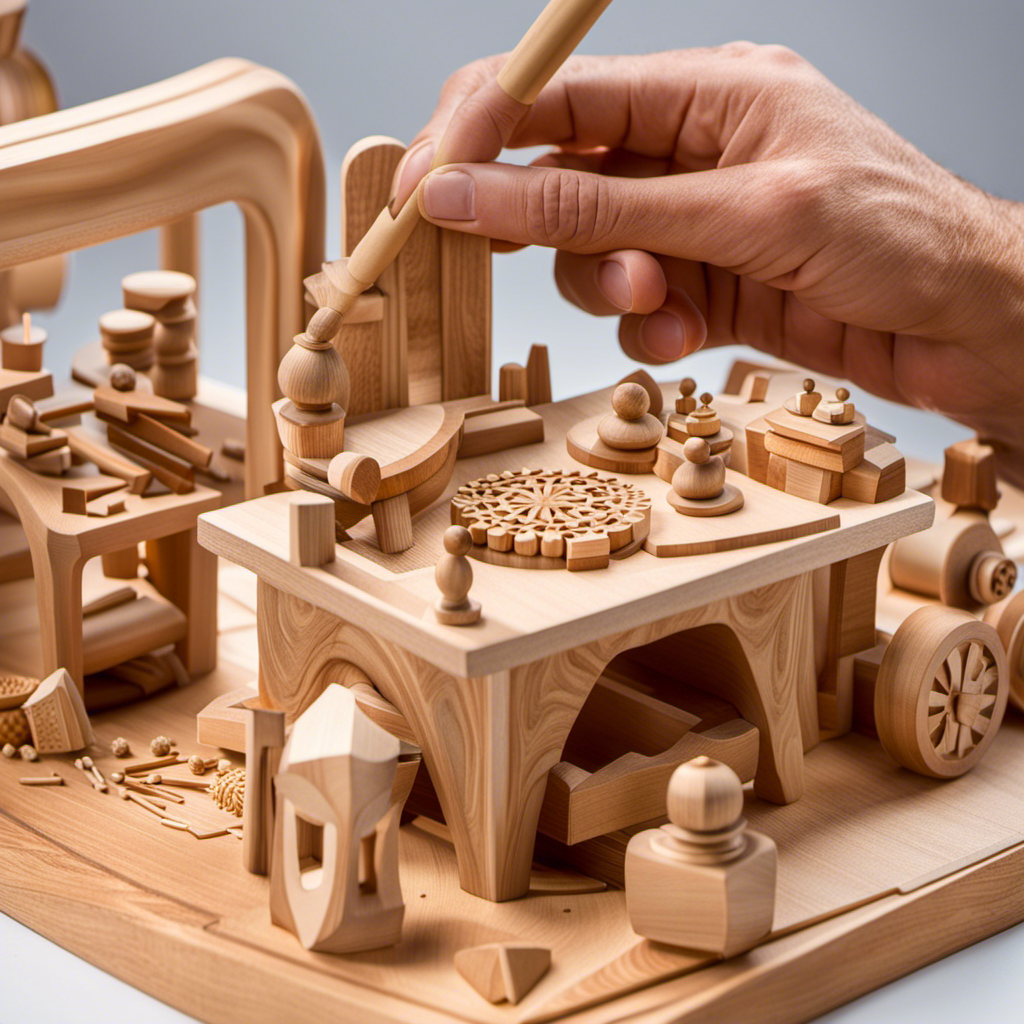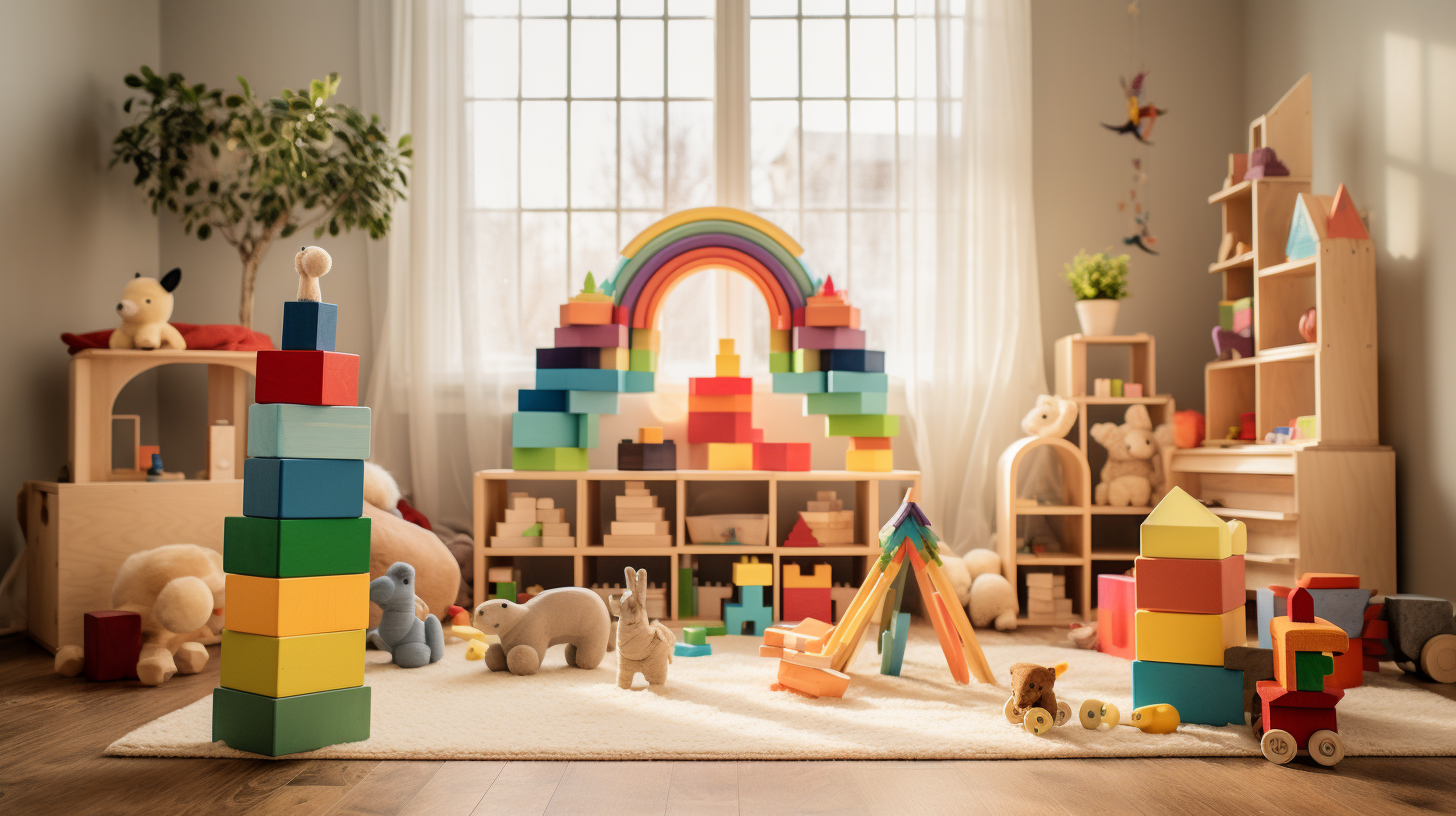
In Waldorf play, you’ll notice a focus on imaginative, artistic activities that foster creativity and emotional growth, often through storytelling, art, and nature-based play. Montessori play encourages independence with hands-on, practical activities that promote focus, self-discipline, and real-world skills, all within a well-organized environment. Both approaches shape play differently—Waldorf nurtures imaginative exploration, while Montessori emphasizes practical mastery. Exploring these differences further will reveal how each philosophy supports your child’s unique development journey.

Get baby and family essentials delivered free — and shop member deals
- Fast, free delivery on millions of items
- Access to Prime Big Deal Days deals on October 6–7
- Prime Video, Amazon Music and more included
Key Takeaways
- Waldorf emphasizes imaginative, artistic play integrated into daily routines, fostering creativity and emotional expression.
- Montessori encourages self-directed, hands-on play with real-world materials to develop independence and practical skills.
- Waldorf play often involves storytelling, artistic crafts, and nature-based activities emphasizing emotional and sensory growth.
- Montessori play centers on exploration of structured materials that promote concentration, problem-solving, and autonomy.
- Both philosophies value play as essential but differ in focus: Waldorf on artistic and imaginative play, Montessori on practical and self-guided activities.

Are you trying to decide between Waldorf and Montessori education for your child? Both approaches prioritize hands-on learning and foster independence, but they do so through different philosophies. Waldorf education emphasizes nurturing the whole child—focusing on creativity, imagination, and emotional development. In Waldorf classrooms, you’ll notice a strong emphasis on artistic expression, where children engage in activities like painting, music, and storytelling to develop their inner worlds. These artistic pursuits aren’t just about creating pretty pictures; they help children explore their feelings, build confidence, and develop their unique voice. The curriculum often integrates arts into every subject, making learning a deeply sensory and creative experience. This approach aims to cultivate a love for learning through beauty and artistic engagement, which can have a lasting impact on your child’s emotional and cognitive growth. In addition, Waldorf education often incorporates nature-based activities, emphasizing a connection to the natural world that supports holistic development.
Montessori, on the other hand, centers on fostering independence through practical life skills and self-directed activity. When you choose Montessori, you’re encouraging your child to take charge of their learning environment. They learn by doing—pouring, sorting, buttoning, and other practical skills that build confidence and self-sufficiency. Montessori classrooms are carefully prepared to promote concentration, order, and respect for materials, allowing children to explore topics at their own pace. While artistic expression is still valued, it often plays a secondary role to the development of practical skills that will serve your child throughout life. The goal is to create an environment where children naturally develop a sense of discipline, responsibility, and problem-solving abilities, which are essential for lifelong learning.
Both methods nurture independence but in different ways. Waldorf’s focus on artistic expression helps children develop their emotional intelligence and creativity, fostering a love of beauty and imagination. Montessori’s emphasis on practical life skills promotes autonomy and confidence, equipping children with tools to navigate the world practically and effectively. If your priority is encouraging your child’s artistic talents and emotional depth, Waldorf might resonate more with your values. If you want your child to master self-care, problem-solving, and independence early on, Montessori could be the better fit. Ultimately, understanding these core differences can help you choose an approach that aligns with your child’s personality and your educational values, ensuring they thrive in a supportive, enriching environment tailored to their developmental needs.
As an affiliate, we earn on qualifying purchases.
Frequently Asked Questions
How Do Waldorf and Montessori Approaches Influence Social Skills Development?
Social skills development is key in early childhood, helping kids build emotional intelligence and peer collaboration. Waldorf emphasizes creative, imaginative play that nurtures empathy and self-awareness, while Montessori encourages cooperative activities that foster respect and teamwork. Both approaches actively support your child’s social growth by providing environments where they practice emotional understanding, share experiences, and develop meaningful relationships with peers, setting strong foundations for lifelong social competence.
Are There Specific Age Ranges Where One Method Is More Effective?
Like a guiding star, age influences the effectiveness of play-based learning. During early childhood, roughly ages 3-6, Montessori’s emphasis on independence helps meet developmental milestones through hands-on activities. As children grow, around ages 6-12, Waldorf’s focus on imagination nurtures social skills and emotional growth. Recognizing these phases helps you choose the approach that best supports your child’s evolving developmental needs during each stage.
How Do Teacher Qualifications Differ Between Waldorf and Montessori Schools?
You’ll find that teacher qualifications differ markedly between Waldorf and Montessori schools. Waldorf teachers usually undergo specialized teacher training focused on their curriculum standards and holistic development principles. Montessori teachers often complete certification programs emphasizing child-centered learning and specific Montessori methods. Both emphasize ongoing professional development, but the training styles and curriculum standards they follow shape how teachers engage with students and support their growth, ensuring they meet the unique needs of each approach.
What Are the Long-Term Academic Outcomes of Each Philosophy?
You’re wondering about the long-term academic outcomes of these philosophies. Both promote strong cognitive development, but Montessori often emphasizes early independence, leading to higher academic achievement in math and reading. Waldorf encourages creativity and social skills, which support overall learning. Over time, students from both approaches tend to perform well academically, but Montessori students might show quicker gains in core skills, while Waldorf students excel in creative thinking and problem-solving.
Can Children Transition Between Waldorf and Montessori Environments Easily?
You might wonder if children can adapt easily when switching environments. It depends on the individual child, but generally, Waldorf and Montessori environments have different approaches, which can make adaptation a bit challenging. Curriculum flexibility plays a role here—some programs can adjust to ease the transition, but it’s crucial to prepare your child for the change. With patience and support, most children can successfully navigate the environment adaptation process.
Conclusion
In choosing between Waldorf and Montessori, remember that you’re guiding your child’s journey, much like a gardener tending different plants. Each philosophy offers unique growth opportunities—one nurturing imagination, the other fostering independence. Ultimately, your choice shapes their path, echoing the timeless wisdom of planting seeds for a future ripe with potential. Trust your instincts, and know that, like a wise gardener, you’re shaping a foundation where your child’s true colors will flourish.
Halloween Picks
halloween
As an affiliate, we earn on qualifying purchases.