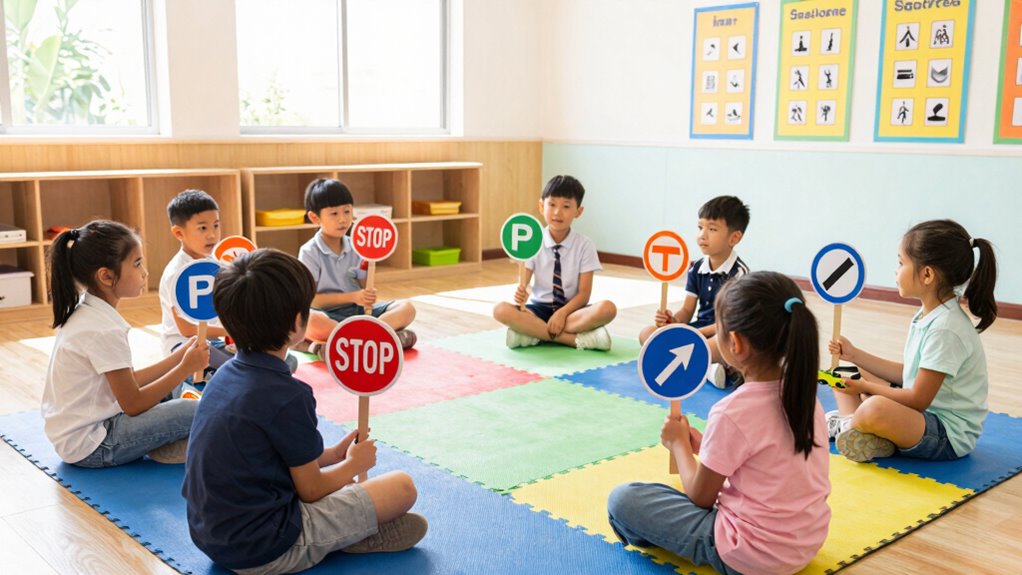
To guarantee safe, organized group play, set clear traffic rules and establish visible boundaries using visual cues like tape or cones. Communicate these rules clearly and remind children regularly, especially during shifts. Reinforce respectful behavior by encouraging responsible movement and respecting personal space. Consistent guidelines help children understand where they can play and how to stay safe. Keep these practices in mind, and you’ll discover more effective strategies to create a secure play environment.

Turn the school run and nap time into listening time
- Thousands of audiobooks, podcasts and originals
- Listen on your phone, tablet or Echo — also offline
- Cancel anytime
Key Takeaways
- Establish and clearly communicate designated pathways and boundaries for safe movement during group play.
- Use visual cues like tape, cones, or signs to reinforce traffic rules and boundaries.
- Teach children to wait their turn and avoid pushing or shoving to promote respectful movement.
- Consistently reinforce safety protocols and boundaries during transitions to ensure understanding.
- Encourage mindful behavior and awareness of surroundings to prevent accidents and promote organized play.
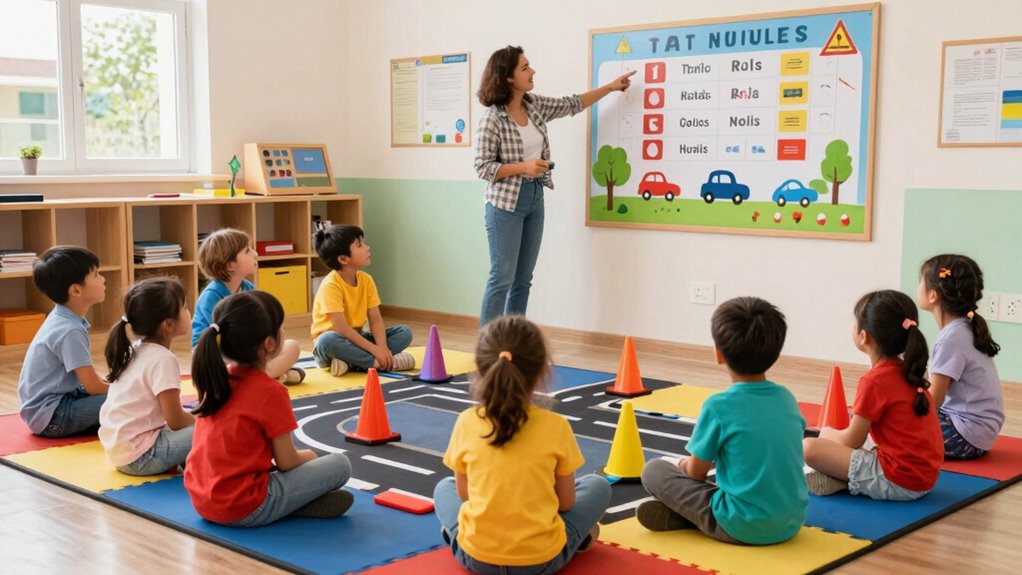
Have you ever wondered how to keep group play safe and enjoyable in your classroom? Establishing clear classroom traffic rules is essential, especially when managing activities that involve multiple children moving around. One of the most effective ways to ensure safety is by implementing well-defined safety protocols. These protocols serve as the foundation for safe interactions, guiding children on how to behave during play. When children understand the rules, they’re less likely to engage in risky behavior. Make sure your safety protocols include instructions about respecting personal space, avoiding pushing or shoving, and waiting their turn. Reinforcing these rules consistently helps children develop a sense of responsibility and awareness that benefits everyone.
Establish clear safety protocols to promote responsible, respectful, and safe group play in the classroom.
Another critical aspect is setting clear playground boundaries. When children know the limits of their play area, it reduces confusion and prevents them from wandering into unsafe zones. You can mark boundaries with visual cues, like tape or cones, or use natural barriers such as walls or furniture. Clearly communicating these boundaries at the start of each activity helps children understand where they can and cannot go. It’s important to reinforce these boundaries regularly, especially during transitions from one activity to another. When children respect the playground boundaries, it creates an organized environment where everyone feels secure and knows what to expect. Incorporating visual cues can enhance understanding and adherence to boundaries, especially for younger children. Additionally, understanding classroom safety protocols helps children become more aware of their surroundings and promotes responsible behavior during play. Teaching children about safe movement practices can further reduce accidents and encourage mindful behavior during group activities.
classroom traffic cones for children
As an affiliate, we earn on qualifying purchases.
As an affiliate, we earn on qualifying purchases.
Frequently Asked Questions
How Do I Introduce Traffic Rules to Young Children?
You introduce traffic rules to young children by using clear, simple language and engaging activities. Show them traffic signs and explain what each one means, making it fun and memorable. Demonstrate safety gear like helmets and knee pads during play to emphasize safety. Reinforce rules through role-playing and visual cues, encouraging children to follow traffic signs and wear safety gear consistently, making safety a natural part of their group play.
What Are Effective Ways to Enforce Traffic Rules During Play?
You can enforce traffic rules during play by using interactive simulations that let children practice real-life scenarios safely. Incorporate visual aids like colorful signs and floor markings to reinforce rules visually. Consistently remind children of the rules, praise good behavior, and gently correct mistakes. By making learning engaging and visual, you help children understand and remember traffic safety, encouraging them to follow rules naturally during group play.
How Can I Handle Disagreements Over Traffic Rule Violations?
Remember, “A stitch in time saves nine.” When disagreements over traffic rule violations happen, stay calm and listen actively to both sides. Use conflict resolution techniques, like asking questions and clarifying rules, to guarantee understanding. Emphasize rule consistency, so everyone knows what to expect. By addressing issues early and fairly, you promote a respectful environment where kids learn accountability and teamwork.
What Are Some Fun Activities to Teach Traffic Safety?
You can teach traffic safety through engaging activities like traffic simulations and role-playing activities. Set up a mini traffic course where kids act as pedestrians and drivers, practicing crossing safely and following signals. Role-playing activities allow children to experience real-life traffic situations, making safety rules memorable. These fun, interactive methods help children understand traffic rules better while keeping them actively involved and entertained.
How Do I Adjust Rules for Different Age Groups?
You adapt traffic rules like a traffic maestro, tailoring them to each age group’s needs. For younger kids, simplify traffic symbols and emphasize safety gear like helmets and reflective vests. For older students, introduce more complex traffic rules and scenarios. Keep rules engaging and relatable, adjusting language and activities to match their understanding. This way, everyone learns safely and effectively, no matter their age, making your group play both fun and educational.
Conclusion
By following these classroom traffic rules, you create a safe and organized space for group play. Think of it like traffic signals guiding cars smoothly through busy intersections—everyone knows when to go, stop, or yield. When you stay attentive and respectful, playtime becomes enjoyable for all. With clear rules, your classroom transforms into a well-oiled machine, where cooperation flows effortlessly like a gentle stream, making learning fun and safe for everyone involved.
Fall Picks
fall essentials
As an affiliate, we earn on qualifying purchases.