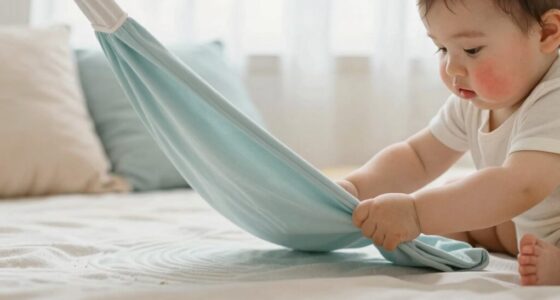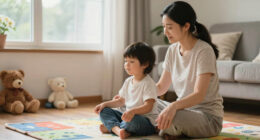
If your child craves texture but you want to avoid mess, try using sensory substitutes like kinetic sand, water beads, or gel-filled bags for safe, moldable fun. Natural objects like smooth stones, textured fabrics, or plush toys also offer rich tactile experiences. You can set up sensory trays filled with dried pasta, rice, or beans for crunch and resistance. These alternatives promote curiosity and sensory development while being easy to clean and safe—keep exploring to find the best options for your child’s needs.
Key Takeaways
- Use moldable, mess-free materials like kinetic sand substitutes and gel-filled sensory bags for tactile satisfaction.
- Incorporate textured natural objects such as smooth stones and fabric swatches for diverse sensory input.
- Fill sensory trays with dried pasta, rice, or beans to provide crunch and resistance without mess.
- Utilize water beads and squishy materials for calming, squishy tactile experiences.
- Choose sustainable, safe materials to promote eco-conscious sensory play that still offers rich textures.

For children who crave the tactile stimulation of sand but are sensitive to mess or sensory overload, finding alternative activities can be a game-changer. Sensory play is vital for your child’s development, helping them explore their environment and process sensory input effectively. When traditional sandboxes become overwhelming or off-limits, offering alternative textures becomes essential. These options provide the same satisfying tactile experience without the mess or sensory overload that often accompanies sand-based activities.
One effective solution is using textured materials such as kinetic sand substitutes, which mimic the feel of real sand but are made from moldable, less messy substances. These materials allow your child to dig, mold, and pour, satisfying their need for tactile engagement without the dust or debris. You can also explore materials like water beads or gel-filled sensory bags. Water beads are smooth, squishy, and provide a calming sensory experience that’s easy to clean up. Sensory bags filled with gel or colored liquids offer a contained, mess-free way for your child to explore different textures with their fingers, promoting fine motor skills and sensory integration.
Another excellent alternative is using natural objects with varied textures. Smooth stones, textured fabric swatches, or soft, plush toys give your child diverse sensory input. These items can be used in sensory bins or as standalone objects for tactile exploration. By introducing a range of textures—rough, smooth, soft, or bumpy—you cater to your child’s sensory curiosity and help develop their tactile discrimination skills. These materials are easy to clean and safe, making them perfect for sensory play that’s both engaging and manageable. Incorporating various textures into play can also help children become more comfortable with unfamiliar surfaces, encouraging sensory exploration and resilience. Additionally, including natural and sustainable materials in sensory activities aligns with principles of biodiversity and conservation, fostering an awareness of environmental responsibility from an early age.
Adding eco-friendly sensory materials not only supports sustainability goals but also introduces your child to the importance of caring for the environment through sensory play. You might also try sensory trays filled with items like dried pasta, rice, or beans, which provide a satisfying crunch and resistance that stimulates tactile receptors. Just be sure to supervise to prevent choking hazards and ensure easy cleanup afterward. Incorporating these alternative textures into play encourages your child to explore different sensations and build comfort with various surfaces, all while avoiding the mess and sensory overload common with traditional sand. Incorporating sustainable and safe materials can further enhance the educational value of sensory activities and promote eco-conscious habits early on.
Ultimately, these sand-free sensory alternatives empower you to create engaging, mess-free sensory play experiences tailored to your child’s needs. They help satisfy their craving for different textures, support sensory development, and make playtime enjoyable without overwhelming their senses. By offering a variety of safe, clean, and engaging options, you foster their curiosity and sensory growth while keeping your environment manageable and stress-free.

Creativity for Kids Sensory Minis Pets Kit | Cloud Clay Sensory Toy for Kids | Mess-Free, Screen Free Summer Supplies | Travel Activity for Kids (Ages 3+)
- Playful Pet Figures: Includes cuddly cat and playful pup
- Travel-Size Sensory Jar: Compact for travel and on-the-go fun
- Mess-Free Cloud Clay: Soft, fluffy, and reusable clay for shaping
As an affiliate, we earn on qualifying purchases.
As an affiliate, we earn on qualifying purchases.
Frequently Asked Questions
Are Sand-Free Sensory Options Suitable for All Ages?
Yes, sand-free sensory options are suitable for all ages because they support sensory integration and tactile stimulation safely. These alternatives, like textured mats or gel-filled toys, provide engaging tactile experiences without the mess or hazards of traditional sand. Whether you’re working with young children or older individuals, these options help satisfy the need for tactile input, promote focus, and improve sensory processing across age groups.
How Do These Alternatives Help With Sensory Processing Issues?
Imagine a child’s fingers exploring a textured surface, then shifting to a smooth, sand-free substitute. These alternatives support sensory integration by providing tactile stimulation that helps regulate sensory processing. They engage the senses without mess or overwhelm, encouraging calming responses and focus. By mimicking natural textures, these options help kids meet their sensory needs while fostering movement and exploration, ultimately aiding in better emotional and behavioral regulation.
Can These Materials Be Easily Cleaned and Maintained?
Yes, these materials are designed for easy cleaning and maintenance. You can incorporate simple cleaning routines like wiping or rinsing, depending on the material. Their durability guarantees they withstand frequent use without tearing or degrading, making them practical for daily play. By choosing high-quality, washable options, you help maintain hygiene and longevity, ensuring your child’s sensory experience remains safe and enjoyable over time.
Are There Any Safety Concerns With Specific Textures?
You should prioritize texture safety to prevent sensory risks. Some textures, like small beads or sharp-edged materials, pose choking hazards or skin irritations, increasing sensory risks. Always check for non-toxic, smooth, and child-safe options. Be vigilant about textures that might cause discomfort or harm, ensuring that every sensory experience is safe and beneficial. Protect your child’s well-being by choosing materials with proven safety standards and avoiding risky textures.
How Do I Choose the Best Sensory Alternative for My Child?
To choose the best sensory alternative, consider your child’s sensory play benefits and what textures they enjoy or seek. Observe their reactions during texture exploration techniques, like feeling different materials or engaging in tactile activities. Look for options that provide safe, engaging, and varied sensory input without overwhelming them. You can also consult with a therapist or specialist to tailor choices that support your child’s sensory development and comfort.
Conclusion
With these sand-free sensory alternatives, you can transform your child’s world into a playground of endless wonder—without a single grain of mess! Imagine a future where their curiosity soars, their hands stay clean, and their love for texture knows no bounds. Say goodbye to chaos and hello to serene, joyful discovery. You hold the power to create a sensory paradise where your child’s imagination takes flight—mess-free, stress-free, and totally unforgettable!