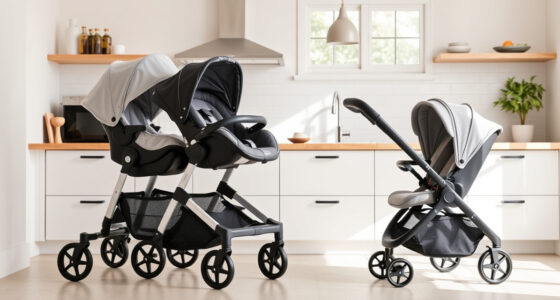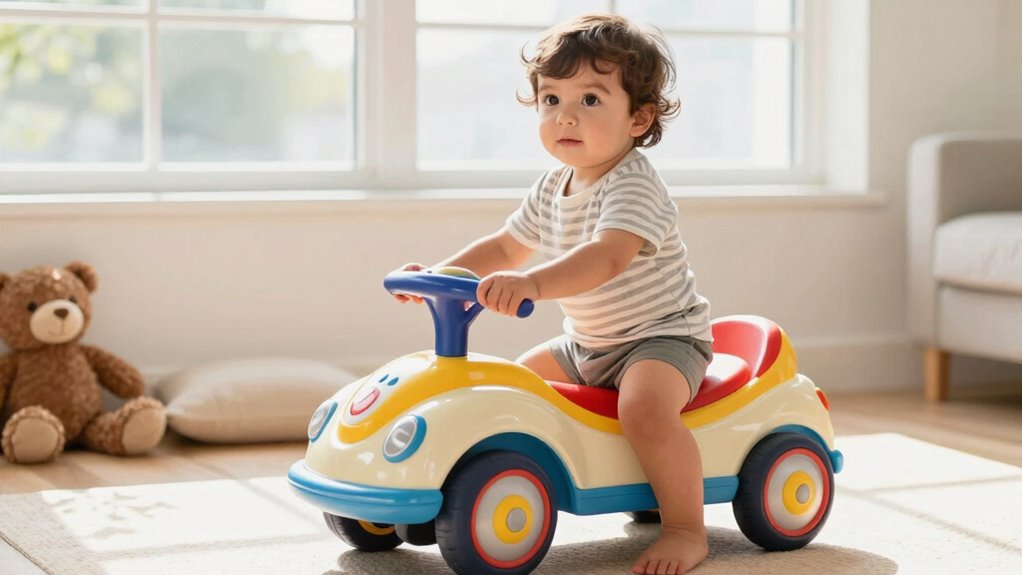

To choose a first ride-on based on your child’s temperament, consider their energy level and comfort with movement. Energetic kids benefit from sturdy, dynamic vehicles with simple controls to boost confidence, while cautious children prefer slower, secure models with safety features like seat belts. Curious children thrive with interactive features and versatile steering. Always prioritize safety, supervision, and setting boundaries. If you keep these factors in mind, you’ll find the perfect match that encourages their development and adventure.

Turn the school run and nap time into listening time
- Thousands of audiobooks, podcasts and originals
- Listen on your phone, tablet or Echo — also offline
- Cancel anytime
Key Takeaways
- Match the vehicle’s speed and controls to your child’s energy level and confidence for safe, enjoyable riding.
- Choose quieter, secure ride-ons with easy controls for cautious or shy children to build comfort gradually.
- Select sturdy, versatile models with interactive features to encourage curious children’s exploration and motor skill development.
- Prioritize safety features like seat belts, remote controls, and stability to protect energetic and adventurous kids.
- Always supervise and set boundaries to ensure safe riding suited to your child’s temperament and developmental stage.
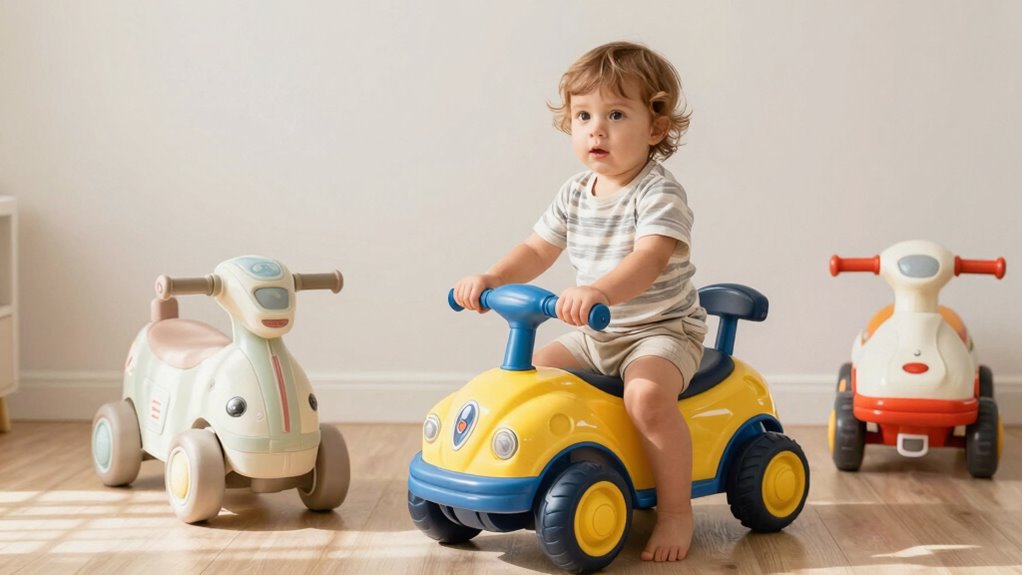
Selecting the right ride-on for your child can be an exciting yet challenging task, as there are many options to take into account. One of the most important factors is matching the ride-on to your child’s temperament, which influences how they’ll interact with it and how much they’ll enjoy the experience. Understanding your child’s personality helps you choose a ride-on that promotes healthy motor skill development while ensuring safety considerations are met.
If your child is energetic, adventurous, and enthusiastic to explore, you’ll want to pick a ride-on that offers stability and durability, so they can ride confidently without risking falls or injuries. These children tend to enjoy vehicles with simple controls that allow them to build confidence and coordination. Look for models with low centers of gravity and secure seating, which help prevent tipping over and support safe motor skill development as they learn to balance and steer.
On the other hand, if your child is more cautious or shy, they might prefer a ride-on that feels secure and predictable. For these children, a quieter, slower vehicle with a comfortable seat and easy-to-understand controls will help them feel safe while they get accustomed to riding. Safety considerations become especially important here, so opt for models with safety features like seat belts, speed limiters, and remote controls for parents to override if needed. This way, you can supervise their motor skill development at their own pace without undue risk.
For children who are naturally curious and love engaging with their surroundings, consider ride-ons that offer interactive features or versatile steering options. These models encourage exploration and can enhance their motor skills as they learn to maneuver in different directions. Make sure, however, that such features don’t compromise stability or safety—check for sturdy construction, anti-slip wheels, and smooth acceleration controls. Additionally, understanding the importance of vehicle stability can help you select the safest options for your child’s explorations. Incorporating appropriate safety gear such as helmets and pads is also crucial in reducing injury risks during play. Recognizing the importance of child temperament can guide you in choosing a ride-on that truly suits your child’s unique personality and needs, ensuring a more enjoyable experience. Moreover, considering the role of supervision can greatly influence your child’s safety and confidence while they learn to ride. Being aware of safety standards and ensuring the ride-on complies with them can further safeguard your child’s well-being during play.
Finally, trust your instincts about your child’s temperament, but always prioritize safety considerations. Set clear boundaries regarding where and how they ride, and supervise their play until they’re confident and capable. The right ride-on should challenge your child’s motor skills in a positive way, helping them grow more coordinated while keeping safety at the forefront. When you match the ride-on to your child’s temperament, you’re not just choosing a toy—you’re supporting their development and ensuring they enjoy every ride safely.
As an affiliate, we earn on qualifying purchases.
Frequently Asked Questions
What Safety Features Should I Look for in a Ride-On?
Look for ride-ons that meet safety standards like sturdy construction, secure seat belts, and smooth brakes. You should also check for parental controls, which let you limit speed, activity time, or shut down the vehicle remotely. These features help keep your child safe during play. Confirm the ride-on has rounded edges and non-slip tires, reducing the risk of accidents and promoting safer adventures for your little one.
How Age-Appropriate Are Different Ride-On Models?
Think of ride-on models as the keys to a young adventurer’s journey. Age-specific models are tailored to your child’s development, ensuring safety and fun align perfectly. For toddlers, choose smaller, simple ride-ons that foster confidence, while older kids benefit from versatile, more feature-rich options. This ride-on versatility keeps pace with your child’s growth, making every ride a new chapter in their exploration.
Can Ride-Ons Be Used Indoors and Outdoors?
Ride-ons are versatile, allowing your child to enjoy indoor adventures and outdoor exploration. Most models are designed with both environments in mind, featuring durable wheels for outdoor terrain and smooth surfaces for indoor use. Just make certain you select a ride-on that’s appropriate for your space, and supervise your child to keep them safe. With the right choice, your little one can have fun anywhere, whether indoors or outside.
How Long Do Ride-Ons Typically Last?
Ride-ons typically last between one to three years, depending on usage and maintenance. Keep an eye on the battery life; over time, it can decrease, reducing how long your child can ride. Also, consider the weight capacity—exceeding it can strain the motor and battery, shortening lifespan. Proper charging habits and regular checks help extend your ride-on’s durability, ensuring your child gets more fun out of it.
Are There Ride-Ons Suitable for Children With Special Needs?
Yes, there are ride-ons designed for children with special needs. These models often feature adaptive features like supportive seats and easy controls, symbolizing independence and confidence. Sensory-friendly options help soothe or stimulate your child’s senses without overload. By choosing a ride-on tailored to your child’s unique needs, you empower them to explore the world comfortably, turning every ride into a journey of growth and self-discovery.
Conclusion
Choosing the perfect ride-on is like finding the key to your child’s world of adventure. By understanding their temperament, you open a treasure chest of joy and exploration. Remember, the right ride-on isn’t just a toy—it’s a trusted companion on their journey of growth. Trust your instincts and choose wisely, for this playful vehicle will be a bridge to new experiences, guiding your little one as they spread their wings and soar into the future.
Fall Picks
fall essentials
As an affiliate, we earn on qualifying purchases.