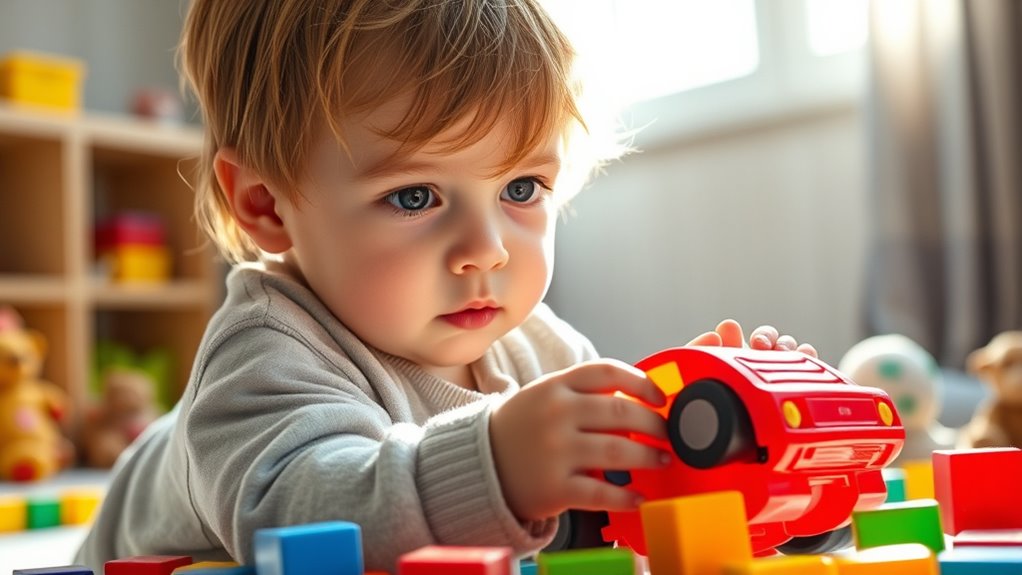

Understanding your child’s play style helps you see their social skills, motor development, and personality traits. Pay attention to whether they enjoy group activities or prefer solitary play, as this reveals their social tendencies. Notice their interests in running, building, or drawing to assess their motor skills. Observing their play behaviors offers insights into their comfort levels and confidence. Keep exploring these signs, and you’ll discover ways to support your child’s growth even better.

Turn the school run and nap time into listening time
- Thousands of audiobooks, podcasts and originals
- Listen on your phone, tablet or Echo — also offline
- Cancel anytime
Key Takeaways
- Observe if your child prefers solitary activities or thrives in group play to identify their social tendencies.
- Note the types of activities they enjoy, such as physical, creative, or manipulative play, to understand their motor skill development.
- Pay attention to how your child shares, takes turns, and interacts with peers to assess social skills.
- Recognize signs of confidence or hesitation during play to gauge emotional comfort and social engagement levels.
- Support diverse play experiences to nurture well-rounded motor and social development aligned with their play style.
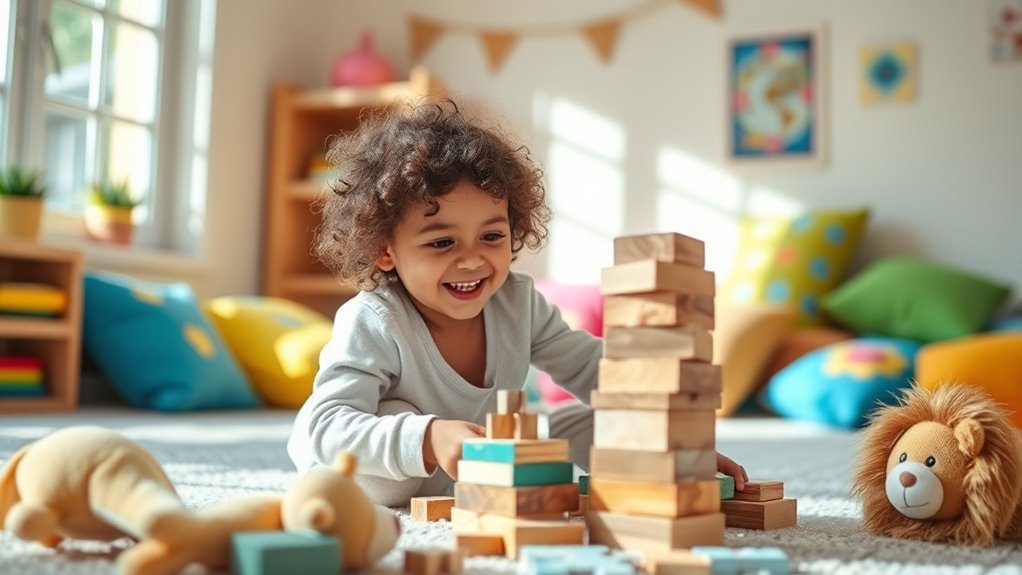
Have you ever wondered what your child’s play style reveals about their personality and development? Observing how your child plays isn’t just about fun; it offers valuable insights into their social development and motor skills. When you notice how they interact with others during play, you can get a sense of their social skills, whether they’re comfortable sharing, taking turns, or initiating conversations. For example, a child who easily engages with peers may be developing strong social skills, while one who prefers solitary play might need more encouragement to build relationships.
Observing your child’s play reveals their social skills and personality development.
Likewise, the types of activities your child prefers can tell you a lot about their motor development. If they enjoy running, jumping, or climbing, it indicates that their gross motor skills are progressing well. On the other hand, a child who favors more precise, fine motor activities like drawing, building with blocks, or threading beads might be keenly honing their hand-eye coordination and dexterity. Recognizing these patterns helps you understand where they are in their developmental milestones and where they might need extra support or encouragement.
Pay attention to how your child approaches different play scenarios. Are they enthusiastic to participate in group activities, or do they prefer playing alone? Do they share toys and cooperate with others, or do they tend to dominate or withdraw? These behaviors highlight their social development and can guide you on how to foster better peer interactions or introduce new social experiences. If they seem shy or hesitant, gently encouraging peer play can help build their confidence and social skills over time.
In terms of motor skills, observe whether your child can manipulate toys easily, balance on one foot, or hop across the room. These activities reflect their physical development and coordination. Supporting their motor skills through age-appropriate activities—like climbing, dancing, or simple sports—can boost their confidence and physical health. Recognizing their strengths and areas for growth allows you to tailor play experiences that challenge them just enough to develop new skills.
Additionally, incorporating STEM toys into play can foster critical thinking and problem-solving skills, further supporting their overall development. Ultimately, understanding your child’s play style is about more than just watching; it’s about engaging with them and encouraging their growth. By paying close attention to how they play, who they choose to play with, and how they handle different tasks, you gain a clearer picture of their social development and motor skills. This awareness empowers you to support their journey, helping them develop into well-rounded individuals confident in their abilities and comfortable in social settings.
As an affiliate, we earn on qualifying purchases.
Frequently Asked Questions
How Can I Identify My Child’s Unique Play Style?
To identify your child’s play style, observe their behaviors during playtime. Pay attention to how they engage with toys and other children, noting if they prefer active, creative, or social activities. Play style recognition comes from consistent interaction and noticing patterns. By engaging in parent-child interaction, you can better understand what excites and interests them, helping you support their development and tailor activities to match their unique play preferences.
What Toys Best Suit Different Play Styles?
Did you know children who engage with toys suited to their play style show increased educational benefits and creative expression? You can choose toys that match their preferences—like puzzles for problem-solvers or art supplies for creative kids. Active play encourages physical development, while role-playing fosters social skills. By selecting toys aligned with their play style, you support their growth and make playtime more engaging and meaningful.
How Does Play Style Influence Social Development?
Play style directly influences your child’s social skills by shaping how they interact with others. If your child prefers solitary or imaginative play, they might develop strong creativity but need encouragement to build social skills. Conversely, kids who enjoy group activities tend to learn cooperation and communication more quickly. Recognizing their play style helps you support their social development effectively, fostering confidence and healthy relationships as they grow.
Can a Child’s Play Style Change Over Time?
Yes, a child’s play style can change over time as they reach new developmental milestones. Play style evolution is influenced by their growing social skills, cognitive abilities, and emotional development. You’ll notice your child experimenting with different types of play, shifting from solitary to cooperative play or vice versa. These changes are natural and help them develop essential skills, supporting their overall growth and adapting to new social and environmental challenges.
How Do Cultural Differences Affect Play Preferences?
Some might think cultural influences don’t substantially shape play preferences, but they actually do. You’ll notice that cultural differences deeply impact how your child plays—what toys they prefer, their activities, and their social interactions. These preferences reflect cultural values and traditions, helping your child develop identity and social skills. Embracing these influences allows you to support your child’s growth while honoring their cultural background, enriching their overall play experience.
Conclusion
By tuning into your child’s play style, you open a window into their vibrant world—where imagination paints forests, castles, and galaxies. When you notice their favorite games and how they interact, you’re guiding them through a landscape of discovery and joy. Remember, each playful step reveals a piece of their unique spirit. Embrace these moments, and watch as their confidence and creativity blossom like flowers reaching toward the sun.
Columbus Day / Indigenous Peoples' Day Picks
long weekend sales
As an affiliate, we earn on qualifying purchases.