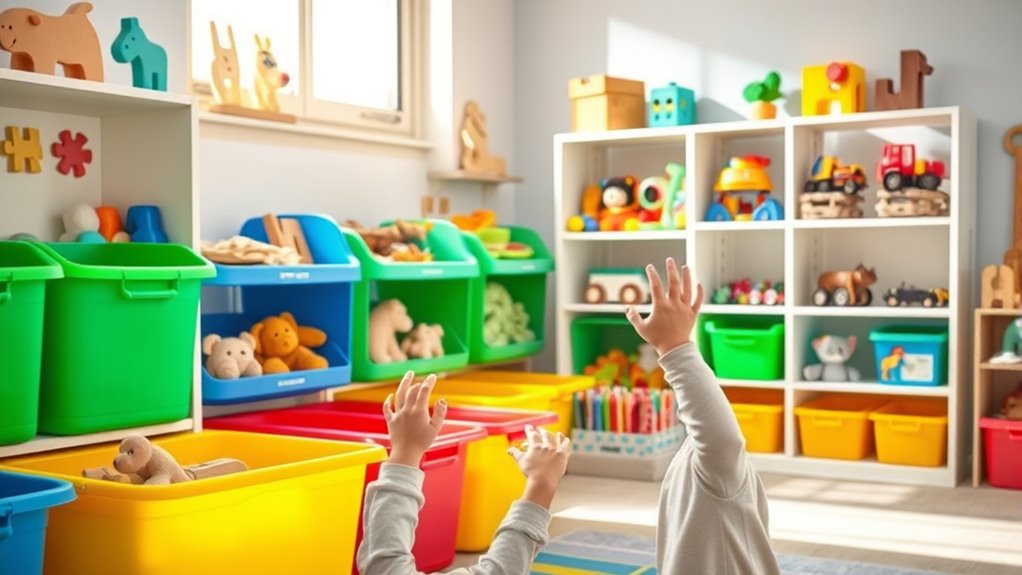

To keep preschool kids engaged, organize toys into clear categories like blocks, stuffed animals, and art supplies using labeled storage bins or shelves. Rotate toys regularly to prevent boredom and reduce clutter, making play areas inviting and manageable. Encourage your child to put toys back in designated spots to foster independence. By maintaining a tidy and well-structured play space, you’ll support their responsibility and keep their interest high—continue exploring ways to optimize your setup.
Key Takeaways
- Use clear, labeled storage bins and designated shelves for toy categories to promote easy access and organization.
- Implement a toy rotation system to introduce variety and prevent overwhelming clutter.
- Involve children in sorting and rotating toys to foster responsibility and ownership of their play area.
- Regularly re-organize toys to maintain tidiness and keep children engaged with fresh options.
- Limit accessible toys to manageable amounts, encouraging focused play and reducing clutter buildup.
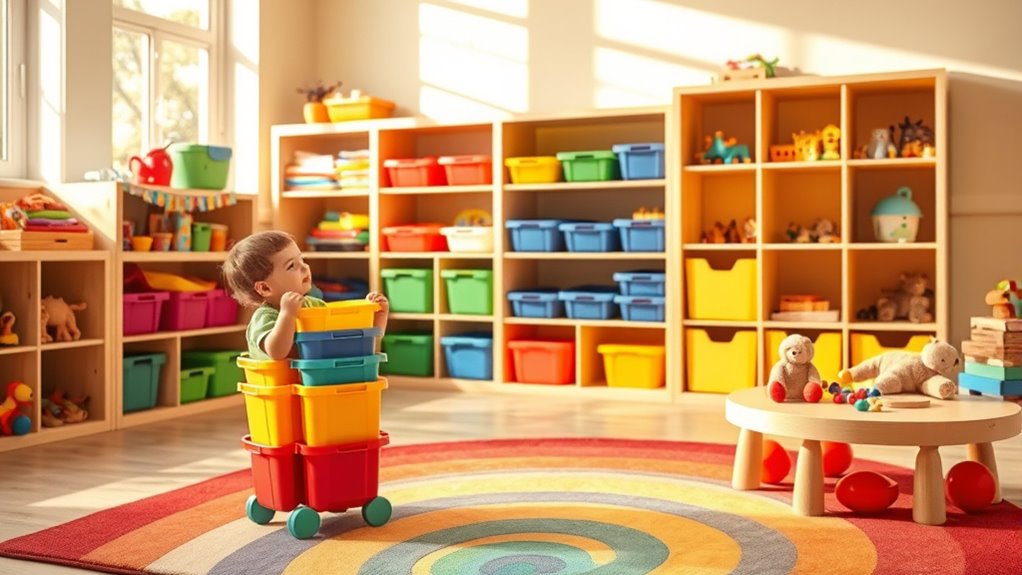
Organizing preschool toys can transform your child’s play area into a tidy, inviting space that encourages creativity and independence. When you set up effective storage solutions, you make it easier not only for your child to find and put away toys but also to develop good organizational habits. Think about using clear bins, labeled baskets, or low shelves that are accessible for little hands. These storage options help contain clutter and give each type of toy a designated spot, making cleanup less of a chore. The key is to choose storage solutions that are sturdy, safe, and simple for your child to use independently. This way, they feel empowered to take responsibility for their space, fostering independence and a sense of ownership over their belongings.
Sorting techniques are equally crucial when organizing preschool toys. Separating toys into categories—like blocks, stuffed animals, art supplies, or musical instruments—helps streamline cleanup and makes playtime more focused. You can implement simple sorting methods, such as color-coded bins or designated shelves for specific toy types. As you organize, involve your child in the process; it becomes an opportunity to teach them about categorization and responsibility. When toys are sorted properly, your child can quickly locate what they want to play with, reducing frustration and keeping them engaged longer in constructive play. Additionally, regular sorting and reorganization prevent clutter from accumulating, which can overwhelm both of you. Incorporating toy rotation strategies further enhances engagement and helps manage clutter effectively.
As an affiliate, we earn on qualifying purchases.
Frequently Asked Questions
How Often Should I Rotate Preschool Toys?
You should rotate preschool toys based on your child’s interest and your toy sorting system, typically every two to four weeks. Creating a rotation schedule helps keep things fresh and engaging. Observe which toys capture your child’s attention and swap out those they’re less interested in. This way, you prevent toy overload and maintain excitement, making playtime more dynamic and educational. Adjust the rotation frequency as needed to suit your child’s changing preferences.
What Are the Best Storage Solutions for Small Toys?
When choosing storage solutions for small toys, focus on toy labeling and storage container types. You should opt for clear plastic bins or stackable drawers to easily see and access toys. Label each container clearly to help your kids find and put away their toys independently. Using small, compartmentalized storage containers keeps tiny items organized and prevents clutter. This approach makes tidying up quicker and encourages your children to stay engaged in cleanup.
How Can I Encourage Children to Tidy Up?
Think of yourself as a coach guiding young heroes in their cleanup quest. To encourage children to tidy up, establish simple cleaning routines they can follow easily. Use colorful storage labels to make it fun and clear where everything belongs. Praise their efforts and make tidying a team activity. Over time, they’ll develop good habits, making cleanup time smoother and more enjoyable for everyone.
What Safety Considerations Are There for Toy Organization?
When organizing toys, you need to consider safety hazards like choking risks, sharp edges, and heavy items that could fall. Make sure all toys are regularly inspected for damage and cleaned following proper cleaning protocols to prevent germs. Store toys in sturdy, age-appropriate containers, and keep small parts out of reach of young children. This helps ensure a safe environment and minimizes any potential accidents or health issues.
How Do I Involve Kids in the Organizing Process?
You can involve kids in organizing by making it fun and engaging. Use parental involvement as a chance to teach them organizing tips, like sorting toys by type or color. Let them decide where things go and encourage them to put toys away after playtime. This not only teaches responsibility but also makes them more invested in keeping their space tidy, fostering good habits early on.
Conclusion
By organizing and rotating your preschool toys, you create a stimulating environment that keeps kids engaged and enthusiastic to learn. Did you know that children’s playtime is linked to 80% of their brain development? When you keep toys fresh and exciting, you’re nurturing their growth and curiosity. So, stay creative with your storage solutions and rotation schedule—your little one’s imagination and learning potential will thank you!