
Open-ended props like silks, peg people, and wagons help you encourage children’s creativity, active play, and emotional development. Silks inspire movement and storytelling, peg people support social skills and fine motor practice, and wagons boost coordination and imaginative scenarios. These versatile tools make playtime exciting and meaningful, limited only by the child’s imagination. Stick around to discover more ways these props can enhance your child’s growth and creativity.
Key Takeaways
- Open-ended props like silks, peg people, and wagons foster creativity, imagination, and versatile storytelling in children’s play.
- Silks promote physical exploration, fluid movement, and vibrant role-playing scenarios.
- Peg people support social-emotional development, fine motor skills, and imaginative role-playing.
- Wagons serve as adaptable play spaces, encouraging coordination, cooperation, and creative storytelling.
- Overall, these props enhance developmental skills and inspire limitless, active, and expressive play.
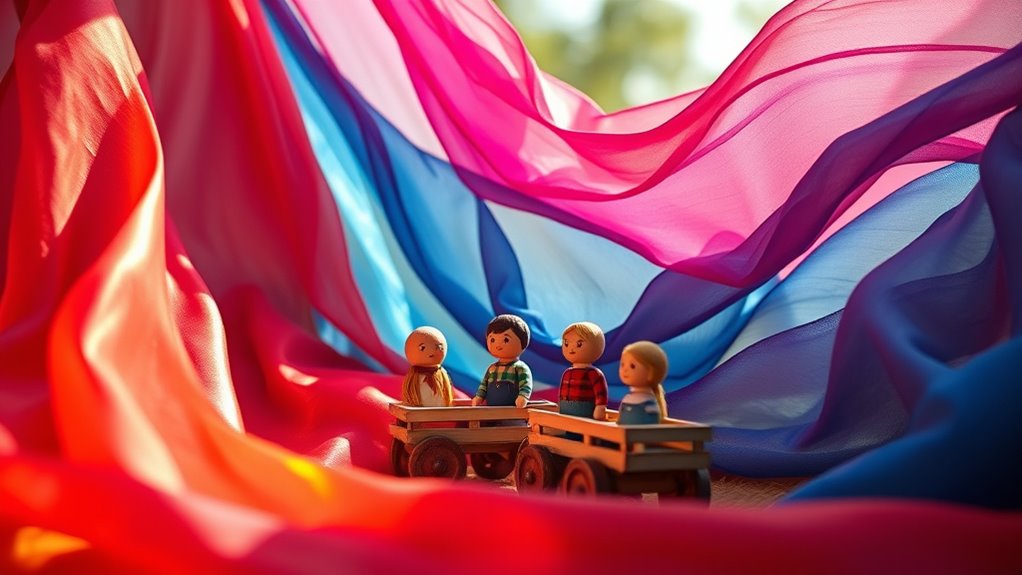
Open-ended props are versatile tools that encourage creativity and imagination in both play and storytelling. When you incorporate items like silks, peg people, and wagons into your child’s play, you’re providing open doors to endless possibilities. These simple objects become more than just toys; they transform into tools for expression, exploration, and learning. With silks, your child can pretend they’re flying through the sky, creating colorful landscapes, or draping themselves as royalty or superheroes. The fluidity of silk encourages movement and physical exploration, fostering coordination and a sense of freedom. Because they lack specific functions, silks invite your child to interpret and manipulate them however they see fit, sparking their imagination and supporting their ability to invent stories. A wide color gamut in silks can further inspire vibrant storytelling and visual creativity. Peg people are another fantastic open-ended resource. These small figures are incredibly adaptable; your child can use them to act out family scenes, create characters for stories, or even practice fine motor skills by dressing and undressing them. The simplicity of peg people allows your child to assign their own roles and narratives, making each play session unique. You might see them as friends, animals, or fantastical creatures, depending on your child’s mood and creativity. Peg people also serve as social tools, helping children understand relationships, emotions, and daily routines through role-playing. As they move and interact with these figures, they develop empathy, language skills, and storytelling abilities. Plus, their size makes them easy to carry around, so imaginative play can happen anywhere. Wagons add another layer of versatility to your child’s imaginative toolkit. They’re not just vehicles for transporting toys or treasures; they become stage sets, market stalls, or even homes for tiny characters. Pushing a wagon allows your child to practice coordination and spatial awareness while imagining journeys to far-off lands or trips to the store. You can encourage them to fill the wagon with natural objects like rocks, leaves, or flowers, turning it into a mobile nature display. Wagons also foster cooperative play when children work together to load and unload items or create stories involving adventures and discoveries. Because these props are open-ended, your child’s play is only limited by their imagination, making wagons a timeless addition that encourages active engagement and creative storytelling.

Avenlur Walnut 9-in-1 Swedish Ladder Wall Gym Set - 78.8 Inches - Trapeze Swing, Rope Ladder, Rock Wall, Rope Wall, Rock Ramp Climber, Slide, Pull-up Bar, Ladder and Swing
Versatile Climbing Gym: Explore countless adventures with this all-in-one indoor wooden jungle gym! With two height options (94.5"...
As an affiliate, we earn on qualifying purchases.
Frequently Asked Questions
How Do Open-Ended Props Enhance Children’s Creativity?
Open-ended props boost your child’s creativity by encouraging imaginative play and problem-solving. When they use silks, peg people, or wagons, they can transform these simple items into anything they envision—castles, animals, or vehicles. You give them the freedom to explore, invent, and express themselves without strict rules, helping develop their cognitive and emotional skills while making playtime more engaging and meaningful.
What Materials Are Safest for Open-Ended Props?
You should choose non-toxic, child-safe materials like organic cotton, silicone, and untreated wood for open-ended props. Some might worry about durability, but these materials are sturdy and safe for active play. By selecting these, you guarantee your children can explore creatively without exposure to harmful chemicals. Plus, natural textures and colors encourage sensory development and imagination, making play both safe and enriching.
How Can Open-Ended Props Be Integrated Into Classroom Activities?
You can integrate open-ended props into classroom activities by encouraging students to brainstorm creative uses for them. For example, let kids use silks as imaginary rivers or peg people as characters in storytelling. You might set up themed scenarios where students invent new games or stories, fostering imagination and collaboration. Prompt them to think outside the box, making learning engaging and hands-on with these versatile props.
Are There Age Restrictions for Playing With These Props?
There aren’t strict age restrictions for playing with these props, but you should consider safety and developmental appropriateness. Younger children, especially those under three, might need supervision to prevent choking hazards or misuse. Older kids can explore more complex imaginative scenarios. Always assess the individual child’s abilities and guarantee the props are safe and suitable for their age, encouraging creativity while maintaining safety.
How Do Open-Ended Props Support Social Development?
Think of open-ended props as the seeds of social growth, sprouting connections and understanding. They encourage you to share, negotiate, and take turns, much like a garden where every plant contributes to harmony. By engaging with these props, you naturally develop communication skills and empathy. You learn to listen and collaborate, fostering deeper bonds and confidence. These tools truly act as catalysts for your social development, nurturing essential interpersonal skills.

Delta Children Lil’ Climber Gym - Indoor Climbing Gym/Jungle Gym for Kids - Montessori Toy with Reversible Arch/Rocking Chair, Reversible Rock Wall/Slide Ramp and Pikler Triangle - for Toddlers 3+
UNLIMITED CONFIGURATIONS: Climbing gym includes 1 reversible arch, 1 reversible rock wall/slide ramp and 1 Pikler triangle |...
As an affiliate, we earn on qualifying purchases.
Conclusion
Open-ended props invite imagination, foster creativity, and inspire exploration. They challenge you to see beyond the obvious, to interpret anew, and to transform simply into something extraordinary. With silks, peg people, and wagons, you’re not just playing—you’re discovering, creating, and imagining endlessly. Embrace their versatility, trust your intuition, and let your mind wander. Because in open-ended play, the possibilities are limitless—and so are you.

PairPear Foldable Pikler Triangle Climbing Set for Kids, 7 in 1 Montessori Large Wooden Climbing Toys Indoor Jungle Gym with Rocker Arch, Ramp & Slide for Toddlers 18 Months+
Bigger for Growing Kids: 38" tall XL frame lets siblings climb side-by-side, perfect from 18m to age 6
As an affiliate, we earn on qualifying purchases.
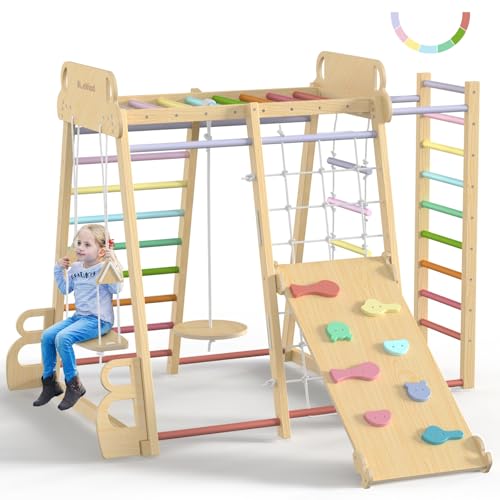
Upgraded Indoor Playground 9-in-1 Jungle Gym Kids Climbing Toys, Montessori Philosophy Waldorf Style Wooden Climber Playset with Slide, Swing, Monkey Bars, Upright/Rope Ladder, Climb Net, Rainbow
Say No to Screen: Unlike electronic and optical toys, Safari-land indoor jungle gym for kids 3-6 unique design...
As an affiliate, we earn on qualifying purchases.