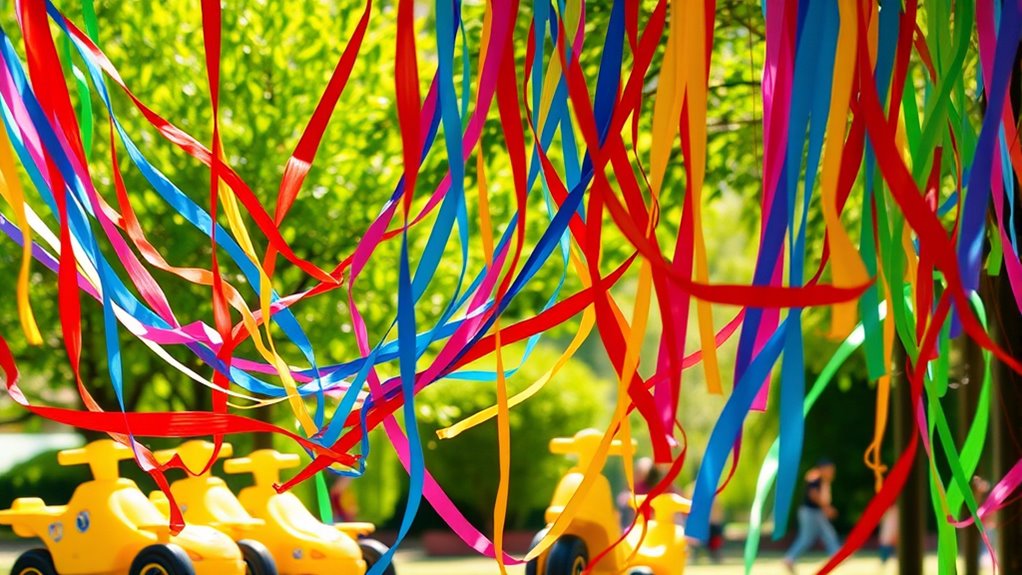

To create vibrant, eco-friendly streamers for ride-ons, use natural dyes from ingredients like beetroot, spinach, turmeric, or berry skins. Simmer these in water, strain them, and soak lightweight fabrics like muslin or cotton to achieve colorful effects. Dip and rinse your dyed strips, then attach them to bikes or scooters for a playful, sustainable look. Continue exploring how different ingredients can produce a variety of hues and unique decorations.
Key Takeaways
- Use natural dyes from kitchen ingredients like beetroot, spinach, or turmeric to create vibrant, eco-friendly streamers for ride-ons.
- Prepare a dye bath by simmering natural materials, then soak lightweight fabrics until desired color is achieved.
- Attach the dyed fabric streamers to bikes, scooters, or ride-on toys for colorful outdoor displays.
- Experiment with different immersion times and layering techniques to produce varied, dynamic color effects.
- Promote sustainability and creativity by incorporating natural dyeing into outdoor craft projects for children.
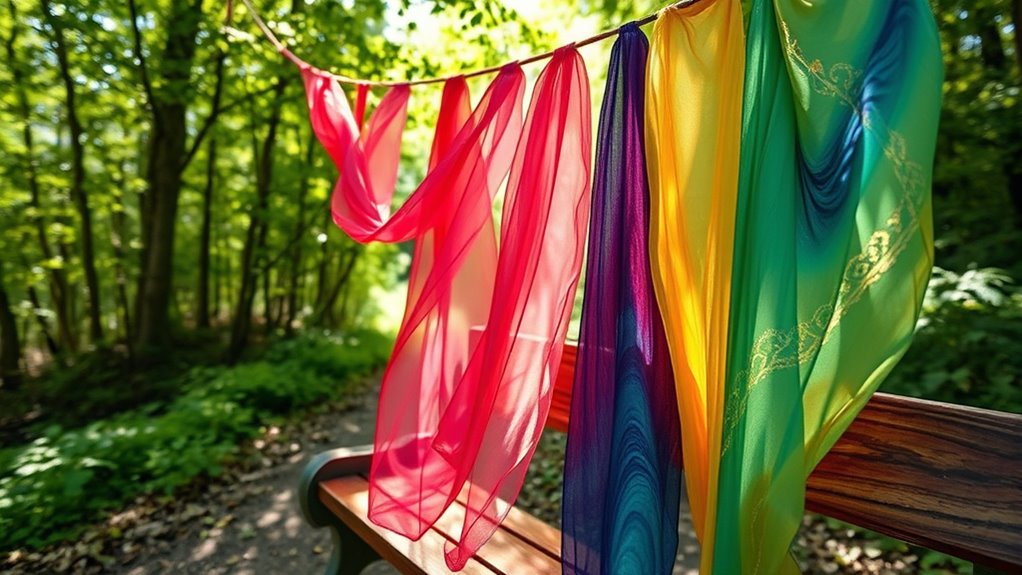
Nature-dye projects offer an eco-friendly way to bring vibrant, natural colors into your crafting. When you choose natural dyes, you’re not only creating beautiful, one-of-a-kind streamers for ride-ons but also making an environmentally conscious decision. Unlike synthetic dyes that can harm ecosystems, natural dyes come from plants, fruits, vegetables, and other organic materials, giving you a safe and sustainable way to add color to your projects. Plus, working with natural dyes feels rewarding because you’re connecting with nature, transforming simple ingredients into stunning hues that can brighten any ride-on toy or outdoor display.
Getting started is straightforward. You’ll gather materials like onion skins, beetroot, spinach, turmeric, berries, or tea leaves—items likely already in your kitchen or garden. Once you have your resources, you’ll prepare your dye bath by simmering these ingredients in water, releasing their pigments into the liquid. The process is simple but effective, and you can experiment with different materials to achieve a spectrum of shades. For instance, onion skins produce warm, golden tones, while beetroot offers deep reds and pinks. Spinach and grass provide lovely greens, and turmeric yields bright yellows. You’ll want to strain out solids and let the dye cool before dipping your fabric or paper.
Gather natural materials like onion skins, beetroot, spinach, turmeric, berries, or tea leaves to create vibrant, eco-friendly dyes.
To create colorful streamers suitable for ride-ons, you’ll need to select lightweight, absorbent materials like cotton or muslin. After dipping your fabric into the dye bath, you can leave it immersed for varying lengths of time to control the intensity of the color. Longer soaking results in deeper hues, while shorter dips give softer shades. Once you’re satisfied, you’ll rinse your dyed fabric in cool water to remove excess dye and hang it to dry. This process ensures your streamers will have vibrant, lasting colors that won’t fade easily.
You might also want to experiment with tie-dye techniques or layering different colors for a more dynamic look. Using natural dyes, you have the flexibility to create subtle gradients or bold, striking contrasts. Once dried, you can attach your colorful streamers to ride-on toys, bikes, or scooters, instantly transforming them into eye-catching, eco-friendly displays. Not only do these projects let you craft something cheerful and lively, but they also teach valuable lessons about sustainability and the beauty of natural resources.
In the end, natural dye projects empower you to craft with purpose, blending creativity with eco-consciousness. Your colorful streamers will stand out because they’re uniquely yours—crafted from nature’s palette and designed to brighten up outdoor adventures without harming the environment.
natural fabric dye kit
As an affiliate, we earn on qualifying purchases.
As an affiliate, we earn on qualifying purchases.
Frequently Asked Questions
How Long Do Natural Dyes Typically Last on Fabric?
Natural dyes usually last between a few months to a couple of years on fabric, depending on factors like exposure to sunlight, washing frequency, and fabric type. To extend their vibrancy, you should wash the dyed item gently, avoid harsh detergents, and keep it out of direct sunlight whenever possible. Proper mordants and setting techniques also help preserve the color longer, ensuring your colorful streamers stay bright for as long as possible.
Are Natural Dyes Safe for Children and Pets?
Natural dyes are generally safe for children and pets when you use food-grade or botanical sources, but always test for allergies first. Think of these dyes as gentle rain nourishing a garden—they’re vibrant yet soft, blending safety with beauty. Keep an eye out for any skin reactions or sensitivities. When in doubt, opt for dyes labeled non-toxic, ensuring your little adventurers and furry friends enjoy colorful fun without worry.
Can I Reuse Leftover Dye Solutions for Other Projects?
Yes, you can reuse leftover dye solutions for other projects if you store them properly in airtight containers and keep them away from light and heat. Always check the dye’s color and consistency before reusing, and do a small test to ensure the color remains vibrant and safe. Reusing dye conserves money and reduces waste, making your craft projects more eco-friendly and enjoyable.
What Are the Best Natural Dye Sources for Bright Colors?
You can get bright colors from natural dye sources like madder root for reds, turmeric for vibrant yellows, and indigo for deep blues. Beetroot and pomegranate seeds also yield lively pinks and purples. To maximize brightness, use mordants like alum or iron, and guarantee your fabric is prepped properly. Experimenting with different plant sources and mordants helps you achieve the most vivid, eye-catching shades in your dye projects.
How Do Environmental Conditions Affect Natural Dyeing Results?
Environmental conditions are like a wild card in natural dyeing, shaping your results. High temperatures can intensify colors, while too much sunlight might fade them faster. pH levels of water influence hues—alkaline solutions brighten yellows, acids deepen reds. Humidity impacts dye absorption, making colors more vibrant or dull. By controlling these factors, you can guarantee your streamers stay bright and beautiful for your ride-ons.
eco-friendly fabric streamers for bikes
As an affiliate, we earn on qualifying purchases.
As an affiliate, we earn on qualifying purchases.
Conclusion
By exploring nature-dye projects, you discover that nature’s colors aren’t just beautiful—they’re a declaration to sustainability and creativity. When you use natural dyes, you embrace a cycle of renewal, proving that old ideas can be refreshed with eco-friendly choices. This practice reminds you that harmony with nature isn’t just a theory; it’s a powerful way to make colorful, meaningful art while caring for the planet. Your ride-ons become symbols of vibrant, conscious living.
cotton muslin fabric for dyeing
As an affiliate, we earn on qualifying purchases.
As an affiliate, we earn on qualifying purchases.
kids outdoor craft supplies
As an affiliate, we earn on qualifying purchases.
As an affiliate, we earn on qualifying purchases.