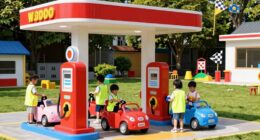
Using ride-on toys is a fun way to help children learn directional language through active play. You can encourage them to follow simple commands like “drive forward,” “turn left,” or “go around the obstacle,” which builds their understanding of directions while strengthening motor skills. As they practice steering and maneuvering, they reinforce spatial awareness and confidence. Keep exploring different activities with ride-on toys to see how they naturally develop their grasp of directions and movement.

Turn the school run and nap time into listening time
- Thousands of audiobooks, podcasts and originals
- Listen on your phone, tablet or Echo — also offline
- Cancel anytime
Key Takeaways
- Incorporate directional words like “forward,” “backward,” “left,” and “right” during ride-on play to reinforce understanding.
- Use obstacle courses and guided routes to help children practice navigating and applying directional concepts physically.
- Combine storytelling with ride-on activities, prompting children to follow verbal directions to enhance language and spatial skills.
- Model and demonstrate directional commands while children operate the ride-on toy to encourage active learning.
- Encourage children to describe their movements and routes, fostering language development alongside spatial awareness.
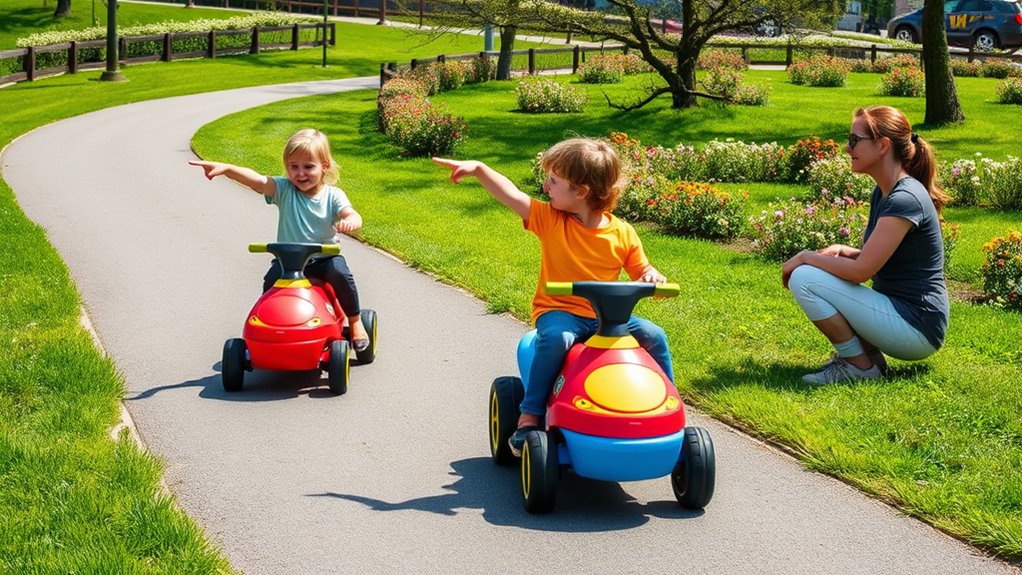
Using ride-on toys is a fun and effective way to teach young children about directional language. When your child pedals, pushes, or scoots around, they’re not just having fun—they’re also developing essential skills like motor skills and spatial awareness. These toys create natural opportunities for your child to understand concepts like “forward,” “backward,” “left,” and “right,” because they’re actively steering their environment. As they push off and steer, they learn to coordinate their movements, strengthening their muscles and improving their overall motor control. This physical activity is critical in early childhood development, helping them gain confidence in their abilities and laying the groundwork for more complex movements later.
Ride-on toys help children learn directions, improve motor skills, and build confidence through active, playful navigation.
As your child maneuvers their ride-on toy, they start to understand spatial awareness—how they relate to objects around them. You can facilitate this learning by encouraging your child to follow directions that involve movement and positioning. For example, you might say, “Drive forward to the tree,” or “Turn left at the bench.” These simple instructions help your child grasp the concept of spatial relationships, reinforcing their understanding of where they are in relation to other objects. The act of steering and maneuvering around obstacles also enhances their ability to judge distances and navigate through space, which are key components of spatial awareness. As they practice, they become more confident in their ability to control their movements and understand their surroundings. Additionally, incorporating self-directed exploration encourages independence and problem-solving skills as children decide which paths to take.
Using ride-on toys also makes it easier for children to connect language to their actions. When you point out directions, such as “Go past the slide,” or “Stop at the fence,” your child begins to associate words with specific movements and locations. Repetition of these terms during play helps solidify their understanding of directional language, making it more intuitive over time. Plus, as they explore different routes and make decisions about where to go, they’re actively engaging in problem-solving, which promotes cognitive development alongside physical growth.
Incorporating ride-on toys into playtime isn’t just about fun; it’s a practical way to teach foundational skills that support future learning. By encouraging your child to move forward, backward, and turn left or right, you’re fostering both their motor skills and their grasp of spatial awareness. The more opportunities they have to practice these concepts in a playful setting, the more natural they’ll become. So, use these toys as tools for learning, and watch as your child gains confidence in navigating their world with increased coordination and understanding.
ride-on toy with obstacle course
As an affiliate, we earn on qualifying purchases.
As an affiliate, we earn on qualifying purchases.
Frequently Asked Questions
How Can Ride-On Toys Improve Spatial Awareness?
Ride-on toys improve your child’s spatial awareness by encouraging them to recognize spatial cues like left, right, and forward. As they navigate around obstacles, their motor development gets a boost, helping them coordinate movements better. This active engagement sharpens their spatial recognition skills, making it easier to understand how objects relate to each other in space. Ultimately, riding helps your child develop a stronger sense of direction and body awareness.
What Safety Precautions Should Be Taken During Activities?
Think of safety precautions as your child’s shield on their ride. You should guarantee they wear protective gear like helmets and pads at all times. Keep a close eye on them with clear supervision guidelines, staying within arm’s reach and watching for hazards. Regularly check the ride-on toys for damage. By doing this, you create a safe environment where your child can explore and learn without unnecessary risks.
Can This Method Be Used for Children With Special Needs?
Yes, you can adapt ride-on toys for children with special needs. Focus on sensory integration by choosing toys that provide calming or stimulating sensations, and encourage social interaction by involving peers or caregivers. You might modify the activity to suit individual sensory preferences and communication abilities, helping children develop directional language skills while feeling safe and engaged. This personalized approach supports inclusive learning and growth.
How Do You Adapt Lessons for Different Age Groups?
You adapt lessons for different age groups by incorporating age-appropriate modifications and engagement strategies. For younger children, use simple commands, colorful toys, and shorter activities to hold their interest. Older kids benefit from more complex directions and longer play sessions. Always observe their responses, and adjust your approach accordingly. By tailoring activities to their developmental level, you verify they stay engaged and effectively learn directional language through ride-on toys.
What Are Some Creative Game Ideas Using Ride-On Toys?
You can create fun games like obstacle courses where kids navigate around cones or cushions, practicing directional words like left, right, and forward. Organize treasure hunts where children follow clues and ride to specific spots, reinforcing their understanding of spatial concepts. These activities make learning engaging and active, helping kids connect language with movement. Plus, they develop coordination and problem-solving skills while having tons of fun on their ride-on toys.
Conclusion
Now that you’ve seen how ride-on toys can bring directional language to life, imagine the excitement as your child navigates around obstacles, turning left, right, and straight ahead. With each new adventure, they’ll build confidence and understanding. But what’s next? Will they master complex instructions or discover new paths? Keep exploring these playful lessons—because each turn could lead to a surprising, discovery-filled moment that sparks a lifelong love of learning and exploration.
Halloween Picks
halloween
As an affiliate, we earn on qualifying purchases.