Using ride-on toys is a great way to bond with your child through active, shared play. As you steer, encourage their movements, which helps build physical skills like balance and coordination while fostering trust. Engaging in these fun adventures also boosts your emotional connection and communication, creating joyful moments together. By supporting their progress and making playtime special, you nurture both their development and your relationship—stay with us to explore more ways to strengthen your bond through play.
Key Takeaways
- Engage in shared play to foster trust, communication, and emotional connection during ride-on toy adventures.
- Use ride-on toys to support your child’s developmental milestones, boosting confidence and independence.
- Incorporate storytelling and praise during play to enhance language skills and emotional bonds.
- Participate actively in navigating obstacles or trying new tricks to encourage growth and cooperation.
- Ensure safety and age-appropriate toys to create a secure environment for meaningful bonding moments.
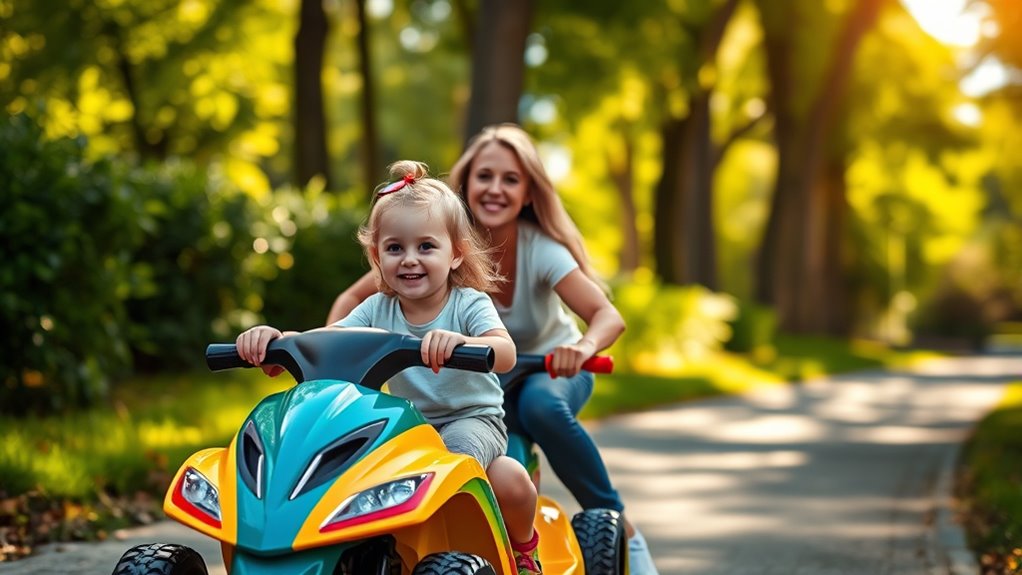
Ride-on toys are more than just fun playthings—they’re a great way to connect with your child and build lasting memories. When you engage in parent-child play using ride-on toys, you create opportunities for your child to develop essential skills while strengthening your bond. These toys aren’t just for entertainment; they serve as tools that support your child’s growth through active, shared experiences. As you watch your little one navigate their ride-on, you’re witnessing their progress in reaching key developmental milestones, such as balance, coordination, and spatial awareness.
By joining your child during playtime, you foster a sense of security and encouragement. You might push them along, cheer when they succeed at steering, or simply sit beside them, sharing in their excitement. This interaction makes the activity more meaningful and helps your child feel supported as they explore their abilities. As they learn to steer and control the ride-on, they’re honing fine motor skills and hand-eye coordination, which are fundamental to later tasks like writing and dressing themselves. Your involvement turns play into a valuable learning experience, reinforcing their confidence and independence.
Furthermore, parent-child play with ride-on toys can boost social skills. When you encourage sharing the toy or take turns, your child learns about cooperation and patience. These interactions serve as foundational social lessons that they’ll carry into other areas of life. It’s also an excellent chance to talk and communicate, whether you’re giving instructions, praising their efforts, or simply chatting about their adventures. These conversations help develop their language skills and emotional intelligence. Engaging in play also supports sensory development through tactile experiences, enriching their understanding of different textures and sensations.
As your child grows, their abilities with ride-on toys will evolve. You’ll notice their increasing ability to navigate around obstacles, balance on uneven surfaces, and even attempt new tricks or routes. Supporting these achievements not only marks their physical progress but also demonstrates your ongoing interest in their development. The shared experience of riding together also cultivates a sense of trust and companionship, making your relationship stronger.
Incorporating ride-on toys into your routine isn’t just about play; it’s about nurturing your child’s growth and creating shared moments that matter. When you actively participate, you’re not only helping your child reach key developmental milestones but also laying the foundation for a lifelong connection. It’s these simple, joyful interactions that build the trust, confidence, and skills your child will carry into the future. Plus, choosing age-appropriate, safe toys ensures a secure environment for their adventures.

KidsBuddy Pikler Triangle Set with Cushion 9 in 1 Climbing Toys for Toddlers 1-3 Indoor Baby Climbing Gym Toddler Montessori Toys Wooden Toy with Maze Toy, Shape Sorter, Dinosaur Car
Patented Dinosaur Design: Our Pikler Triangle Set features a patented dinosaur design with a unique frame, detailed cushion,...
As an affiliate, we earn on qualifying purchases.
Frequently Asked Questions
What Safety Precautions Should I Take When My Child Uses Ride-On Toys?
When your child uses ride-on toys, guarantee helmet safety by always having them wear a properly fitted helmet. Check the surface safety by choosing flat, smooth areas free of debris or obstacles. Supervise constantly, and teach your child to ride responsibly. Regularly inspect the toy for damage or loose parts, and avoid steep slopes or busy streets. These precautions help keep your child safe and enjoy their ride confidently.
How Do I Choose the Best Ride-On Toy for My Child’s Age?
Choosing the right ride-on toy is like finding a perfect puzzle piece that fits seamlessly. You should look for age-appropriate options with features suited to your child’s developmental stage, such as balance aids or speed controls. Check the toy’s weight limit and safety certifications. Pick a sturdy, durable model that matches your child’s size and interests, ensuring they have fun and stay safe while exploring.
Can Ride-On Toys Help With My Child’s Developmental Skills?
Ride-on toys can boost your child’s cognitive development and motor skills. As they navigate and control the toy, they learn spatial awareness, problem-solving, and coordination. Playing on these toys encourages physical activity, helping strengthen their muscles and improve balance. You’ll notice their confidence grow as they master new skills. Offering ride-on toys at the right age supports their overall growth, making play both fun and educational.
How Much Supervision Is Recommended During Ride-On Toy Play?
Imagine your child zooming around on a ride-on toy, their face lit with joy. You should keep a close eye on them, providing high supervision levels to guarantee safety. Always have safety gear like helmets and pads, and stay nearby to intervene if needed. Your active presence helps prevent accidents, making playtime fun and safe. Remember, a watchful eye transforms their adventure into a secure, delightful experience.
Are There Outdoor and Indoor Ride-On Toy Options Suitable for Bonding?
Yes, there are indoor play and outdoor adventures ride-on toys perfect for bonding. Indoor options like small cars or scooters let you enjoy active play without weather worries, while outdoor ride-on toys, such as larger bikes or off-road vehicles, encourage exploration and teamwork. You can join your child’s adventures, build trust, and create lasting memories, all while promoting their physical activity and coordination in fun, safe environments.

EDOSTORY 5 in 1 Pikler Triangle Set, Indoor Playground and Gym for Kids, Foldable Wooden Montessori Climbing Set Triangle Ladder Set with Slide and Climbing Ramp, Gift for Boys Girls(Rainbow)
【Designed For Toddlers】Our 5 in 1 Pikler Triangle Toys are specifically designed with toddlers in mind. The size,...
As an affiliate, we earn on qualifying purchases.
Conclusion
Don’t worry if you’re worried about safety or making time for play. Ride-on toys are a fantastic way to bond with your child while keeping things fun and safe. Even busy schedules can include quick, joyful rides that strengthen your connection. Just start slow, stay present, and enjoy these special moments together. Remember, those little adventures not only boost your child’s confidence but also create lasting memories you’ll cherish forever.

PairPear Foldable Pikler Triangle Climbing Set for Kids, 7 in 1 Montessori Large Wooden Climbing Toys Indoor Jungle Gym with Rocker Arch, Ramp & Slide for Toddlers 18 Months+
Bigger for Growing Kids: 38" tall XL frame lets siblings climb side-by-side, perfect from 18m to age 6
As an affiliate, we earn on qualifying purchases.

ENYOPRO 2 Seater Ride On Car for Kids, 24V Licensed Ford Bronco Raptor Electric Power Ride On Truck Toy with Remote Control, 4 Wheels Shock Absorption, Soft Start, Bluetooth, Radio, 3 Speed - Blue
[Excellent Power & Longer Drive] - The ENYOPRO 24V 2 seater battery powered car for kids boasts dual...
As an affiliate, we earn on qualifying purchases.