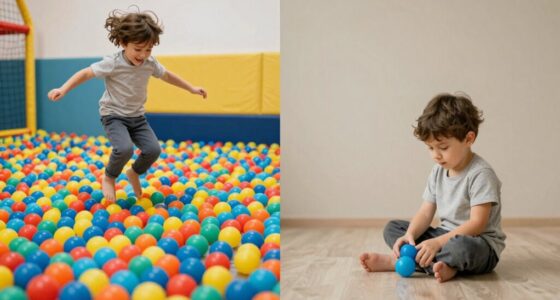
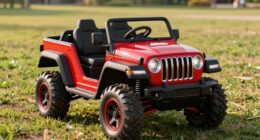
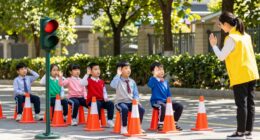
Using ride-on toys in sensory rooms can boost motor skills by encouraging movement, balance, and coordination. They provide rich sensory input through tactile, auditory, and visual cues, engaging children actively and promoting exploration. Picking the right sturdy, age-appropriate toys guarantees safety and maximizes benefits. Incorporating different ride-on types and environment features can also enhance sensory engagement and confidence. Keep exploring how these toys can transform your sensory space to support development and fun.
Key Takeaways
- Incorporate ride-on toys to promote motor skills, balance, and coordination within the sensory room environment.
- Use a variety of ride-on types and textured surfaces to enhance multi-sensory stimulation for children.
- Ensure a safe, supervised space with appropriate toy size, stability, and designated riding areas.
- Integrate ride-on activities to encourage exploration, independence, and confidence in a controlled setting.
- Combine visual, tactile, and auditory cues from ride-on toys to enrich sensory engagement and development.
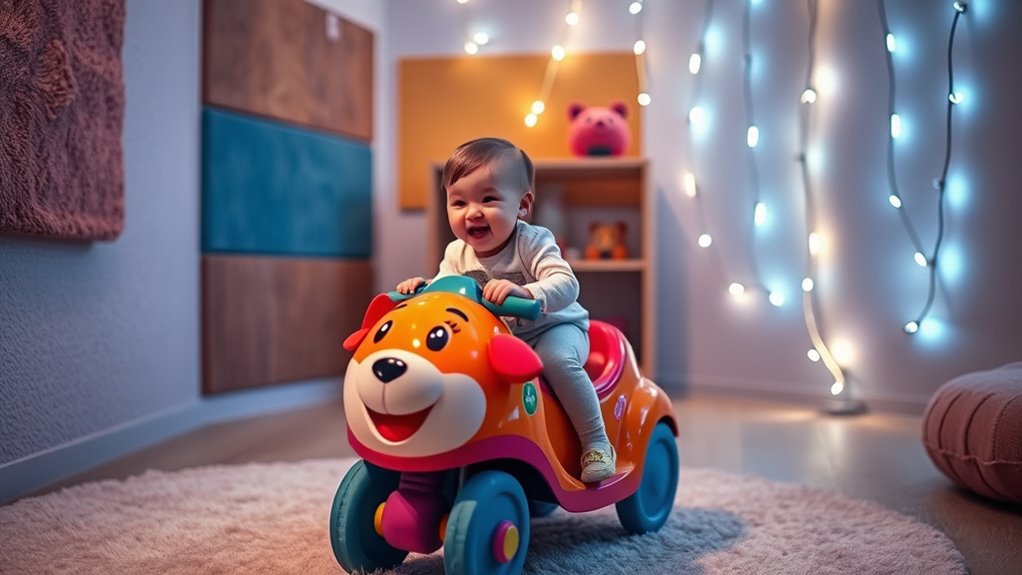
Ride-on toys can be a dynamic addition to sensory rooms, providing children with engaging opportunities to develop motor skills and explore their environment. When you introduce these toys, you’re offering a fun way for kids to improve coordination, balance, and muscle strength. Movement is crucial for motor skill development, and ride-on toys encourage children to use their legs, core, and arms actively. As they push, pedal, or steer, they refine their fine and gross motor abilities, which are essential for everyday activities like walking, running, and grasping objects. Plus, the movement involved in riding stimulates the vestibular system, contributing to better balance and spatial awareness. This sensory stimulation not only helps children become more comfortable with movement but also enhances their overall sensory processing capabilities. Incorporating different riding experiences can also stimulate the vestibular system and promote equilibrium.
Using ride-on toys in a sensory room taps into multiple senses simultaneously. As children propel themselves forward, they experience tactile feedback through the handlebars, seat, and wheels. The motion creates a sense of acceleration and deceleration, offering rich proprioceptive input that helps children understand their body’s position in space. The sound of the wheels on different surfaces or the child’s own movements can add auditory input, further enriching the sensory experience. Visual cues, such as watching their movement or noticing colorful designs on the toys, provide additional visual stimulation. This multi-sensory approach keeps children engaged and encourages exploration, making therapy or developmental activities more enjoyable and effective.
Using ride-on toys engages multiple senses, promoting exploration, coordination, and sensory development through tactile, auditory, and visual feedback.
When you select ride-on toys for a sensory room, consider options that are sturdy and appropriately sized for the child’s age and motor abilities. Toys with textured surfaces or adjustable features can offer varied sensory input, catering to individual needs. Incorporate different types of ride-ons—such as scooters, tricycles, or powered vehicles—to diversify sensory experiences and keep children motivated. You can also introduce obstacles or themed environments within the room to promote navigational skills and spatial awareness while riding. Always supervise children during play to ensure safety and to guide them in using the toys effectively for motor skill development and sensory stimulation.
Ultimately, integrating ride-on toys into sensory rooms provides a fun, active way to promote motor development and sensory processing. These toys motivate children to move, explore, and learn about their bodies and surroundings in a controlled, engaging environment. As they ride, they build confidence and independence, key components of overall development. By carefully selecting and using ride-on toys, you create a versatile space where children can thrive physically, socially, and sensory-wise.

Radio Flyer Busy Buggy, for Toddlers 1-3, 3-in-1 Push Walker Ride On Car with 17 Sensory Activities, Anti-Tip Feature, Under-Seat Storage, Horn and Gears, 42 lb Capacity, Toddler Ride On Toys
3-IN-1 WALKER & RIDE-ON: The Radio Flyer Busy Buggy is a versatile first vehicle with push walker, ride…
As an affiliate, we earn on qualifying purchases.
As an affiliate, we earn on qualifying purchases.
Frequently Asked Questions
What Safety Measures Are Recommended for Ride-On Toy Use?
You should regularly check ride-on toy maintenance to guarantee parts are secure and functioning properly. Always supervise children during use to prevent accidents. Store toys in designated areas to keep the sensory room organized and safe. Before use, inspect for damage or hazards, and instruct children on proper riding behavior. These safety measures help minimize risks, ensuring a fun and secure environment for everyone.
How Do Ride-On Toys Benefit Specific Sensory Needs?
Did you know that 85% of children with sensory processing challenges see improvements in motor skills and emotional regulation? Ride-on toys help you support these needs by providing proprioceptive input, which enhances motor coordination. They also promote emotional regulation through sensory feedback and physical activity, helping kids feel more grounded and secure. Using ride-on toys in sensory rooms creates an engaging environment that nurtures both motor development and emotional stability.
What Age Groups Are Most Suitable for Ride-On Toys?
You should consider ride-on toys for children aged 2 to 7, as they support children’s motor development and enhance play therapy techniques. Younger kids develop coordination and strength, while older children improve balance and spatial awareness. By choosing age-appropriate ride-on toys, you create engaging opportunities that foster physical growth and sensory integration, making them ideal tools for therapy and play in sensory rooms.
How Can Ride-On Toys Be Customized for Individual Users?
Think of customizing ride-on toys as planting a tailored garden for each user. You can enhance adaptive features like adjustable seats, sensory feedback, and textured grips. Personalization techniques include adding visual cues or sound effects that resonate with individual preferences. By fine-tuning these elements, you make the ride-on experience uniquely theirs, turning a simple toy into a personalized adventure that sparks engagement and comfort for every user.
Are There Any Contraindications for Using Ride-On Toys in Sensory Rooms?
You should be aware of potential contraindications when using ride-on toys in sensory rooms. Medical concerns, such as balance issues or joint problems, might make these toys unsuitable for some users. Additionally, allergy risks should be considered if the toys are made with materials that could trigger reactions. Always assess individual needs and consult with healthcare professionals to guarantee safety and suitability before incorporating ride-on toys into sensory activities.

Radio Flyer Deluxe Steer & Stroll Trike, Red, for Kids 2-5, 2-in-1 Parent Steer Tricycle, Removable Push Handle, Adjustable Seat, Steel Frame, Covered Storage Bin, Tricycle for Toddlers and Kids
2 WAYS TO RIDE: The Radio Flyer Deluxe Steer & Stroll Trike allows you to switch from parent-steered…
As an affiliate, we earn on qualifying purchases.
As an affiliate, we earn on qualifying purchases.
Conclusion
Incorporating ride-on toys into your sensory room is like opening a gateway to endless exploration and joy. They help children develop motor skills while igniting their imagination, turning the space into a vibrant playground of discovery. When you blend movement with sensory input, you create an environment where every child can thrive and shine brighter than a star. So, don’t hesitate—let these toys be the magic keys to revealing their full potential.

ELEMARA Ride On Car, Bluetooth Ride on Toys for Toddlers, 12V Kids Battery Powered Vehicles w/Remote, 3.5 mph Motorized Off-Road Truck, Electric Car for Kids w/3 Speeds,LED Lights- Green
【 Thrill-Ready 12V Performance & Rugged Design】Equipped with a robust 12V motor and all-terrain traction tires for conquering…
As an affiliate, we earn on qualifying purchases.
As an affiliate, we earn on qualifying purchases.

Kiddieland Disney Minnie Mouse Light & Sound Ride-On Toy for Toddlers 12–36 Months, Foot-to-Floor Car with Light-Up Bow, Engine Rev, Horn, Safe Durable Build, 50 lb Capacity
Engaging lights and sounds: Light-up bow, engine revs, horn, and rewarding dial sounds keep toddlers excited, boosting sensory…
As an affiliate, we earn on qualifying purchases.
As an affiliate, we earn on qualifying purchases.