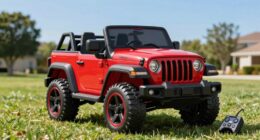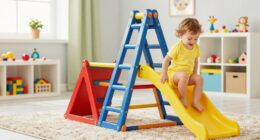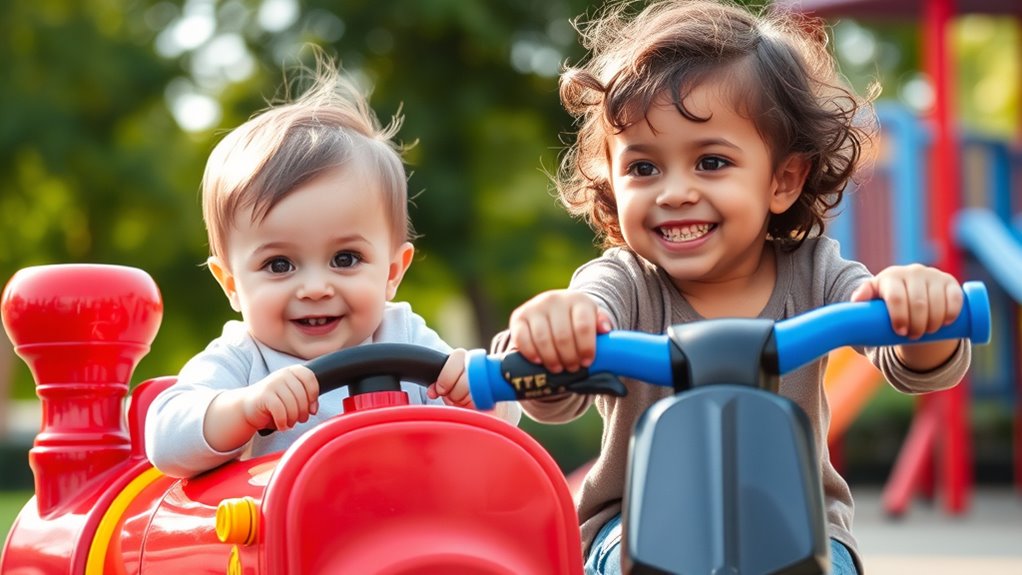
Moving your child from toddler to preschool ride-ons helps boost their confidence, coordination, and independence. Choose models that match their height, weight, and interests, like balance bikes or pedal vehicles, to promote growth and fun. Safety features such as sturdy builds and stability are essential. Involving your child in the selection process can foster ownership and excitement. To guarantee a smooth transition and keep play engaging, explore how to select the right ride-on and support their development.
Key Takeaways
- Choose ride-ons with adjustable seat heights and handlebar positions to accommodate your child’s growth.
- Introduce a variety of ride-ons like balance bikes or scooters to match evolving skills and interests.
- Prioritize safety features such as sturdy build, non-slip pedals, and secure handles for confident riding.
- Gradually encourage independence by involving your child in selecting their ride-on style or color.
- Focus on durability and engaging features to support active play and continued motor development.
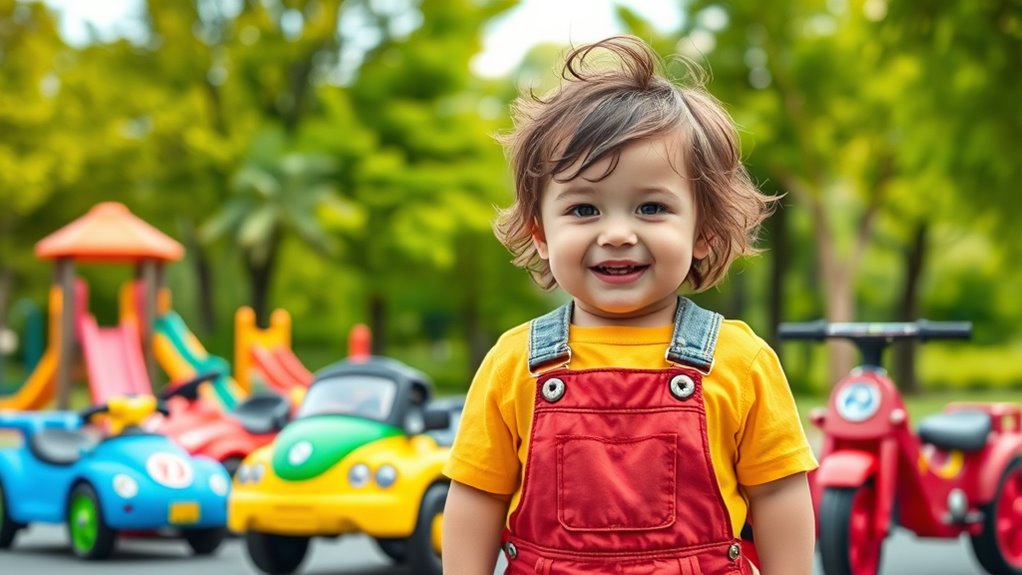
As your little one outgrows their toddler ride-on toys, it’s natural to start thinking about shifting to preschool-sized models. This progression isn’t just about size; it’s about supporting their growing skills, confidence, and independence. You’ll notice that your child is eager to explore more complex movements, and their current ride-on might no longer challenge or engage them as much as before. Moving to a preschool model means finding a balance between safety, durability, and fun, making certain that your child continues to develop physically and socially while enjoying their ride.
As children outgrow toddler ride-ons, transitioning to preschool models supports their growth, confidence, and active development.
When choosing a preschool ride-on, consider the height and weight limits. You want something that allows your child to sit comfortably with their feet flat on the ground, giving them stability and control. If they’re stretching to reach the pedals or handlebars, it might be time to upgrade. Look for models with adjustable features—like seat height or handlebar position—so you can accommodate your child’s growth over several months. This guarantees they won’t quickly outgrow their new ride, making it a worthwhile investment.
Another key factor is the type of ride-on you select. Preschools offer a variety of options, from balance bikes and pedal-powered vehicles to push cars and scooters. Each fosters different skills: balance bikes improve coordination, pedal bikes build leg strength, and push cars enhance motor control. Think about your child’s interests and current abilities. For example, if they’re already comfortable with balancing, a pedal bike might be the next step. If they’re more cautious, a push car that they can propel with their feet might be a better choice to build confidence.
Safety features are paramount. Look for sturdy construction, non-slip pedals, and secure handles. Check that the ride-on has a wide wheelbase for stability and smooth-rolling wheels to prevent tipping. Some models come with additional safety features like seat belts or brakes, which are beneficial for more confident or adventurous kids. Remember, even with a preschool model, supervision remains essential, especially since children are still developing their coordination and judgment.
It’s also helpful to consider product durability when selecting a ride-on, as kids can be quite energetic and may require a sturdy vehicle that withstands rough play. Remember, involving your child in the selection process can help foster excitement and ownership. Letting them choose a color or style helps build excitement and a sense of ownership. Your encouragement and enthusiasm will motivate them to enjoy their new ride and develop a love for active play. Transitioning to preschool ride-ons signals a new chapter in your child’s development, one filled with exploration, confidence, and joy. By choosing the right model and supporting their growth, you help foster their independence and motor skills while keeping play safe and fun.

Fisher-Price Harley Davidson Toddler Tricycle Ride-On Preschool Toy, Lights & Sounds Trike with Adjustable Seat (Amazon Exclusive)
Kid-powered outdoor tricycle features awesome Harley-Davidson graphics with a secret handlebar storage compartment
As an affiliate, we earn on qualifying purchases.
As an affiliate, we earn on qualifying purchases.
Frequently Asked Questions
When Should I Start Introducing Preschool Ride-Ons?
You should start introducing preschool ride-ons when your child shows interest and can confidently reach and sit on the new ride. Typically, around age 3, kids are ready to shift, but it depends on their development and comfort level. Watch for signs like improved coordination and independence. Make the switch gradually, ensuring they feel secure and excited about the new experience, which helps build confidence and enjoyment.
How Do I Choose the Right Size for My Child?
You should choose a preschool ride-on that comfortably supports your child’s weight and height, with enough room to grow. Check the manufacturer’s weight and height limits, and have your child sit on the ride-on to ensure they can reach the handlebars or pedals without strain. Opt for models with adjustable features, so it can accommodate as your child grows, providing safety and comfort during play.
Are There Safety Features to Consider for Older Kids?
Yes, there are safety features you should look for in ride-ons for older kids. Check for sturdy seat belts or harnesses to keep them secure, anti-slip pedals to prevent slipping, and a low center of gravity for stability. make certain the ride-on has reliable brakes or a slow start/stop mechanism. These features help prevent accidents and give you peace of mind as your child enjoys their ride.
How Can I Encourage Independent Riding Skills?
Imagine guiding your child onto a gentle stream, where small steps lead to confident paddling. To foster independent riding skills, encourage practice with supportive supervision, gradually increasing their confidence. Offer praise for effort, not just success, and set manageable goals. Let them explore at their own pace, feeling the thrill of control. With patience and encouragement, you’ll see them blossom into capable riders, enthusiastic for new adventures.
What Are the Best Storage Options for Multiple Ride-Ons?
You should consider using stackable storage bins or dedicated cubbies to organize your ride-ons. These options keep multiple toys easily accessible and neatly stored, saving space. Wall-mounted racks or hooks are also great for hanging smaller ride-ons, freeing up floor space. If you have a garage, invest in sturdy shelves to categorize different types or sizes of ride-ons. Regularly declutter to maintain an organized, safe play area.

SEREED Toddler Balance Bike 2 Year Old, No Pedal Kids Toy Bike for 2-5 Years Old, Tool-Free Adjustment, Gift for 2-3 Boys Girls, Customize Plate with 3pcs Stickers (White)
STURDY AND SAFE- What you think for your kids is what SEREED toddler balance bike have. Wide and…
As an affiliate, we earn on qualifying purchases.
As an affiliate, we earn on qualifying purchases.
Conclusion
As you shift your little one from toddler to preschool ride-ons, remember it’s a big milestone that boosts confidence and independence. Did you know that children who use ride-on toys develop better coordination and balance? Watching your child grow and conquer new challenges is truly rewarding. Embrace these moments, knowing each ride brings them closer to new adventures and skills. You’re shaping their confidence—one ride at a time—making every step of this journey exciting and meaningful.

hauck Kids Pedal Go Kart, 4 Wheel Bike Cart, Ride for Ages 4-8, Green- Outdoor Bicycle Karts with Plastic Wheels for Boys and Girls
Ride-On Toy: Ride-on pedal kart encouraging outdoor play, physical activity, and imaginative adventures; Ideal for kids aged 4…
As an affiliate, we earn on qualifying purchases.
As an affiliate, we earn on qualifying purchases.

VEVOR Ride On Push Car for Toddlers, Ages 19+ Months, Ride Racer, Sit to Stand Toddler Ride On Toy, Kids Ride On Car with Music Steering, Horn & Under Seat Storage, Ride On Toy for Boys Girls,
【Ride on Car】: Designed just for little ones aged 1-3, this ride on push car helps them build…
As an affiliate, we earn on qualifying purchases.
As an affiliate, we earn on qualifying purchases.