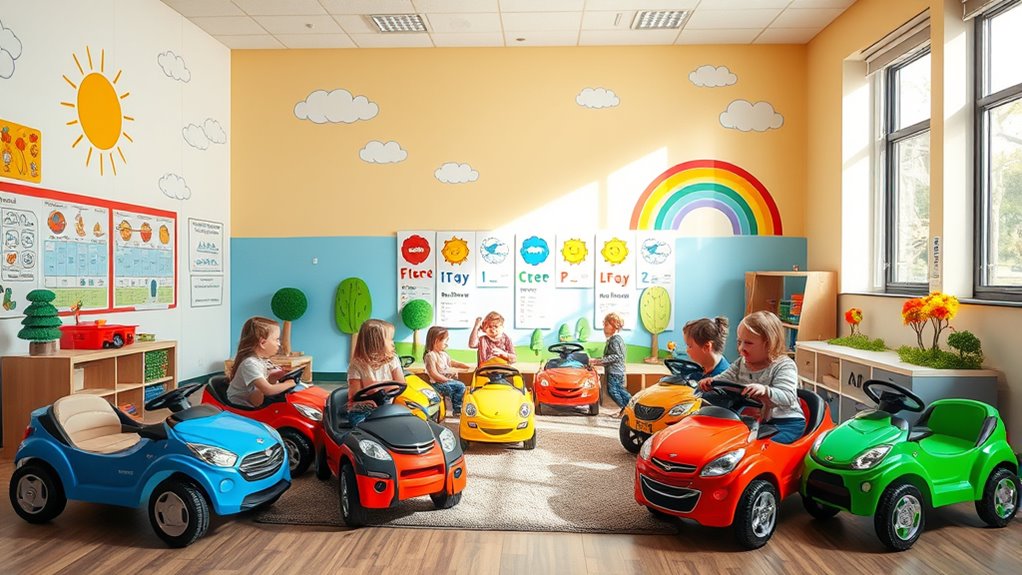

Using ride-on themes to teach weather and seasons makes learning engaging and hands-on. You can set up themed stations representing different weather types or seasons, incorporating costumes, umbrellas, and movement activities. This approach helps children act out weather scenarios, connect vocabulary to real-world experiences, and deepen their understanding through play. By integrating movement and role-play, you’ll create memorable lessons that make seasonal concepts easier to grasp—if you want to explore more ideas, keep going.
Key Takeaways
- Create themed ride-on paths representing different weather conditions and seasons to promote active learning and engagement.
- Incorporate weather icons, costumes, and role-playing stations to reinforce vocabulary through movement and play.
- Use immersive seasonal environments like spring gardens or summer beaches for contextual weather and season teaching.
- Connect weather vocabulary to seasonal activities, encouraging children to describe their experiences and relate to real-world scenarios.
- Support language development with prompts and storytelling during ride-on activities to foster creativity and vocabulary retention.
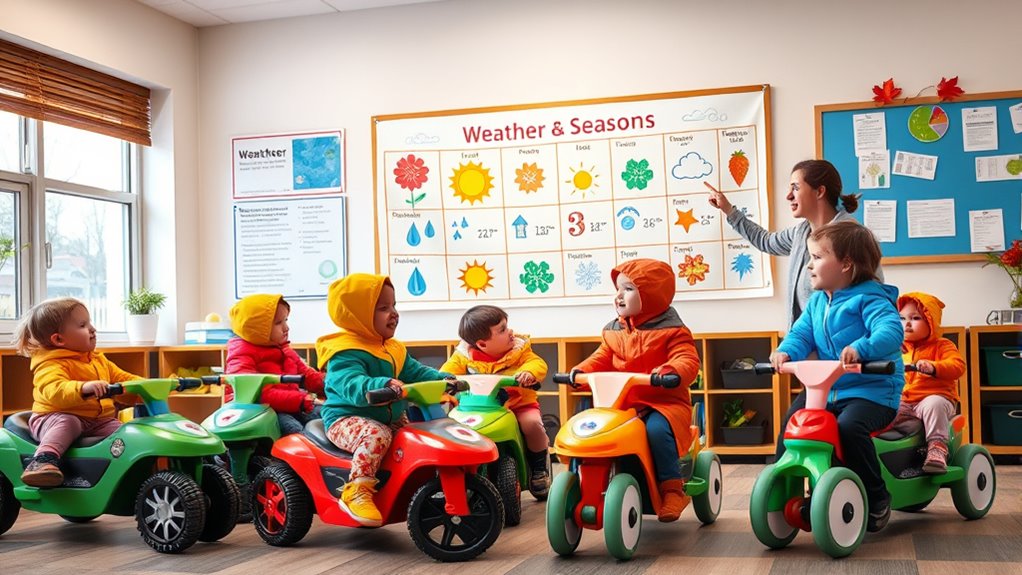
Have you ever wondered how to make learning about weather and seasons engaging for your students? Using ride-on themes can be a fantastic way to bring energy and hands-on excitement into your lessons. When you focus on weather vocabulary, you help your students build a strong foundation to describe different weather conditions confidently. Incorporate words like sunny, rainy, snowy, windy, and cloudy into your activities, making sure students get plenty of opportunities to practice them in context. For example, you can set up a mini weather station or create a weather board where children can move icons representing different weather types. This reinforces vocabulary through visual cues and kinesthetic learning, making the words stick more effectively.
To make the learning process even more lively, connect weather vocabulary to seasonal activities that children are familiar with or can look forward to. For instance, talk about building snowmen in winter or jumping in puddles during rainy days. Use ride-on toys or models to demonstrate these activities, turning abstract concepts into tangible experiences. When children can see and touch representations of seasonal activities, they develop a better understanding of how weather influences daily life. Incorporate prompts that encourage them to describe their own experiences with different weather conditions, consequently fostering language development and personal connection to the lesson.
Connect weather vocabulary to seasonal activities through hands-on play and prompts to enhance understanding and language skills.
You can also design a themed weather and seasons path where children ride on toy vehicles to different stations, each dedicated to a specific weather type or season. At each station, include interactive elements like costumes to dress for winter or umbrellas for rainy weather, encouraging children to role-play and use weather vocabulary actively. This approach not only makes the lesson fun but also helps children internalize seasonal activities associated with various weather patterns. It creates a dynamic environment where movement and learning go hand in hand, making the concepts memorable.
Furthermore, integrating seasonal activities into your ride-on themes allows children to understand how weather impacts different times of the year. For example, they can “visit” a spring garden, where they learn about rain showers and blooming flowers, or a summer beach scene with sun and swimming. These immersive experiences help children connect vocabulary to real-world contexts, making lessons more meaningful. Plus, by involving them in storytelling or simple role-play scenarios related to seasonal activities, you foster their creativity and communication skills.

Radio Flyer Retro Rocket, for Toddlers 1-3, 3-in-1 Push Walker Ride On Rocket with Sensory Activities, Under-Seat Storage, Lights and Sounds, 42 lb Capacity, Toddler Ride On Toys
3-IN-1 WALKER & RIDE-ON: The Radio Flyer Retro Rocket is a versatile first vehicle with push walker, ride…
As an affiliate, we earn on qualifying purchases.
As an affiliate, we earn on qualifying purchases.
Frequently Asked Questions
How Can I Incorporate Weather Themes Into Ride-On Toy Activities?
You can incorporate weather themes into ride-on toy activities by creating weather-based games that match the season. For example, during winter, organize snow-themed rides or pretend snowball fights, and in summer, add water sprays for hot weather fun. Use seasonal ride-on activities like rainbows, sunshine, or snowflakes to make the experience engaging. These activities help children connect weather concepts with active play, making learning both fun and memorable.
What Safety Precautions Are Recommended During Outdoor Weather Lessons?
Imagine your little ones riding under a bright sun, their faces glowing with excitement. You should guarantee sun safety by applying sunscreen and providing hats, and make certain they wear proper footwear to prevent slips. Keep a close eye on weather changes, especially during rain or strong winds, and have a plan to move indoors if conditions worsen. These precautions keep outdoor weather lessons safe and fun for everyone.
How Do I Address Diverse Weather Conditions in Indoor Classroom Settings?
You can address diverse weather conditions indoors by using indoor climate adaptations like fans, humidifiers, or heaters to mimic different environments. Incorporate weather simulation tools such as virtual weather apps or videos to create realistic scenarios. These methods help children experience various weather patterns safely and engagingly, enhancing their understanding of seasons and weather changes without leaving the classroom. Always ensure the environment remains comfortable and safe for all students.
What Age-Appropriate Ride-On Toys Best Demonstrate Seasonal Changes?
Think of seasonal ride-ons as tiny time machines, guiding your little ones through nature’s changes. You’ll want age-appropriate vehicles that match each season—like snow-themed cars for winter or bright, open vehicles for summer. These seasonal ride-ons make learning fun and tangible, helping children understand weather shifts. Choose versatile, durable options that grow with your child, so they can explore each season safely and happily, embracing nature’s ever-changing story.
How Can Weather Concepts Be Integrated Into Storytime Using Ride-On Themes?
You can integrate weather concepts into storytime by using ride-on themes that highlight cloud formation and wind patterns. For example, choose stories where characters observe clouds or feel the wind, then encourage children to mimic these patterns with their ride-on toys. Use visuals or props to demonstrate how clouds form and how wind moves, making the story interactive. This approach helps kids connect weather ideas to their play and learning experiences actively.
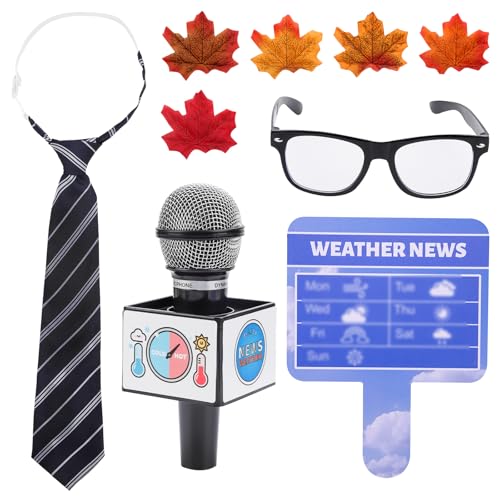
2 MULE TEAM Kids Meteorologist Costume Set Weather Toys for Kids Glasses Microphone Weather Man Necktie Maple Leaves Weather Chart Prop for Career Day Party
5-Piece Kids Meteorologist Costume Set: This fun and educational dress-up kit includes 1 kids’ costume tie, 1 fake…
As an affiliate, we earn on qualifying purchases.
As an affiliate, we earn on qualifying purchases.
Conclusion
By exploring weather and seasons through ride-on themes, you engage your students, spark their curiosity, and build their understanding. You make learning fun, you foster discovery, and you inspire a love for nature. You create connections, encourage exploration, and nurture confidence. Together, you turn lessons into adventures, transforming education into an exciting journey. Keep guiding their curiosity, keep fueling their wonder, and watch as their love for learning blossoms with every ride-on discovery.

Wooden Weather Station Cognitive Board with 24 Cards, Montessori Climate Busy Board for Toddlers, Learning Daily Weather Condition Changes, Teaching Months & Seasons Toys for 3,4,5 Years Old
⛅【Wooden Weather Cognition Board】The engaging weather board is a comprehensive learning tool that includes a thermometer, weather change…
As an affiliate, we earn on qualifying purchases.
As an affiliate, we earn on qualifying purchases.
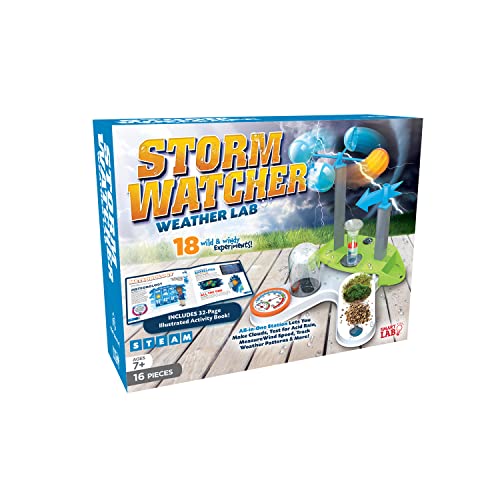
SMARTLAB Toys Storm Watcher Weather Lab with 18 Wild and Windy Experiments
EXCITING HANDS-ON STEM LEARNING: Kids discover the science behind weather patterns with their own weather station, complete with…
As an affiliate, we earn on qualifying purchases.
As an affiliate, we earn on qualifying purchases.