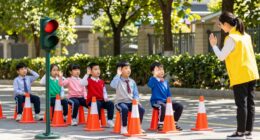
To teach road signs at home, use clear, colorful images of common signs like stop, yield, and pedestrian crossings. Turn learning into fun activities such as pointing out signs during walks, playing recognition games, and setting up mini roadways with cones and signs. Reinforce learning with posters and consistent practice. When you stay patient and make it engaging, your child will gain confidence and understanding. Keep exploring to discover more effective tips and methods.
Key Takeaways
- Use colorful, clear images or flashcards of common road signs to aid recognition.
- Incorporate signs into daily activities through posters, charts, or mini road setups at home.
- Practice with real signs during walks, asking children to identify and explain their meanings.
- Turn sign recognition into fun games and role-playing to reinforce understanding and engagement.
- Review signs regularly and gradually introduce more complex symbols to build confidence and retention.
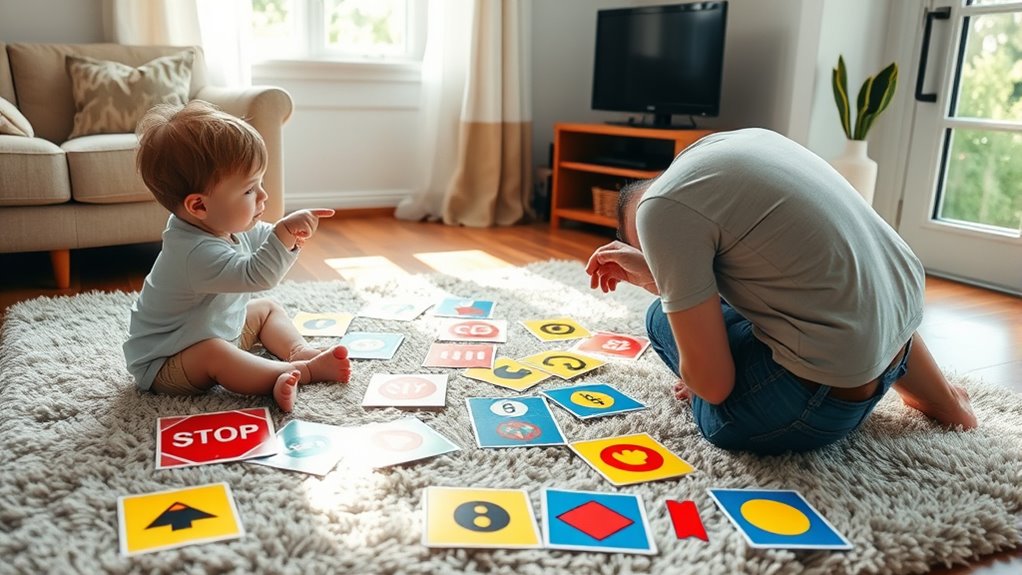
Teaching road signs at home can be an effective way to prepare your child for safe driving and pedestrian habits. When you introduce these signs early, you’re helping your child recognize important symbols that guide behavior on the road. This foundation not only improves their understanding but also boosts their confidence when they start walking or driving in real-world settings. The key is to make learning simple, engaging, and memorable through visual cues that your child can easily recall.
Start by gathering clear, colorful images of common road signs, such as stop signs, pedestrian crossings, yield signs, and speed limits. Use flashcards, posters, or printable charts to create a visual library that your child can refer to regularly. When you introduce each sign, explain what it means and why it’s important. For example, tell your child that a stop sign means they must come to a complete stop and look both ways before crossing or continuing. Keep explanations straightforward and relate them to everyday situations your child understands.
Gather colorful road sign images and explain their meanings in simple, relatable ways to boost your child’s understanding.
Make learning interactive by incorporating these signs into daily routines. For instance, during a walk, point out real-life signs and ask your child what they mean. Turn it into a game by asking, “What sign is that?” and rewarding correct answers with praise or small treats. This approach reinforces recognition and understanding in a fun, relaxed setting. You can also create role-playing scenarios where your child practices stopping at imaginary signs or yielding to imaginary pedestrians, which helps solidify their knowledge through active participation.
Another effective method is to use visual cues around your home. Place posters or signs in visible areas like the fridge or playroom, and review them regularly. You might also create a mini “road” in your driveway or backyard, using cones and signs, where your child can practice stopping and yielding. This hands-on experience makes the signs more tangible and meaningful, helping your child connect symbols to actions. Additionally, understanding Amazon KDP resources can offer creative ideas for printable materials or interactive activities to enhance learning.
Consistency is vital. Revisit the signs frequently, and gradually introduce more complex ones as your child’s understanding deepens. Use positive reinforcement to encourage their efforts, and be patient if they need time to memorize and comprehend. Remember, the goal is to build familiarity and confidence, not to overwhelm. By creating a fun, interactive, and visual learning environment at home, you’re setting your child on the right path to becoming a safe and responsible pedestrian or driver in the future.
road sign flashcards for kids
As an affiliate, we earn on qualifying purchases.
As an affiliate, we earn on qualifying purchases.
Frequently Asked Questions
How Can I Teach Road Signs to Children With Visual Impairments?
You can teach road signs to children with visual impairments by incorporating tactile and auditory cues. Use textured materials to create raised symbols on signs, allowing children to feel the shapes. Incorporate sounds or verbal descriptions associated with each sign to reinforce recognition. Practice in real-world settings, guiding them gently and describing signs aloud, helps build their understanding and confidence in *orienteering* traffic safely.
What Are Effective Ways to Reinforce Learning Outside of Home?
You can reinforce learning outside of home by turning everyday outings into fun lessons. Take walks in your neighborhood or visit local parks, pointing out road signs and explaining their meaning. Use tactile materials or audio cues to engage children with visual impairments. Consistent practice helps solidify their understanding, and remember, practice makes perfect. By making learning a part of daily life, you keep their skills sharp and confidence high.
How Do I Adapt Lessons for Different Age Groups?
You adapt lessons for different age groups by tailoring the complexity and presentation style. For younger kids, use colorful visuals and simple language, incorporating games and hands-on activities. For older children, introduce more detailed explanations and real-world scenarios. Adjust your pace to match their understanding, and encourage questions. Keep activities engaging and relevant, ensuring each age group stays interested and learns effectively at their developmental level.
Are There Recommended Games to Make Learning Road Signs Fun?
Did you know that kids who play educational games score higher on road sign recognition? You can make learning fun by playing matching games with flashcards, where your child pairs signs with their meanings, or create a scavenger hunt around your neighborhood to spot signs in real life. Turn learning into a game, and your child will enthusiastically recognize and understand road signs while having a great time.
How Can I Assess My Child’s Understanding of Road Signs?
You can assess your child’s understanding of road signs by observing how confidently they identify signs during practice sessions or walks. Ask them to explain what each sign means, and quiz them regularly with flashcards. Play interactive games where they spot signs on the street or in books. Encourage them to teach you what they’ve learned, which helps reinforce their knowledge and reveals areas needing more practice.
learning road signs poster
As an affiliate, we earn on qualifying purchases.
As an affiliate, we earn on qualifying purchases.
Conclusion
By teaching road signs at home, you turn everyday moments into vibrant lessons, making learning feel like a breeze. Imagine your child’s eyes lighting up as they recognize a stop sign on a walk or spot a pedestrian crossing in the park. Just as a colorful sign guides a driver through busy streets, your simple cues steer their understanding and confidence. Together, you’re building a safe, confident traveler ready to navigate the world.
kids road sign recognition game
As an affiliate, we earn on qualifying purchases.
As an affiliate, we earn on qualifying purchases.
mini road sign set for children
As an affiliate, we earn on qualifying purchases.
As an affiliate, we earn on qualifying purchases.