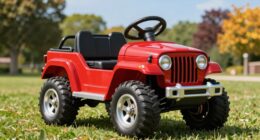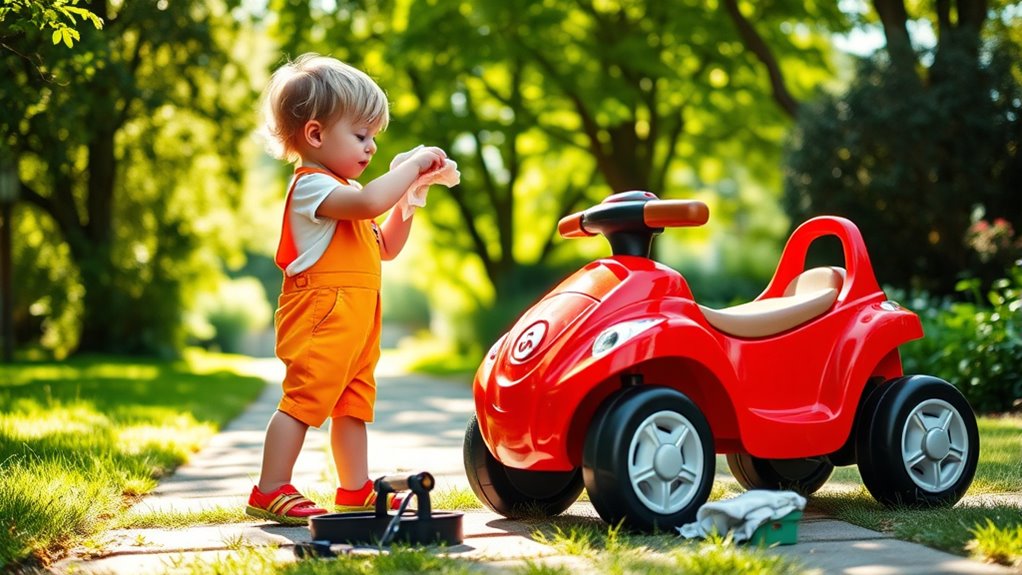

To teach responsibility in caring for your child’s ride-on toy, involve them in daily safety checks, cleaning, and maintenance. Show them how to inspect for loose parts or hazards before use and remind them to handle the toy gently. Establish clear rules, praise their efforts, and encourage sharing and cooperation with others. These habits help your child develop ownership and respect for their belongings. Keep exploring for more tips on fostering lifelong responsibility.
Key Takeaways
- Involve children in regular cleaning and maintenance to foster ownership and care for their ride-on toy.
- Teach them to handle the toy gently, avoiding rough play that could cause damage.
- Establish routines for inspecting the toy for loose parts or hazards before and after use.
- Encourage children to put the toy away properly after play to promote responsibility and organization.
- Reinforce the importance of safety rules, such as wearing helmets and following usage guidelines.
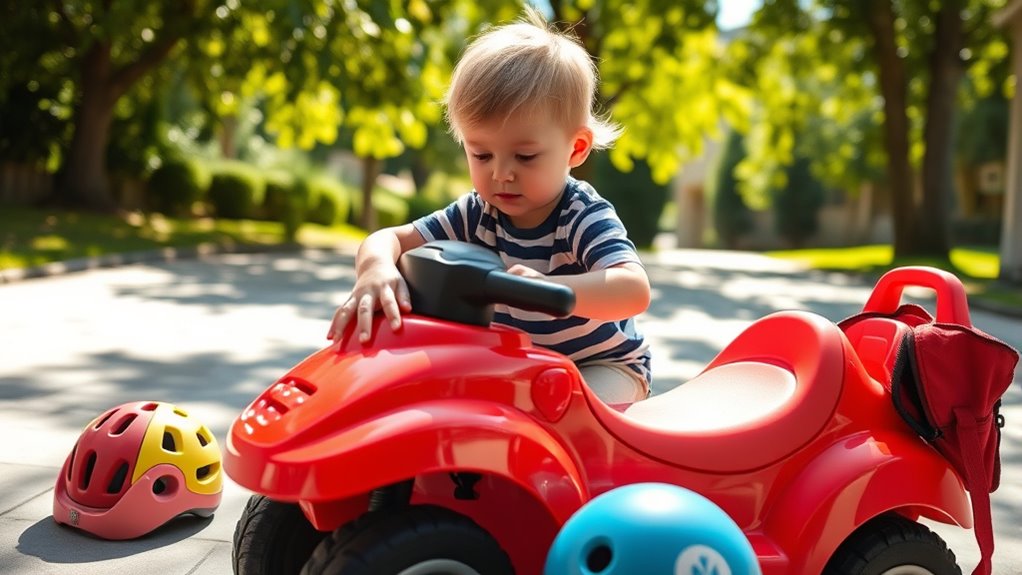
Have you ever wondered how to effectively teach responsibility? It starts with simple, everyday actions that help your child understand the importance of caring for their belongings, especially their ride-on toy. When guiding them, focus on toy safety by showing them how to inspect their toy before each use. Teach them to check for loose parts, sharp edges, or anything that might cause harm. This not only keeps them safe but also instills a sense of accountability for their toy’s well-being. As they learn to prioritize safety, they begin to see their toy as something they need to care for, rather than just a toy to play with.
Encourage your child to understand the importance of sharing and cooperation when it comes to their ride-on toy. If they have siblings or friends over, teach them to take turns and share the toy fairly. Explain that sharing isn’t just about giving someone a turn; it’s about working together and showing kindness. By doing this, your child learns to think beyond themselves and appreciate the feelings of others. This cooperation fosters a sense of responsibility because they realize their actions impact those around them. When they understand that their behavior can help or hinder others’ enjoyment, they become more mindful and respectful.
Sharing and cooperation teach children responsibility and kindness.
Setting clear rules about how to use and care for the toy helps solidify their responsibility. For example, you might say, “After you finish playing, put the toy back in its designated spot,” or “Always wear your helmet to stay safe.” These rules teach them that responsibility isn’t just about keeping the toy in good condition; it’s also about following safety precautions and respecting shared spaces. Consistent reminders and positive reinforcement, like praise when they follow rules, reinforce these lessons and boost their confidence in managing their responsibilities.
Additionally, involve your child in the maintenance of their ride-on toy. Show them how to clean it after play and remind them to handle it gently. When they take part in caring for their toy, they develop a personal connection and understand that responsibility involves ongoing effort. This involvement helps them see their toy as something valuable, deserving of care, rather than just a disposable item. Recognizing the importance of toy safety and ongoing maintenance helps lay the foundation for responsible behavior.
Teaching responsibility through caring for their ride-on toy combines safety awareness, sharing, cooperation, and maintenance. It’s a practical way to help your child develop essential life skills. As they learn to take ownership of their actions and understand the importance of caring for their belongings, they build habits that will serve them well far beyond childhood.
ride-on toy cleaning kit
As an affiliate, we earn on qualifying purchases.
As an affiliate, we earn on qualifying purchases.
Frequently Asked Questions
How Can I Motivate My Child to Take Care of Their Ride-On Toy?
You can motivate your child to care for their ride-on toy by establishing a reward system that celebrates their responsibility. Make sure to role model good behavior by showing your own respect for belongings. Praise their efforts consistently and offer small rewards for taking care of the toy. This combination encourages them to develop good habits, making them more likely to take pride and responsibility in maintaining their ride-on toy.
What Are Common Mistakes Parents Make When Teaching Responsibility?
You might neglect safety or overparent when teaching responsibility. For example, a parent who constantly hovers and controls every aspect of their child’s play can hinder independence. This approach makes kids feel micromanaged and less accountable. Instead, give age-appropriate tasks, like checking the ride-on toy’s battery, and trust them to do it. This fosters responsibility while balancing safety and independence, avoiding common mistakes.
How Do I Balance Supervision With Independence in Toy Care?
You should set clear rules and boundaries that match your child’s age and abilities. Allow them to handle age-appropriate tasks like wiping down the toy or putting away accessories, but supervise to make certain of safety. Encourage independence by trusting them to complete simple chores, while staying nearby to guide and step in if needed. This balance helps them learn responsibility while feeling supported and secure.
When Should I Replace or Upgrade My Child’s Ride-On Toy?
You should replace or upgrade your child’s ride-on toy when it shows significant wear, safety issues, or no longer fits their size. Regular maintenance tips include checking for loose parts, battery health, and tire condition. Conduct safety inspections frequently to make sure the toy remains secure and functional. If repairs become costly or unsafe, upgrading to a newer model is a wise choice, ensuring your child stays safe and enjoys their ride.
How Can I Make Responsibility Fun and Engaging for My Child?
You might think responsibility is boring, but you can make it fun with creative games and reward systems. Turn caring for their ride-on toy into a game, like a race to clean it or earn stickers for each task completed. Rewards motivate your child, making responsibility feel exciting rather than chores. This approach helps them develop good habits while having fun, fostering a sense of pride in their responsibilities.
kids safety helmet for ride-on toys
As an affiliate, we earn on qualifying purchases.
As an affiliate, we earn on qualifying purchases.
Conclusion
Teaching responsibility through caring for their ride-on toy helps your child develop important life skills. When they learn to take care of their toys, they understand the value of responsibility and commitment. Did you know that children who participate in caring for their belongings are 40% more likely to develop positive habits? By encouraging this, you’re not just teaching them about their toy, but also helping shape responsible, caring individuals for the future.
ride-on toy maintenance tools
As an affiliate, we earn on qualifying purchases.
As an affiliate, we earn on qualifying purchases.
storage bin for ride-on toys
As an affiliate, we earn on qualifying purchases.
As an affiliate, we earn on qualifying purchases.