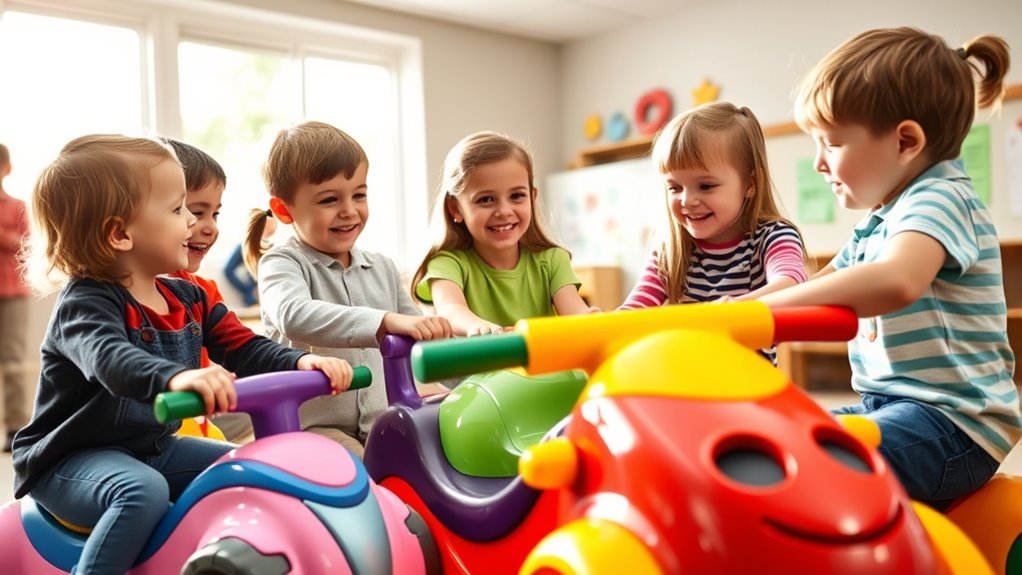

To teach kindness and sharing with ride-on games, create scenarios like taking turns, racing, or group challenges that encourage patience and cooperation. Use positive reinforcement by praising children when they share or help peers, and guide them to express feelings calmly during conflicts. These activities promote social skills, empathy, and emotional regulation, laying a foundation for healthy relationships. Keep exploring these strategies to see how ride-on games can become powerful tools for nurturing caring behaviors.
Key Takeaways
- Use shared ride-on activities like races and relay games to promote taking turns and cooperation.
- Reinforce kindness through positive feedback when children share or help peers during play.
- Incorporate group challenges to encourage teamwork, patience, and respect for others’ turns.
- Model empathetic behavior and guide children to express feelings calmly during conflicts.
- Highlight the importance of sharing and caring, fostering emotional awareness and supportive social skills.
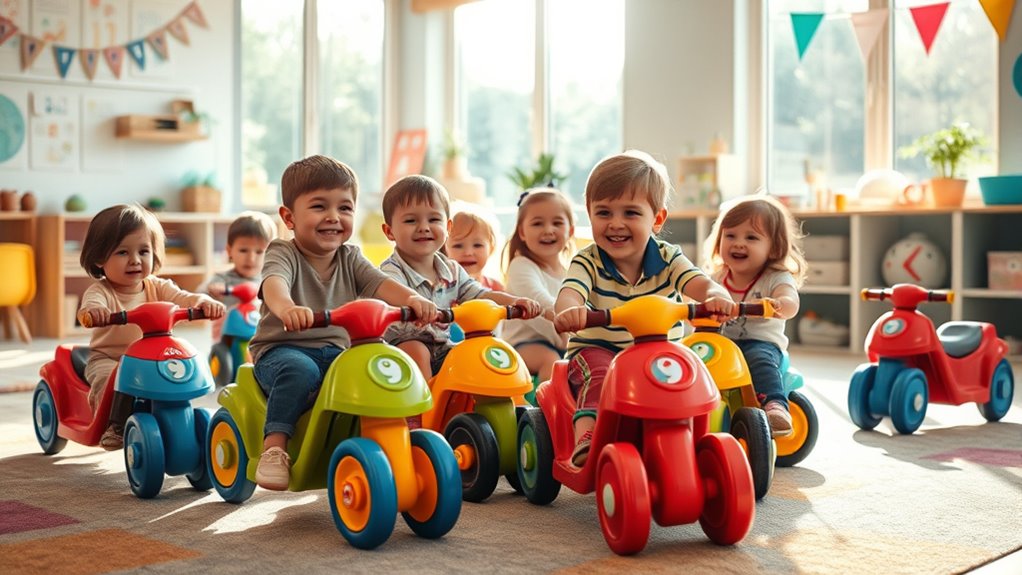
Teaching kindness and sharing to young children can be both fun and effective when you incorporate ride-on games into your activities. These games naturally encourage children to interact, cooperate, and develop important social skills. As they navigate their ride-on toys, children learn to read social cues, understand others’ feelings, and respond appropriately. This process fosters empathy development, which is essential for building meaningful relationships. When children share space on a ride-on toy or take turns, they practice patience and consider others’ needs, reinforcing the value of kindness.
Ride-on games teach kindness, sharing, and social skills through fun, cooperative play.
In ride-on games, you can create scenarios that promote sharing and caring. For example, set up a race where children must take turns riding or a relay-style activity that requires waiting and passing a toy or flag. These activities teach children to wait patiently, respect others’ turns, and celebrate their peers’ successes. As they learn to take turns, they develop self-control and patience—key components of social skills. You might also introduce group challenges, like forming a line or a circle of ride-on toys, where cooperation becomes necessary for everyone to participate happily. This encourages children to work together, communicate, and support one another.
Using positive reinforcement during these activities amplifies their learning. Praise children when they share or help a peer, emphasizing the kindness behind their actions. You can say things like, “That was very thoughtful of you to let your friend ride next,” or “Great sharing! That made everyone happy.” Such feedback reinforces the connection between their behavior and positive social interactions. The more children experience cooperation and sharing during play, the more naturally these behaviors become part of their everyday interactions.
Furthermore, ride-on games provide a safe space for children to practice emotional regulation. When they encounter frustration or disappointment, guiding them to express their feelings calmly and encouraging empathy towards others helps them understand different perspectives. They start recognizing that everyone has feelings and that kindness can resolve conflicts or misunderstandings. Engaging in social-emotional learning activities with ride-on toys can further strengthen their ability to manage emotions and develop compassion.
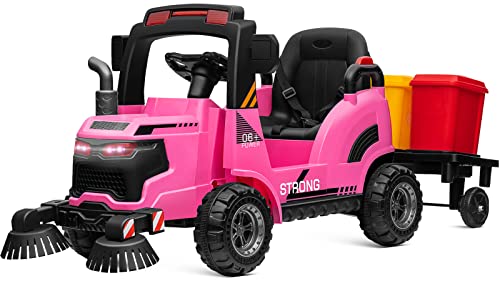
MOLACHI 12V Ride On Street Sweeper Truck, Ride on Car w/Remote Control,Electric 360 Degree Rotating Sweeping Brooms, Ideal Gift for Kids 3-7 Years Old, Pink
Realistic Ride On Street Sweeper Truck:Our kids’ street sweeper car has the electric 360 degree rotating sweeping brooms,...
As an affiliate, we earn on qualifying purchases.
Frequently Asked Questions
How Can Parents Reinforce Kindness Outside of Ride-On Games?
You can reinforce kindness outside of ride-on games by consistently using positive reinforcement when your child shows caring behavior. Praise their actions and explain why they’re kind, helping them understand its importance. Model kindness yourself in daily interactions, as children learn best through observation. Encourage sharing, empathy, and respectful communication, creating a supportive environment. This approach helps your child develop lasting kindness habits beyond ride-on games.
What Are Some Signs a Child Struggles With Sharing?
If your child shows sharing resistance, they might cling to toys or get upset when others want a turn. Look for jealousy signs, like fussing or withdrawing when peers play with their belongings. They may also struggle to wait patiently or react negatively to sharing requests. These behaviors indicate your child needs gentle guidance to develop sharing skills and manage feelings of jealousy, fostering kindness and cooperation.
Are There Specific Ride-On Games Best Suited for Teaching Kindness?
Imagine a colorful ride-on car, its wheels spinning in sync with your child’s laughter. You’ll find that games encouraging taking turns and cooperative riding promote sharing techniques naturally. Look for ride-on games designed with kindness milestones in mind, like multi-seat vehicles or group activities, where children learn patience and empathy. These immersive experiences help your child understand the joy of sharing, fostering kindness through fun and movement.
How Do I Handle Conflicts During Ride-On Sharing Activities?
When conflicts happen during ride-on sharing activities, you should stay calm and guide kids through conflict resolution. Encourage them to express their feelings and listen to each other. Use sharing strategies like taking turns or setting timers to guarantee fairness. Reinforce kindness by praising positive interactions. By actively mediating and modeling respectful behavior, you help children develop essential sharing skills and promote a cooperative environment during ride-on play.
When Should I Introduce New Sharing Rules in Games?
You should introduce new sharing rules at the perfect moment—think of it as catching a shooting star! Timing considerations are vital; wait until kids are comfortably engaged and demonstrating understanding of existing rules. Implement rules gradually, ensuring they’re clear and consistent. When conflicts arise or kids seem ready for a new challenge, that’s the ideal time. This approach keeps sharing smooth and helps kids learn kindness naturally.

OLAKIDS 12V Ride on Car, 2 in 1 Kids Street Sweeper Recycling Garbage Truck Electric Vehicle with Remote Control, Rotatable Cleaning Brushes, Trash Bins, Battery Powered Construction Toy (Pink)
2 in 1 Street Sweeper Truck: The kids ride on sweeper truck features with two 360 degree rotating...
As an affiliate, we earn on qualifying purchases.
Conclusion
By guiding children through ride-on games, you plant seeds of kindness and sharing that bloom into a vibrant garden of friendship. As they take turns and cheer each other on, their hearts become gentle streams flowing with compassion. These playful moments are the sun and rain nurturing their social growth, shaping them into caring individuals. With each ride, you’re sculpting a future where kindness is the steady foundation supporting a world full of joy and understanding.

OLAKIDS Ride on Car, Recycling Garbage Truck Electric Vehicle with Music, Horn, Warning Lights, Recycling Accessories Included, Toddlers Battery Powered Trash Toy for Boys Girls (Green)
Simulative Garbage Sorting Process: The kids ride on recycling truck features with 6 recycling accessories that kids can...
As an affiliate, we earn on qualifying purchases.