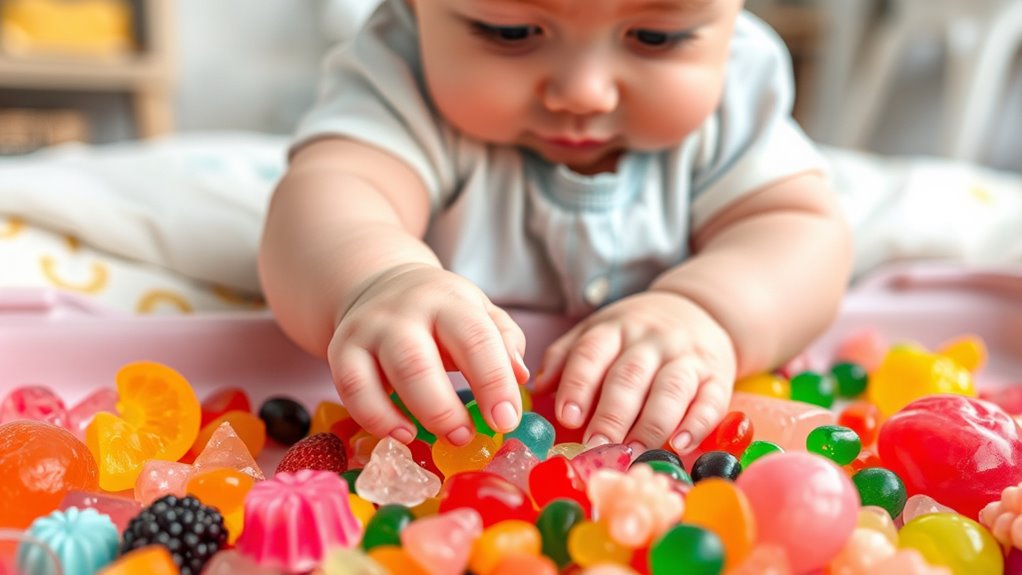

For safe, taste-safe sensory play with your babies and toddlers, choose soft, edible materials like mashed fruits, cooked vegetables, or flavored yogurt that are appropriate for their age. Supervise closely and double-check foods for choking hazards or allergies. Use gentle tools to help them explore textures and tastes safely, encouraging curiosity and development. By ensuring safety and offering a variety of tasty textures, you’ll help your little ones enjoy enriching sensory experiences—if you keep exploring, you’ll discover even more ways to support their growth.
Key Takeaways
- Use edible, age-appropriate foods like fruits, vegetables, and yogurt to ensure safety during sensory exploration.
- Constantly supervise infants and toddlers to prevent choking and ensure safe ingestion of sensory materials.
- Incorporate soft, easily squished textures such as mashed fruits or cooked vegetables to promote tactile development.
- Introduce a variety of tastes and flavors gently to help children develop healthy eating habits and oral motor skills.
- Set up sensory play with safe tools and supervised activities to create a fun, safe environment for exploration.
Sensory play is a vital part of your baby’s and toddler’s development, helping them explore the world around them through their senses. When it comes to taste-safe sensory activities, you’re providing a safe environment where your little one can discover new textures, flavors, and sensations without the risk of harm. One engaging way to do this is through music exploration combined with sensory play. For example, you can create homemade instruments using safe, edible materials like fruit, vegetables, or even soft bread. As your child touches and manipulates these items, they’re not only experiencing different textures but also hearing the sounds they produce, which enhances their auditory senses. This form of music exploration can be incredibly stimulating, encouraging your child to experiment with different sounds and rhythms while refining their fine motor skills.
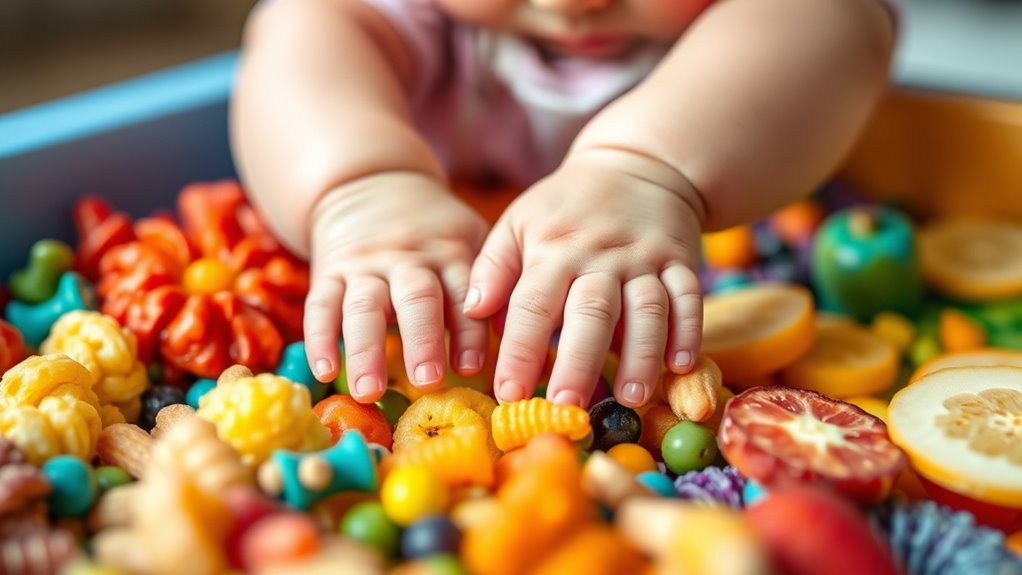
Taste-safe sensory play also involves introducing your baby or toddler to a variety of edible textures, such as soft mashed fruits, cooked vegetables, or even flavored yogurt. As they squish, smear, and taste these foods, they develop their sense of touch and boost their hand-eye coordination. These activities are perfect for improving fine motor skills because they require your child to grasp, pinch, and manipulate different textures and shapes. You can set up a sensory tray with a few safe ingredients, allowing your little one to explore freely while you supervise closely. This hands-on exploration encourages independence and curiosity, helping them learn about different textures and flavors in a safe, controlled manner.
Additionally, incorporating taste-safe sensory activities into playtime can help your child develop better oral motor skills. For instance, give them soft, edible objects like chilled fruit slices or smooth cheese, which they can comfortably bite and chew. These activities not only support their motor development but also help them get accustomed to different tastes and textures, which is important for healthy eating habits later on. Using appropriate sensory tools can further enhance their experience and safety during exploration. Always verify that the foods you use are age-appropriate, free from choking hazards, and free of common allergens if your child has sensitivities.
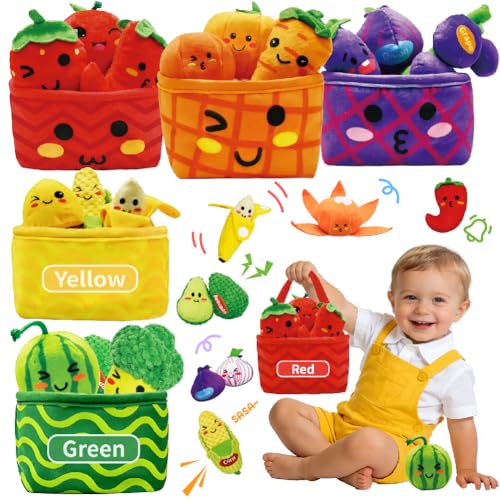
Play Food for Toddlers 1-3, Plush My First Fruit Vegetables Basket Color Sorting Rattle, Squeaker & Crinkle Play Food Set for Kitchen Baby Sensory Toys Easter Basket Stuffers Birthday Gifts 20PCS
My First Sensory Toys: This 20 pcs play food set of plush fruits and veggies is montessori toys…
As an affiliate, we earn on qualifying purchases.
As an affiliate, we earn on qualifying purchases.
Frequently Asked Questions
How Can I Introduce Taste-Safe Sensory Play During Teething?
When your baby is teething, you can introduce taste-safe sensory play to help with teething relief and encourage sensory exploration. Offer cold, soft, and safe foods like chilled fruit or teething toys made from food-safe materials. This stimulates their senses and soothes sore gums. Always supervise closely to guarantee safety, and choose items that are easy to clean. This approach makes teething more comfortable and engaging for your little one.
Are There Specific Foods Best Suited for Sensory Play With Babies?
You should choose fruit options with varying textures to make sensory play engaging. Soft bananas, squishy strawberries, and firm apple slices offer a fun texture variety. Always guarantee the fruits are ripe and cut into manageable pieces to prevent choking. Offering these options helps your baby explore different sensations, enhancing their sensory development while keeping everything safe and enjoyable during playtime.
How Do I Prevent Choking Hazards During Taste-Safe Sensory Activities?
Did you know choking is a leading cause of injury in young children? To prevent hazards during taste-safe sensory activities, closely monitor your child at all times. Focus on choosing foods with safe textures, like soft or mashed items, and employ supervision strategies such as sitting with your child and offering small amounts. Always stay attentive, and never leave your little one unattended with food to guarantee safety during play.
When Should I Start Incorporating Taste-Safe Sensory Play Into Routines?
You should start incorporating taste-safe sensory play once your child reaches age-appropriate milestones, typically around 6 months when they begin exploring with their mouths. Use gentle sensory exploration techniques to introduce safe, edible textures gradually. Observe your child’s reactions and comfort levels, and always supervise closely. This approach helps foster curiosity while ensuring safety, making sensory play an engaging, educational experience during their early development stages.
How Can I Modify Sensory Play for Babies With Allergies?
You might worry about allergies limiting sensory play, but with allergy-safe ingredients, you can still encourage exploration. Use safe foods and textures, like cooked pasta or ripe fruits, and always check labels. Incorporate sensory exploration tips by introducing new textures gradually and observing your child’s reactions. Modify activities to avoid common allergens, creating a safe environment where your little one can enjoy sensory play without risks and foster curiosity safely.

Hiawbon 20PCS Sensory Bin Tools, Sensory Sand Tools Set, Sensory Bin Filler, Fine Motor Skills Handy Scooper Set, Sensory Bin Accessories, Bin Scoops Plastic Tweezers Tongs Cups Scissors Clip
PACKAGE INCLUDES: You will receive 20 different tools, sufficient quantity to meet your use.
As an affiliate, we earn on qualifying purchases.
As an affiliate, we earn on qualifying purchases.
Conclusion
As you introduce taste-safe sensory play, you’re opening a tiny world of discovery for your little one—like planting seeds in a garden that will blossom with curiosity. By exploring safe textures and flavors, you’re nurturing their senses and building confidence. Keep it simple, playful, and safe, so their curiosity can blossom into a lifelong love of learning. Remember, you’re guiding their first steps into a vibrant, colorful world—one delicious touch at a time.

Inspire My Play Starter Bundle – Sensory Bin with Lid and Removable Storage Inserts
Sensory Bins for Toddlers – The Inspire My Play Sensory Play Starter Set is perfect for parents and…
As an affiliate, we earn on qualifying purchases.
As an affiliate, we earn on qualifying purchases.
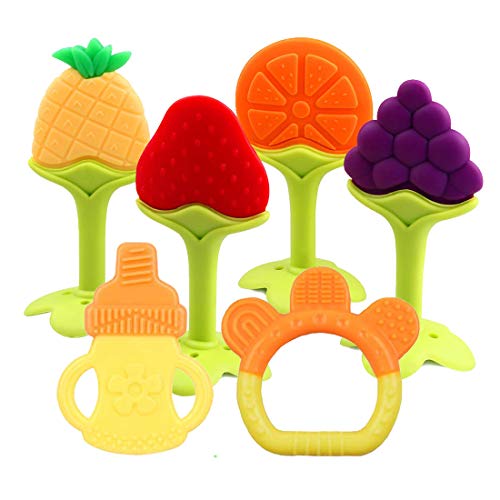
Baby Teething Toys 6 Packs BPA Free Silicone Baby Teethers, Freezer Safe Organic Infant Teething Toys Soft & Textured for Natural Brain Development
【100% Safe & Comfortable for Baby】Our baby teething toys are professionally made of soft and chewable food grade…
As an affiliate, we earn on qualifying purchases.
As an affiliate, we earn on qualifying purchases.