
To recognize and support different learning styles in play, observe how children respond to activities—whether they prefer tactile, visual, auditory, or movement-based experiences. Tailor play by incorporating multisensory methods and adaptive options that suit their preferences, encouraging exploration and confidence. Flexibly adjusting activities helps meet individual needs, fostering growth. When you understand these differences, you create a more inclusive environment that promotes motivation and development. Keep exploring to master these valuable strategies.
Key Takeaways
- Observe children’s reactions and preferences to identify their dominant learning styles during play activities.
- Incorporate multisensory experiences that engage sight, sound, touch, and movement to cater to diverse learners.
- Adapt play tools and rules to accommodate individual needs, promoting inclusivity and skill development.
- Offer varied play options to stimulate different senses and encourage exploration of each child’s strengths.
- Foster a positive, flexible environment that supports discovery, confidence, and growth tailored to each child’s unique style.
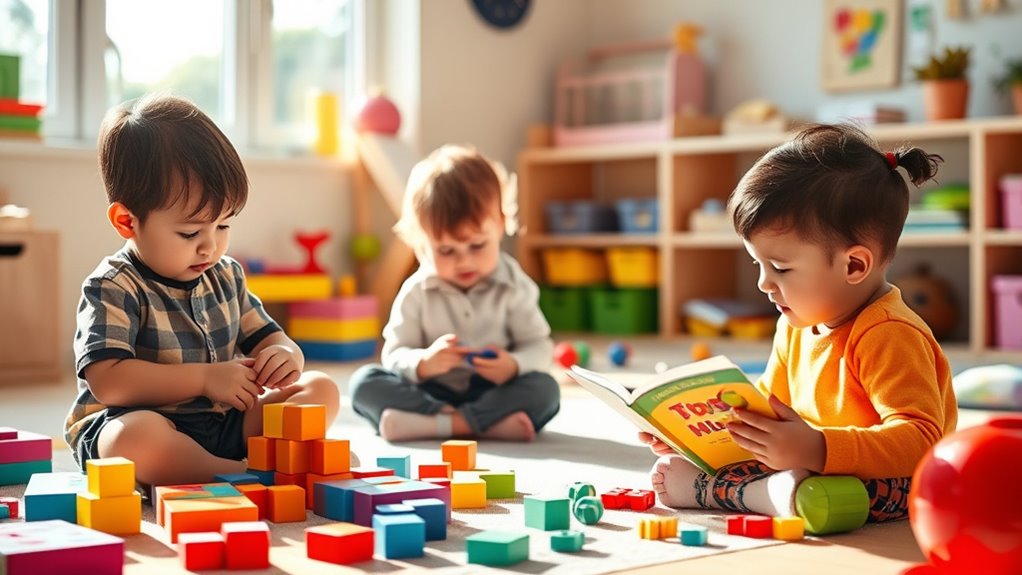
Have you ever wondered why some children thrive in certain activities while others excel in different ways? The answer often lies in their unique learning styles and how they engage with their environment. Recognizing these differences is key to supporting children effectively during play. One powerful approach is multisensory engagement, which involves stimulating multiple senses simultaneously—sight, sound, touch, and even movement. When children participate in activities that activate different senses, they build stronger neural connections, making learning more meaningful and memorable. For example, a child who enjoys tactile experiences might learn best through hands-on activities like building blocks or finger painting. Incorporating multisensory engagement into play helps children process information more deeply, fostering confidence and independence. Additionally, aligning activities with a child’s preferred learning style can enhance their overall development and motivation.
Engaging multiple senses enhances learning, confidence, and independence in children.
Adaptive play is another essential element in supporting diverse learning styles. It involves tailoring activities to meet each child’s individual needs and abilities, ensuring everyone can participate and benefit. If a child struggles with traditional games, adapting the rules or providing alternative tools can make a significant difference. For instance, using larger, textured pieces for a puzzle can aid a child with fine motor challenges, while simplifying instructions helps a child who gets overwhelmed by complex tasks. Adaptive play encourages children to explore and learn at their own pace, reducing frustration and promoting a sense of achievement. It also emphasizes flexibility, allowing you to modify play scenarios as children develop new skills or interests.
When you focus on multisensory engagement and adaptive play, you create an inclusive environment where all children feel valued and supported. You learn to observe their reactions carefully—notice which activities excite them or cause frustration—and adjust accordingly. This approach not only enhances their learning experience but also boosts their emotional well-being. As a caregiver or educator, your role is to provide a variety of play options that stimulate different senses and offer adaptable challenges. This way, children can discover what resonates with them, develop new skills, and enjoy the process of learning through play.
Ultimately, recognizing and supporting different learning styles isn’t about fitting children into a box but about embracing their individuality. By integrating multisensory engagement and adaptive play into your approach, you empower children to explore, innovate, and thrive in ways that suit them best. Your attentive, flexible strategies help nurture their natural strengths, paving the way for lifelong curiosity and confidence. Incorporating principles from the Law of Attraction can further amplify these efforts by fostering a positive mindset and cultivating an environment of growth and possibility.
Frequently Asked Questions
How Can Parents Identify Their Child’s Unique Learning Style During Play?
To identify your child’s unique learning style during play, observe how they engage with activities. Conduct a simple learning style assessment by noting if they prefer hands-on tasks, visual aids, or listening. Pay attention to their reactions and interests. Use these insights to customize their play environment, offering toys and activities that suit their style. This approach helps support their development and makes playtime more effective and enjoyable.
What Are Effective Strategies to Adapt Play Activities for Visual Learners?
To adapt play activities for visual learners, you can use engaging strategies like interactive storytelling and visual cue techniques. Incorporate colorful visuals, picture cards, and diagrams that reinforce concepts and keep their attention. Make the play environment visually stimulating, and encourage them to draw or use visual aids to express ideas. These approaches help visual learners process information better, stay engaged, and enjoy learning through play.
How Do Auditory Learners Engage Differently in Play Compared to Kinesthetic Learners?
Auditory learners engage differently in play by responding well to music activities and verbal instructions. They often enjoy listening to sounds, stories, or songs that enhance their learning experience. In contrast, kinesthetic learners thrive on movement games and hands-on activities that involve physical activity. You can support both by incorporating music and movement into play, allowing auditory learners to process information through sound, while kinesthetic learners explore through active movement.
Are There Specific Toys or Materials That Support Different Learning Styles?
Think of toys as keys opening different learning doors. For sensory learners, include sensory toys like textured balls and fidget tools that engage their senses. Creative materials like paints, clay, and building blocks inspire hands-on exploration. These toys act as bridges, helping children connect with their unique learning styles. By providing a variety of playthings, you support every child’s growth, making learning as natural as breathing.
How Can Educators Assess Learning Styles Through Play-Based Observations?
To assess learning styles through play-based observations, you should focus on your play observation notes. Watch how children engage with different activities—do they prefer hands-on tasks, visual materials, or social interactions? Use these insights for learning style assessment, noting patterns in their play. This helps you tailor support to their individual needs, fostering a more effective and inclusive learning environment.
Conclusion
By recognizing and supporting different learning styles in play, you create an inclusive environment where every child can thrive. Observing their preferences helps you tailor activities that foster growth and confidence. Remember, “A wise man learns more from his enemies than a fool from his friends,” so embrace each child’s unique way of learning. When you adapt with understanding, you lay the foundation for lifelong curiosity and success in every young learner.