Engaging children in storytelling through play helps develop their narrative skills naturally and joyfully. By using activities like interactive puppetry and role-playing, you encourage children to explore characters, settings, and stories while practicing sequencing, emotions, and structure. These hands-on experiences boost language, confidence, and social skills. As you explore more ways to incorporate play into storytelling, you’ll discover effective strategies to enrich children’s creative and cognitive growth.
Key Takeaways
- Play-based storytelling enhances language, sequencing, and emotional expression through engaging activities like puppetry and role play.
- Interactive puppetry encourages improvisation, imagination, and understanding of story characters and actions.
- Creative role playing fosters empathy, confidence, and comprehension by acting out stories and scenarios.
- These activities promote social skills, cognitive flexibility, and the ability to structure and understand narratives.
- Adaptable to various ages and interests, play-based storytelling builds foundational communication and lifelong storytelling skills.
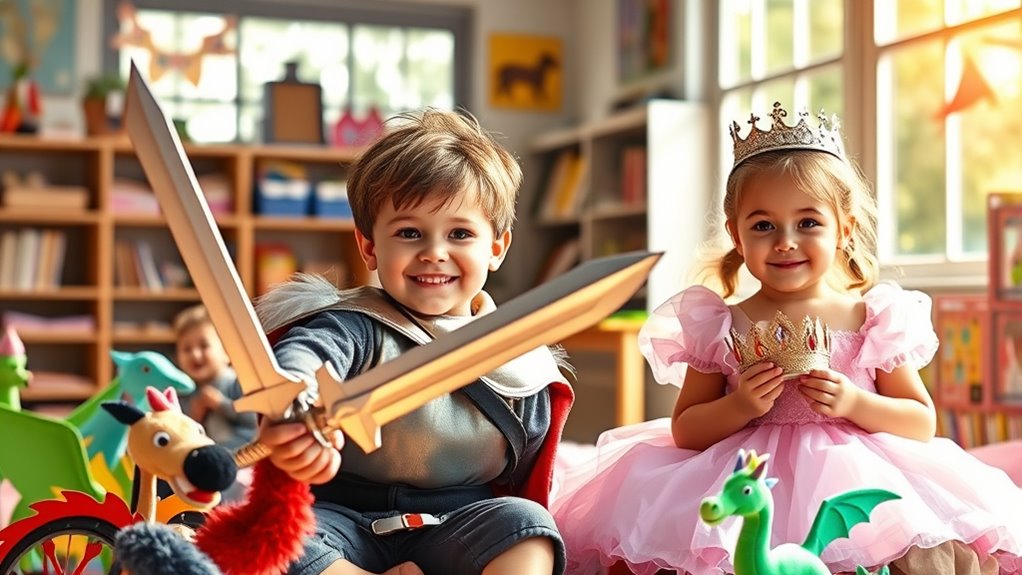
Storytelling through play transforms children’s natural curiosity into powerful learning experiences. When you encourage kids to engage in interactive puppetry and creative role playing, you help them develop their narrative skills in a fun and meaningful way. These activities make stories come alive, allowing children to explore characters, settings, and plots with enthusiasm. As they manipulate puppets or act out scenarios, they practice sequencing events, expressing emotions, and understanding story structure—all essential components of storytelling.
Interactive puppetry is particularly effective because it puts children at the center of the story. You can guide them to create puppets from simple materials like socks, paper bags, or felt, giving them a tangible way to embody characters. Once they have their puppets, you’ll see how they naturally start improvising dialogues and scenarios. This hands-on approach sparks their imagination and encourages spontaneous storytelling. They learn to narrate their puppet’s actions, describe characters’ feelings, and introduce new plot twists—all while having fun. The physical act of moving puppets helps children internalize story elements, making it easier for them to recall and retell stories later. Additionally, incorporating diverse characters can enhance their understanding of different perspectives.
Creative role playing takes this a step further by involving children in acting out entire stories or scenarios. When you set up role-playing activities, children don costumes, adopt different personas, and participate actively in storytelling. This process boosts their confidence as they practice speaking, listening, and responding within a narrative context. It also promotes empathy, as kids step into others’ shoes and explore different perspectives. As they create their own stories or reenact familiar ones, they learn how to develop characters, set scenes, and build a cohesive narrative. These skills translate into better comprehension and expressive abilities, enriching their overall communication.
Both interactive puppetry and creative role playing provide a dynamic setting for children to experiment with storytelling. You’re not just teaching them facts or rules; you’re letting them discover the joy of creating stories themselves. By supporting their imaginative play, you nurture their language development, cognitive flexibility, and social skills. Plus, these activities can be adapted to different ages and interests, ensuring every child has an engaging way to practice narrative skills. As they tell stories through puppet shows or role-play adventures, they gain confidence in expressing ideas and understanding others—building a solid foundation for lifelong storytelling and communication skills. Engaging in storytelling activities like these also enhances their ability to sequence events and understand story structure more deeply.
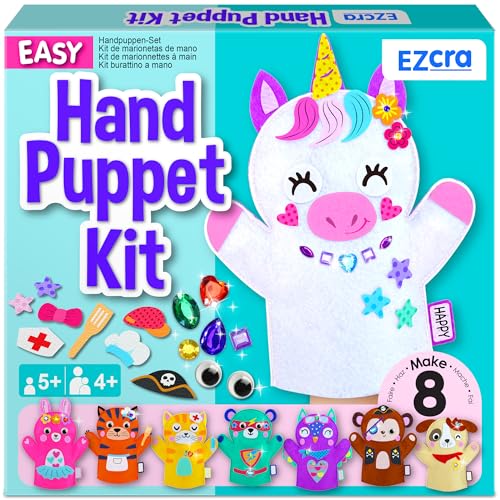
EZCRA Unicorn Hand Puppet Making Kit for Kids Age 5-8 – DIY Puppet Making Craft Kit – Creative Arts & Crafts Set, Educational Gift – Pretend Play Toys – 8 Projects, Extra Stickers for Decoration
💛Perfect for Kids💛Unleash your child's creativity with our Unicorn Hand Puppet Making Kit. Our hand puppet kit requires…
As an affiliate, we earn on qualifying purchases.
As an affiliate, we earn on qualifying purchases.
Frequently Asked Questions
How Can Parents Encourage Creative Storytelling During Play?
To encourage creative storytelling during play, you can use imaginative prompts that spark their imagination. Introduce role-playing scenarios where your child can pretend to be different characters or explore new worlds. Ask open-ended questions to inspire their storytelling ideas and provide props to make scenarios more engaging. Your active participation helps boost their confidence, making playtime a fun opportunity for developing their narrative skills naturally.
What Are the Best Toys for Developing Narrative Skills?
Imagine a treasure chest of tools that sparks your child’s imagination—role-playing toys and imaginative playsets. These toys, like dollhouses, costumes, and pretend kitchens, invite your child to craft stories and explore new worlds. They foster creativity, language skills, and confidence. By encouraging your child to step into different roles, you help develop their narrative skills naturally. Choose toys that inspire storytelling, and watch their imagination flourish.
How Does Storytelling Through Play Benefit Language Development?
Storytelling through play boosts your child’s language development by encouraging vocabulary expansion and cognitive enhancement. As they create stories, they learn new words and how to use them contextually, which strengthens their communication skills. Play also stimulates imagination and critical thinking, helping your child understand story structure and develop expressive language. Engaging in storytelling during play makes learning fun and interactive, laying a strong foundation for their future literacy and social skills.
At What Age Should Children Start Structured Storytelling Activities?
You should start structured storytelling activities around age 3 or 4, when children can engage in imaginative play and understand basic story sequencing. At this age, they begin to grasp the concept of beginning, middle, and end, making it an ideal time to introduce simple stories. These activities enhance language skills, boost creativity, and help children express their ideas clearly through organized storytelling.
How Can Teachers Integrate Storytelling Into Classroom Play?
You might find it amusing how often children turn classroom play into storytelling moments. To integrate storytelling, you can set up imaginative scenarios that inspire role-playing activities. Encourage kids to create characters and stories within these scenarios, guiding them to express their ideas. This approach makes learning fun and naturally develops their narrative skills, blending play with storytelling effortlessly and making every classroom activity a chance to build their storytelling abilities.
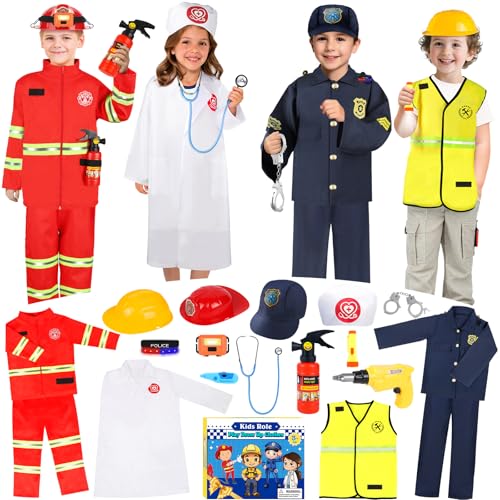
IVENRXIU Toddler Dress Up Clothes, Kids Role Play Costumes 4 In 1 Set-Police Doctor Fireman Engineer for Kids Boys and Girls 3-8, Career Dress Up Pretend Play Toys, Birthday Halloween Christmas Gifts
MULTI-STYLE KIDS DRESS UP COSTUME SET: With the IVENRXIU professional role-playing costume set, your child can immerse themselves…
As an affiliate, we earn on qualifying purchases.
As an affiliate, we earn on qualifying purchases.
Conclusion
As you encourage storytelling through play, you unseal boundless imagination, transforming simple moments into rich narratives. Yet, amidst the joy and creativity, you also foster critical thinking and emotional awareness. The playful stories you nurture serve as both a sanctuary and a springboard—where innocence meets insight. In this delicate balance, you realize that developing narrative skills isn’t just about words, but about shaping resilient, expressive minds ready to face the world.

WATINC Animals Felt Story Finger Puppets – 5Pcs DTY Animal Storytelling Hand Puppet Felt Education Gift, Farm Insect Zoo Ocean Polar Animal Storytime Early Learning Role Play for Kids
If you have problems with the accessories coming off easily and not sticking well, we suggest you buy…
As an affiliate, we earn on qualifying purchases.
As an affiliate, we earn on qualifying purchases.

Skillmatics Activity Kit – Creative Storytelling & Skill Building with 150+ Reusable Stickers, Educational, Mess-Free Fun, Preschool & Kindergarten Toy, Gifts for Kids Ages 3, 4, 5, 6, 7
CREATE YOUR OWN STICKER STORIES: Transform storytelling into a hands-on adventure! With 16 engaging animal stories, kids can…
As an affiliate, we earn on qualifying purchases.
As an affiliate, we earn on qualifying purchases.