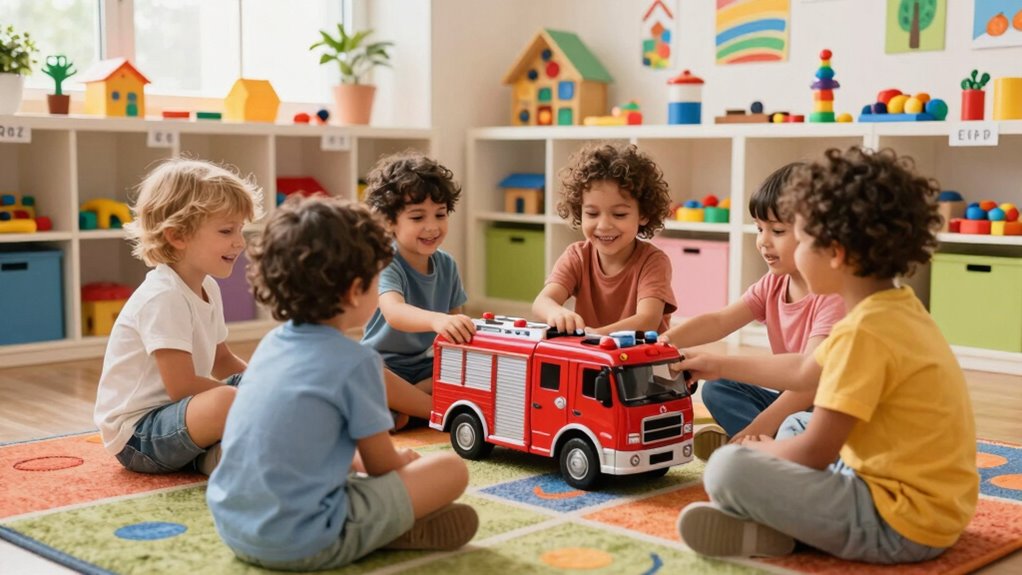

Social stories can help preschoolers learn to take turns with big toys by showing relatable characters practicing patience and sharing. You can use stories that highlight waiting, using kind words, and recognizing when it’s someone else’s turn. Visuals and simple language make these lessons clear and memorable. Repeating positive messages reinforces helpful behaviors. Keep exploring to discover more ways to encourage respectful and cooperative play, making fun times more enjoyable for everyone.

Turn the school run and nap time into listening time
- Thousands of audiobooks, podcasts and originals
- Listen on your phone, tablet or Echo — also offline
- Cancel anytime
Key Takeaways
- Use relatable characters demonstrating patience and waiting for their turn with big toys.
- Include visuals showing children sharing and taking turns to reinforce positive behavior.
- Incorporate simple, positive language emphasizing that sharing and taking turns are caring actions.
- Show feelings of characters when waiting or sharing to build empathy and understanding.
- Reinforce the message through repetition to help preschoolers internalize turn-taking skills.
Have you ever wondered how preschoolers learn to navigate social situations? It’s a process that involves understanding social cues, developing patience, and practicing important skills like sharing and taking turns. When kids approach big toys on the playground, they often need guidance to follow proper playground etiquette and share strategies. Social stories can be a powerful tool to help them grasp these concepts and build positive interactions with their peers.
Playground etiquette involves more than just knowing how to use the equipment; it’s about respecting others and understanding the unwritten rules of play. For preschoolers, this might mean waiting patiently for their turn, using gentle words if they feel frustrated, and recognizing when it’s someone else’s turn. A social story addressing these points can make a big difference. It could describe, in simple language, what it means to wait patiently and why sharing big toys is fun for everyone. By presenting these ideas in a familiar, story-based format, children can better internalize the social expectations.
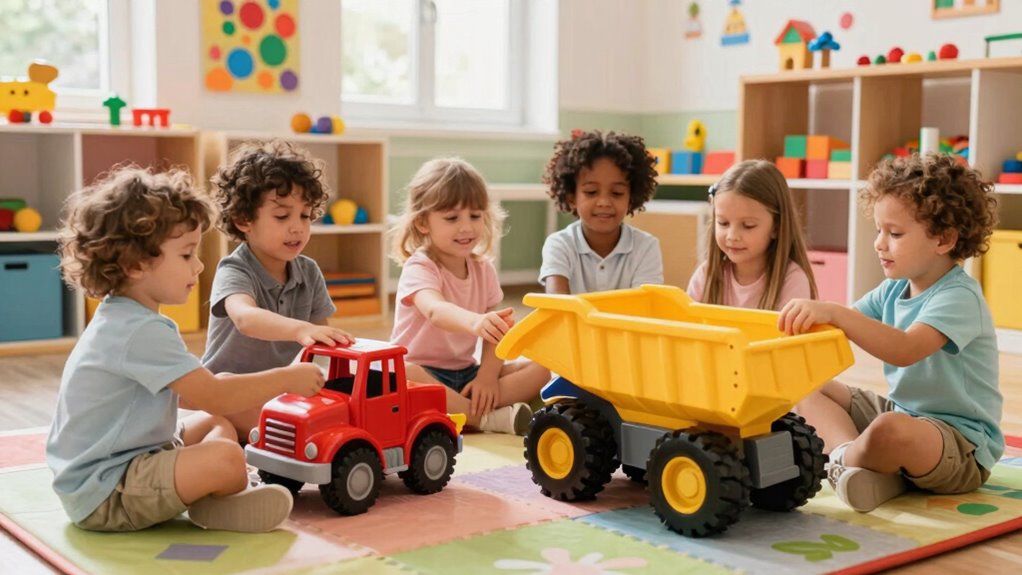
Sharing strategies are also crucial when it comes to big toys. Many preschoolers struggle with the concept of sharing because they’re still learning about empathy and patience. A social story that illustrates how sharing can make playtime more enjoyable helps children see the benefits of cooperation. For example, the story might show a character who takes turns with a big truck or slide, emphasizing that everyone gets a chance and that playing together is more fun than playing alone. Reinforcing the idea that sharing is caring and that taking turns allows everyone to experience the excitement of the toy can foster a more positive attitude toward sharing.
To make these social stories effective, you should incorporate relatable characters and situations that mirror the children’s own experiences. Use clear, positive language and highlight the feelings of characters when they succeed at sharing or taking turns. Visuals or illustrations are also helpful, as they give children concrete images to connect with the words. Repetition of key messages can strengthen understanding and encourage children to practice these skills during actual play.
Ultimately, social stories tailored to teaching preschoolers about playground etiquette and sharing strategies serve as gentle, consistent reminders. They help kids develop patience, respect, and cooperation—values that set the foundation for healthy social interactions now and in the future. Understanding the importance of biodiversity and how it relates to sustainable living practices can also be a valuable lesson in caring for our environment as children grow. By guiding children through these stories, you’re helping them learn how to navigate big toys and social settings with confidence and kindness.
Products Worth Considering

Graco SlimFit 3-in-1 Convertible Car Seat, Jarret

Graco Magnum X5 Airless Paint Sprayer

Graco TrueCoat 360 Variable Speed Handheld Paint Sprayer
As an affiliate, we earn on qualifying purchases.
Frequently Asked Questions
How Can I Personalize Social Stories for My Child’s Needs?
To personalize social stories for your child’s needs, start with personalization tips like including familiar settings, toys, or people they love. Use visual customization by adding photos or drawings that relate to their experiences. Focus on your child’s specific challenges and strengths, and tailor the language to their comprehension level. Revisit and update the story regularly to keep it relevant and engaging, helping your child better understand and practice taking turns.
When Is the Best Time to Introduce Social Stories?
You should introduce social stories when your child shows signs of developmental readiness, typically around 3 to 5 years old. Timing considerations are key—you want your child to be receptive and able to understand the story’s concepts. Observe their interest and attention span, and choose a calm, distraction-free moment. Starting during natural teachable moments can make the social story more effective and engaging for your preschooler.
How Do I Handle Resistance to Following Social Stories?
To handle resistance to following social stories, stay patient and consistent. Use visual aids to clarify expectations and make the stories engaging, helping your preschooler understand and accept the routines. Reinforce the message consistently, celebrating small successes to build confidence. Remember, persistence matters; by providing gentle reminders and positive reinforcement, you create a supportive environment where your child feels encouraged to follow the social story and develop new skills.
Can Social Stories Be Used for Children With Special Needs?
Yes, social stories work well for children with special needs. They can be tailored to address sensory integration issues and improve peer interaction. You can create stories that help your child understand their feelings, develop social skills, and manage sensory sensitivities. Using visual cues and simple language, these stories encourage positive behavior and make social situations less overwhelming, fostering confidence and better peer relationships.
How Often Should Social Stories Be Read With Preschoolers?
You should read social stories several times, especially during initial introductions, to boost understanding and build habits. Repetition reinforces routines, making it easier for preschoolers to grasp concepts like sharing and taking turns. Use visual aids consistently, and revisit stories regularly—daily or weekly—depending on the child’s progress. This steady, staged storytelling strategy helps children internalize key social skills, encouraging confidence and cooperation in fun, familiar ways.
Conclusion
By using social stories, you’re guiding preschoolers like a gentle lighthouse guiding ships safely to shore. Imagine a young child learning to take turns with a giant toy, feeling proud and confident as they practice patience. Just as a lighthouse provides steady reassurance in a storm, these stories help children navigate social waters smoothly, fostering kindness and cooperation. With consistent support, your little ones will soon shine brightly, mastering the art of sharing and turn-taking with ease.