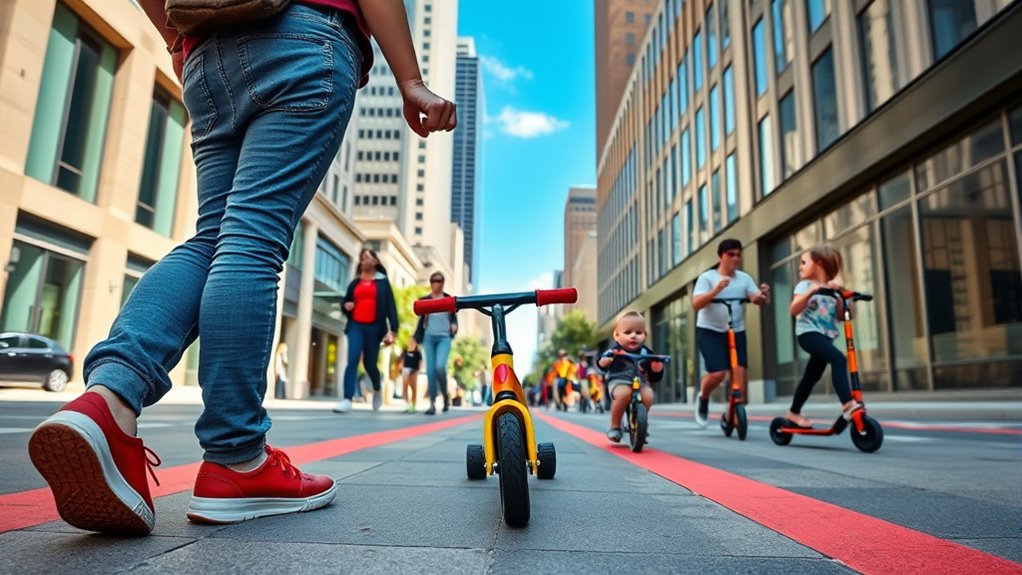

To guarantee sidewalk safety and etiquette for your toddler rider, always check that their helmet, knee, and elbow pads fit snugly and that their scooter or bike is in good condition. Supervise closely, encouraging slow, predictable riding and teaching your child to look both ways and use hand signals. Remind them to respect pedestrians, stay right on the sidewalk, and share space considerately. Continuing to learn how to foster responsible riding habits helps create a safer environment for everyone.
Key Takeaways
- Always wear appropriate safety gear and check equipment before riding.
- Supervise toddlers closely and teach them to stay on the right side of the sidewalk.
- Encourage respectful sharing by giving pedestrians ample space and slowing down near others.
- Use clear signals or verbal cues to communicate riding intentions and ensure predictable behavior.
- Instill good habits like looking both ways and stopping safely to promote responsible riding.
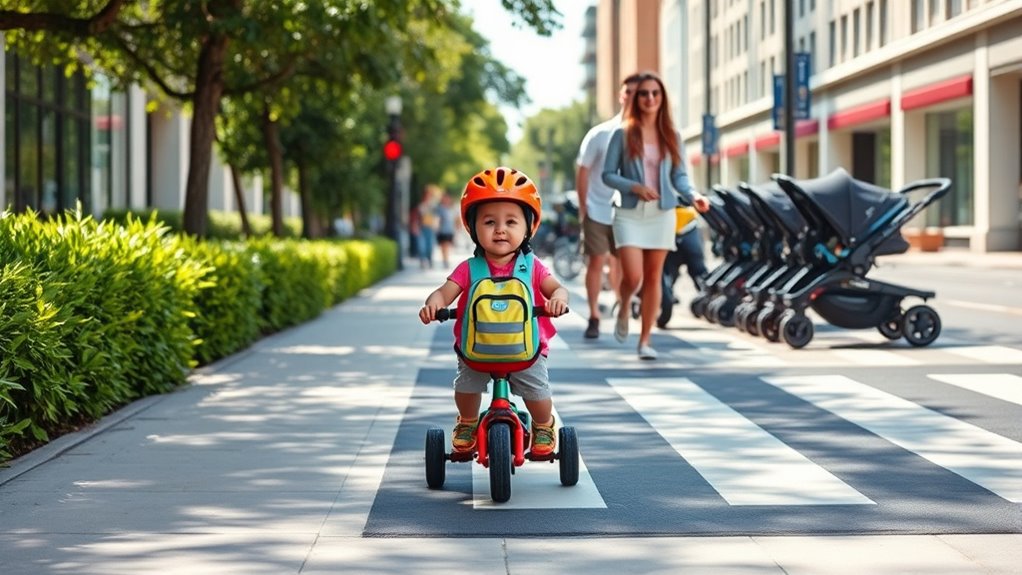
Ensuring sidewalk safety and proper etiquette is essential when your toddler rides a scooter or bike. As a parent or caregiver, your role is vital in teaching your child how to navigate shared spaces responsibly. Start by explaining basic safety rules. Emphasize the importance of wearing a helmet, knee pads, and elbow pads to protect against falls and accidents. Make sure your child understands that safety gear isn’t just a recommendation; it’s a necessity. Before heading out, check that their scooter or bike is in good condition—tires are inflated, brakes work properly, and the equipment fits comfortably. This preparation helps prevent mishaps and boosts your child’s confidence as they ride.
When your toddler is on the sidewalk, stay close by to supervise. Keep a watchful eye on their movements and be ready to intervene if they veer into the street or approach obstacles unexpectedly. Teaching your child to stay in control is crucial. Encourage slow, steady riding, especially on crowded sidewalks where pedestrians are present. Remind them to look both ways before crossing driveways or intersections, even if you’re confident no cars are coming. Instilling these habits early ensures they develop good judgment and awareness.
Respect for others is fundamental to sidewalk etiquette. Teach your child to be considerate of pedestrians, especially seniors, people with disabilities, and young children. Encourage them to slow down or stop when passing others. They should always give pedestrians plenty of space and avoid riding too closely behind someone, as sudden movements can startle or cause accidents. Remind your child that sidewalks are shared spaces—it’s not just about riding fast or having fun, but about being courteous and safe. Using a friendly voice and clear signals, like slowing down when approaching others, fosters a respectful atmosphere.
Additionally, your child should understand the importance of staying on the right side of the sidewalk, just as drivers stay on their side of the road. This simple rule helps prevent collisions and makes riding more predictable for everyone. When your child needs to stop, teach them to do so safely and quietly, avoiding sudden halts that could cause others to trip or fall. If they’re riding in a busy area, consider using hand signals or verbal cues to communicate their intentions, much like adult cyclists. This habit promotes clear communication, reducing the risk of misunderstandings. Incorporating riding etiquette into their routine helps them develop good habits that extend beyond childhood.
Ultimately, fostering good sidewalk etiquette and safety habits in your toddler sets the foundation for responsible riding as they grow. By staying attentive, respectful, and proactive, you help create a safe environment for everyone. Your guidance not only protects your child but also teaches them valuable lessons about sharing public spaces responsibly. With patience and consistent reinforcement, your toddler can enjoy their rides while respecting the needs of others around them.
kids toddler helmet with adjustable straps
As an affiliate, we earn on qualifying purchases.
As an affiliate, we earn on qualifying purchases.
Frequently Asked Questions
Are Helmets Necessary for Toddler Sidewalk Riders?
Yes, helmets are necessary for toddler sidewalk riders. Wearing a helmet greatly reduces the risk of head injuries if your toddler falls or bumps into something. You should always guarantee the helmet fits snugly and is properly secured. While it might seem like an extra step, safety comes first. By insisting on helmet use, you help protect your child and teach good safety habits early on, making every ride safer and more enjoyable.
How Do I Teach My Toddler Sidewalk Safety Rules?
You can teach your toddler sidewalk safety rules by making it fun and simple. Show them how to look both ways before crossing and to stay on the sidewalk. Use clear, easy-to-understand language and set a good example by following these rules yourself. Practice together regularly, praise their good behavior, and reinforce safety as a part of your daily routines. Consistency helps your toddler learn and remember these important safety habits.
What Are the Best Types of Toddler Ride-On Toys?
You need the absolute best toddler ride-on toys, and the top pick is a sturdy, balanced ride-on with smooth wheels and a low center of gravity—it’s like a tiny, speedy vehicle on wheels! Look for ones with safety features like non-slip footrests and easy-to-handle steering. These toys boost your kid’s confidence, keep them safe on sidewalks, and turn every outing into an adventure-filled, giggle-worthy ride they’ll love.
Should Toddlers Ride on Busy or Quiet Sidewalks?
You should have toddlers ride on quiet sidewalks rather than busy ones. Quiet areas reduce the risk of accidents and make it easier for your little one to learn proper riding skills. Always supervise them closely, stay alert, and keep a safe distance from traffic. If the sidewalk is crowded or noisy, consider choosing a safer, less congested route or riding in a designated park or playground instead.
How Can I Encourage Courteous Behavior in Other Sidewalk Users?
You can encourage courteous behavior by setting a good example yourself, politely asking others to share space, and acknowledging their patience. Smile and make eye contact to foster friendliness, and use kind words when addressing any issues. If someone is being unkind or unsafe, calmly explain the importance of sharing the sidewalk. Your positive attitude and respectful approach can inspire others to follow suit, creating a safer, more considerate environment.
children's knee and elbow pads set
As an affiliate, we earn on qualifying purchases.
As an affiliate, we earn on qualifying purchases.
Conclusion
By following sidewalk safety and etiquette, you create a smooth path for your little rider’s adventures. Think of yourself as a guiding star, shining brightly to show the way. When you stay alert, keep your toddler safe, and share the sidewalk kindly, you’re building a community where everyone can enjoy the journey. Remember, a safe and respectful environment is the foundation for joyful rides—turn every outing into a memorable and happy chapter in your child’s exploration.
kids scooter safety gear
As an affiliate, we earn on qualifying purchases.
As an affiliate, we earn on qualifying purchases.
training wheels for toddler bike
As an affiliate, we earn on qualifying purchases.
As an affiliate, we earn on qualifying purchases.