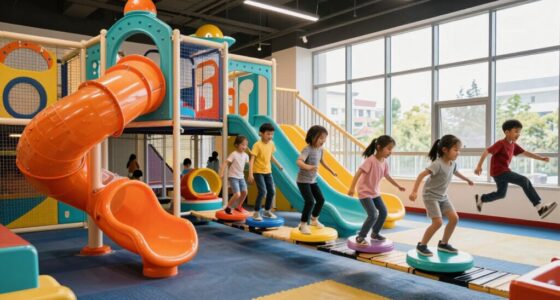

Starting with sensory warm-ups helps you prepare both your body and mind for active play. These activities enhance your enjoyment, boost confidence, and make movements safer. By stimulating tactile and proprioceptive senses early on, you reduce feeling overwhelmed and improve coordination. This warm-up sets a positive tone, ensuring your session is more focused and fun. Keep exploring to discover how these simple steps can truly transform your active experiences every time.

Turn the school run and nap time into listening time
- Thousands of audiobooks, podcasts and originals
- Listen on your phone, tablet or Echo — also offline
- Cancel anytime
Key Takeaways
- Sensory warm-ups prepare the nervous system, reducing overwhelm and promoting better focus during active play.
- They enhance sensory processing, allowing children to handle intense stimuli more effectively.
- Warm-ups improve body awareness and coordination, leading to smoother, more controlled movements.
- Properly prepared sensory systems increase confidence and enjoyment throughout the session.
- Incorporating warm-ups can prevent sensory overload, making activities safer and more engaging.
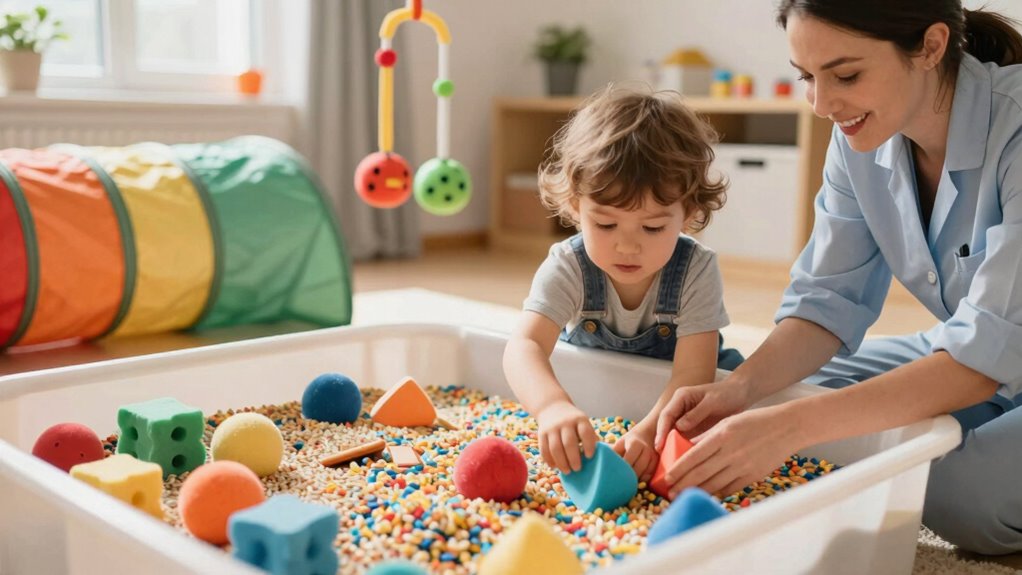
Before diving into play, taking a few moments for sensory warm-ups can make the experience more enjoyable and safer. These warm-ups prepare your body and mind, helping you engage fully in active play. One of the key elements is tactile stimulation, which involves your sense of touch. By gently touching different textures—like soft fabrics, smooth stones, or rough surfaces—you activate your skin’s receptors, increasing your awareness of sensory input. This process helps your nervous system get ready to handle more intense sensations during play, reducing the risk of being overwhelmed or distracted.
In addition to tactile stimulation, proprioceptive input plays an essential role in setting the stage for active play. Proprioception is your sense of body position and movement, and it’s what helps you know where your limbs are without looking. Engaging in activities that provide proprioceptive input—like squeezing a stress ball, pushing against a wall, or pulling on a resistance band—can strengthen this sense. When you incorporate proprioceptive input before play, your muscles and joints become more aware of their positions, which improves coordination and stability. This makes movements more controlled and safe, especially during vigorous activities or complex motions.
Starting with simple tactile activities, such as rubbing your hands over different textured objects or gently pressing on your arms and legs, primes your skin and deep tissues for more intense sensations. These activities help your nervous system calibrate itself, so you’re less likely to react negatively to sensory input once play begins. Similarly, gentle proprioceptive exercises—like bouncing on a therapy ball or bearing weight through your legs—can help you develop a better sense of your body’s location in space. This awareness is essential for maintaining balance and reacting appropriately during active play. Incorporating sensory integration techniques can further enhance your ability to process sensory information effectively, leading to more confident and enjoyable play experiences. Developing a body awareness through these warm-ups not only prepares you physically but also helps in managing sensory sensitivities, ensuring a more positive active play session. Furthermore, engaging in these warm-up activities can boost your overall sensory processing skills, making future activities easier and more comfortable. Additionally, these warm-ups can help promote emotional regulation, making the experience more relaxing and enjoyable for children and adults alike.
As an affiliate, we earn on qualifying purchases.
Frequently Asked Questions
How Long Should a Sensory Warm-Up Last Before Active Play?
The ideal warm-up length for a sensory warm-up before active play is about 5 to 10 minutes. This duration allows enough time to engage the senses without causing fatigue or boredom. You should tailor the sensory warm-up duration to the child’s needs and activity intensity, ensuring they are alert and prepared. Keep it dynamic and fun, so the child stays motivated and ready for the main activity.
Are Sensory Warm-Ups Suitable for Children With Sensory Processing Disorders?
Think of sensory warm-ups like tuning a delicate instrument—essential for children with sensory processing disorders. They’re often suitable and can help with sensory integration, reducing the risk of sensory overload. I once saw a child who struggled with shifts, but a tailored warm-up eased her into activity smoothly. Just remember, customize warm-ups carefully, and observe how each child responds to make certain they benefit without becoming overwhelmed.
What Are Some Quick Sensory Warm-Up Activities I Can Do at Home?
You can do quick sensory warm-up activities at home by incorporating sensory integration and calming techniques. Try gentle squeezing of a stress ball, deep pressure hugs, or slow, rhythmic brushing to engage tactile senses. Spin in a chair briefly or do gentle bouncing to activate vestibular input. These activities help calm and prepare children for active play, making their sensory experiences more manageable and enriching the session.
Can Sensory Warm-Ups Replace Other Pre-Activity Routines?
Sensory warm-ups can’t fully replace other pre-activity routines, but they markedly spice up sensory integration and play enhancement. These engaging exercises prime the senses, improve focus, and prepare kids for active play. While traditional routines set a foundation, incorporating sensory warm-ups adds an extra layer of readiness, boosting confidence and cooperation. So, blend them in for a balanced, beneficial pre-play preparation that energizes and excites your child.
How Do I Know if a Sensory Warm-Up Is Effective?
You’ll know a sensory warm-up is effective if you notice improved engagement and calmer behavior during active play. Observe if sensory integration activities help the child shift seamlessly into movement, reducing anxiety or agitation. Effective warm-ups often incorporate calming techniques that promote focus and self-regulation. If you see positive changes in mood and participation, your sensory warm-up is working well. Adjust activities as needed to maintain this beneficial impact.
Conclusion
Think of sensory warm-ups as the ignition switch for a car—they set the engine in motion, ensuring a smooth ride. By incorporating these gentle preparations before active play, you’re not just warming up muscles, but fueling curiosity and focus. When you start with sensory warm-ups, you’re planting the seeds for a session that flows seamlessly, like a well-orchestrated symphony. So, don’t skip this step—watch how it transforms playtime into a vibrant, engaging adventure.
Cold & flu season Picks
humidifiers
As an affiliate, we earn on qualifying purchases.